On 19th January, 2023, the Biennial Report entitled “Communion in action; a lifestyle of sharing” published by the Focolare Movement was presented in Rome. It is an overview of the activities and initiatives promoted by the Movement during the period 2020-2021.
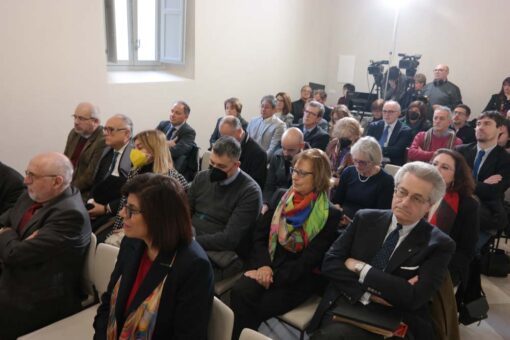
The first report of this kind published by the Focolare Movement was presented to an audience from the diplomatic, political and religious worlds and to journalists from the Italian media.
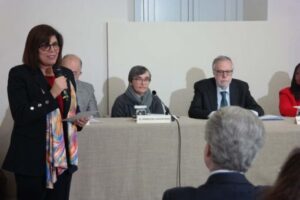
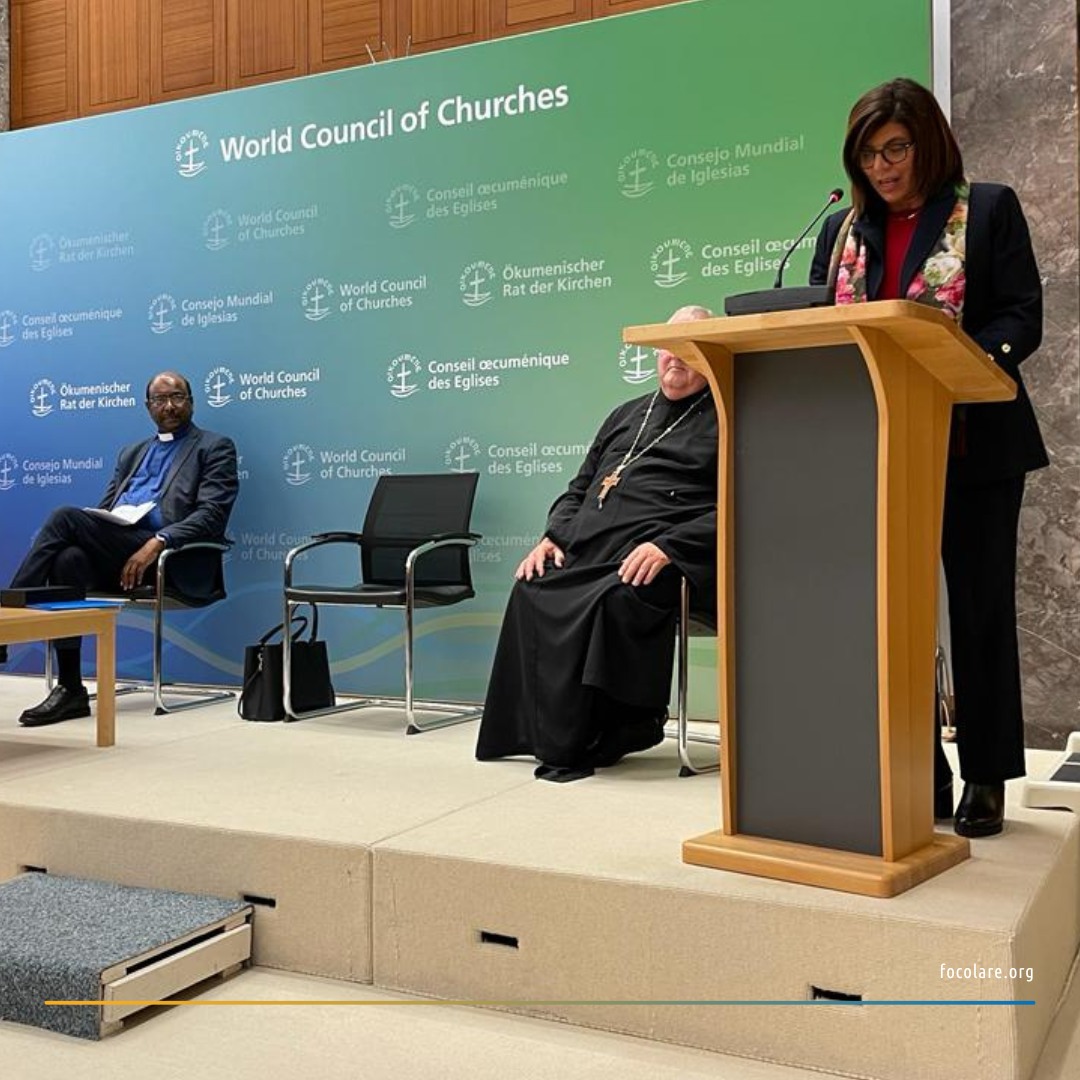
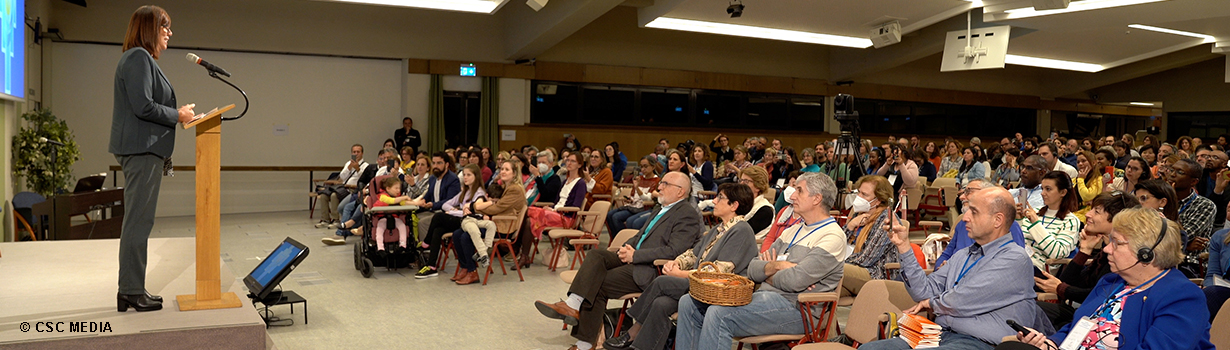
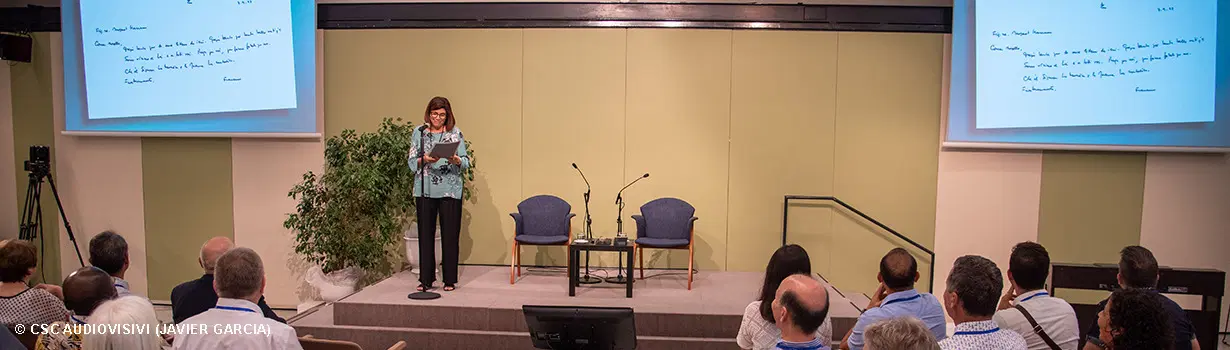
Margaret Karram addressing the meeting
The document describes a lifestyle made up of spontaneous sharing, not only of goods but of experiences and needs. It is all inspired by evangelical love. Contemplating the fruits of this sharing encourages a renewed dialogue to increase communion even more. Alongside material resources, the invisible goods which have been donated, invested or gathered in this period are given equal importance.
The journalist Claudia di Lorenzi facilitated the event. It opened with a greeting from the President of the Focolare Movement, Margaret Karram, who said. “I hope that these pages mark the beginning of an ever greater sharing. We desire to be credible seeds of hope that contribute to renewing the world with love”.
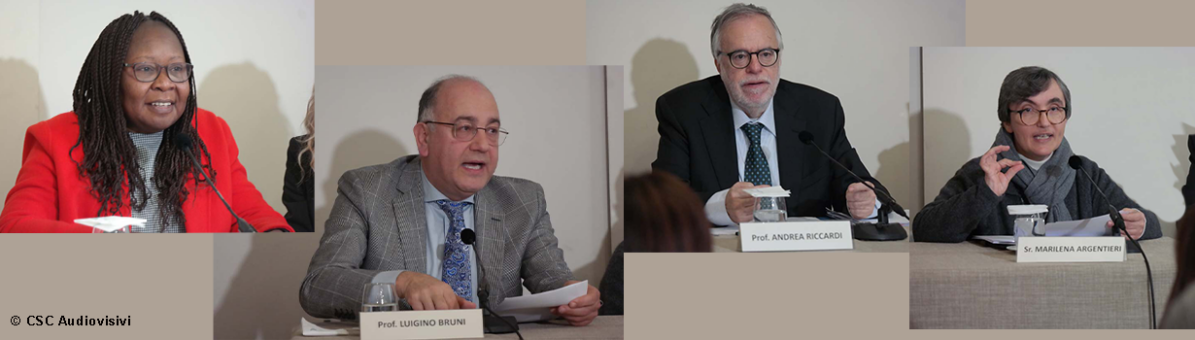
Geneviève Sanze, Economist and Co-Responsible for the aspect of “Economy and Work” at the International Centre of the Focolare Movement, explained that “this Report is an instrument of dialogue, an attempt to offer a glimpse of what we try to bring into society to progress the path towards fraternity”.
Sr Marilena Argentieri, President of the CNEC (National Centre for Religious Community Economists) said that what “the Report conveys the idea that nothing belongs to us (…) because everything I have is in communion with others”. Then she added a personal note, “I think the Report makes me grow in freedom and detachment, because at its centre is love for God and love for the poor”.
From left:: Dott.sa Geneviève Sanze, Prof. Luigino Bruni, Prof. Andrea Riccardi, Sr. Marilena Argentieri.
Andrea Riccardi, historian and Founder of the Community of Sant’Egidio, said, “This document highlights the effects of this communion, of what we have and what we are, in a voluntary and free sharing. And to some extent the more communion there is, the less the effects can be controlled but perhaps the more the Gospel is lived. The Focolare Movement, which has spread silently in many countries of the world, is like a network in society and in the Church, that protects the earth from landslides. We are in a time of human, ecological and religious unease and then there is this network of friendship in the world and here I insist on the value of unity, but a unity that is rooted in so many places in the world, has a much greater value”.
In his turn, Luigino Bruni, Economist and Professor of Economics at the Lumsa University in Rome, said that “the Report reminds us of the importance of the relational capital, the spiritual capital and the invisible capital that make our community beautiful and rich (…). Charisms are capable of activating energies deeper than money, that is, people act for higher aims”.
The “Communion in action; a lifestyle of sharing” Report is a 112-page document, in which you can visualize the life of the Focolare Movement, from the many initiatives to the aspect of formation and study, from communication to ecology and in which it is clear that, as Geneviève Sanze said, “it is not money that changes the world but “new” women and men who bring a new culture of fraternity. This is what we want to highlight”.
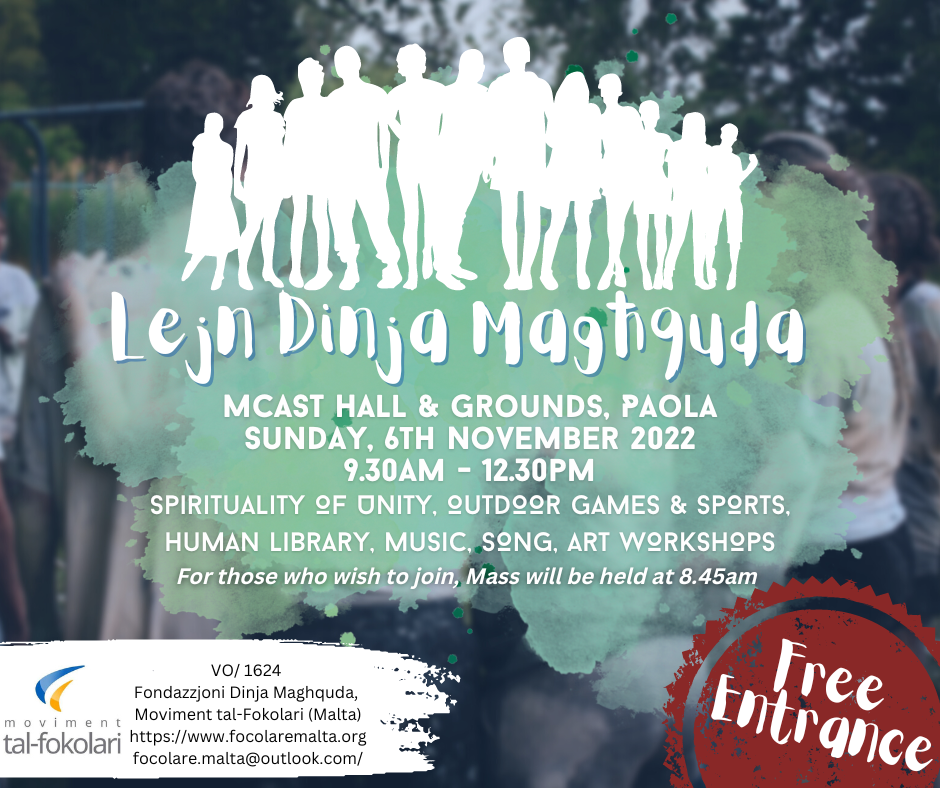
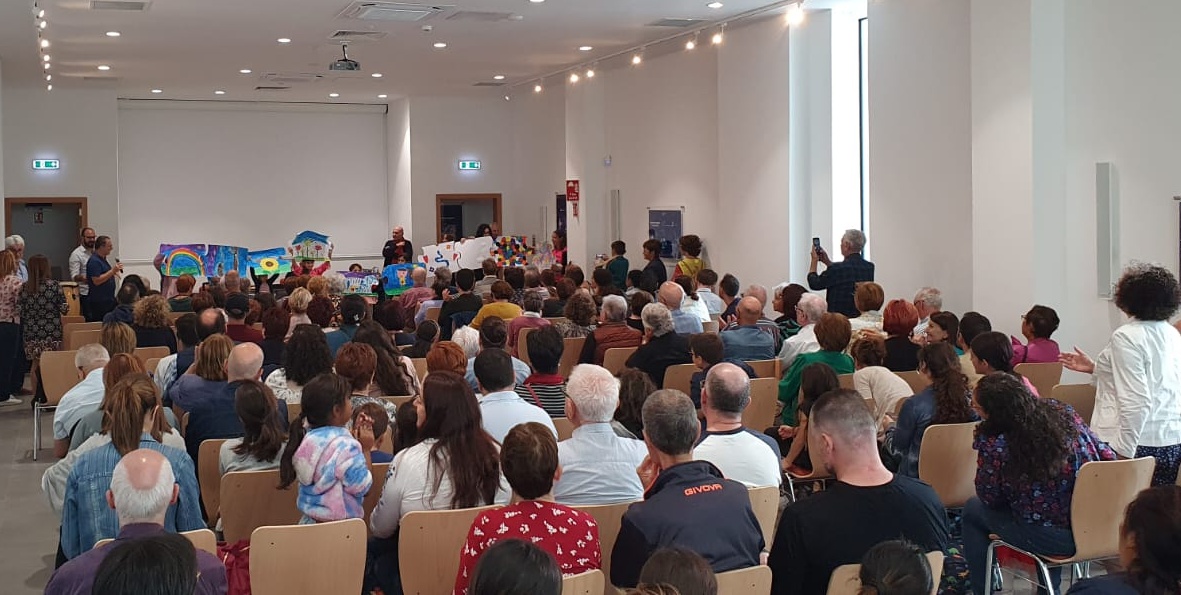
“Lejn Dinja Magħquda” (Towards a United World) was the title of the “Focolare Open Day” held in Malta on 6 November 2022.
We awaited this well-attended event with great joy. In the weeks leading up to it, so many of us tried to give not only the time and effort to prepare it with great care, but also to promote it with all the means at our disposal. We wanted to make this meeting an opportunity to show, even if in a small way, that the reality of a united world is possible.
And this encouraged us to be bold and creative in the style of the program prepared for this meeting, which was attended by young and old. Also present was the Archbishop’s Delegate for the Laity and a collaborator for the Diocesan youth.
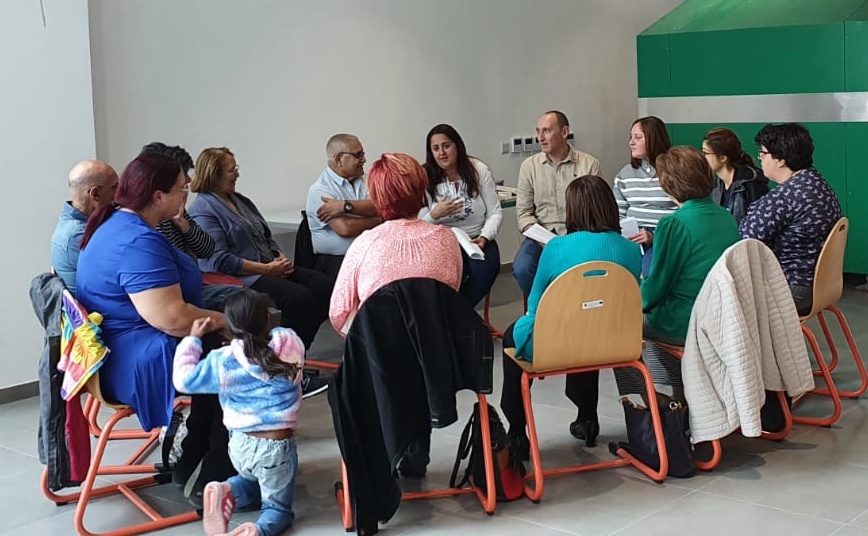
Following an introductory session held in one of the meeting rooms at MCAST – the Malta College of Arts, Science and Technology – which proved to be a modern and welcoming environment, those present were invited to participate in the various workshops which catered for the different age groups: spirituality, music, art, outdoor games, youth activities and the human library.
The goal “towards a united world” was kept in mind for the format of each workshop. It was wonderful to see adults, young people and children working together in the various groups. This in itself was a tangible witness to building a sense of family among everyone.
Here is some feedback we received:
“It was truly a beautiful day, in a very pleasant environment. I went around and noticed that everyone was involved. A young girl summed it up to me by saying, ‘I’m really happy to be here’.
“The program was well prepared and responded to today’s needs. Everyone enjoyed the activities. I took part in the spirituality workshop and the brief reflections and personal stories that were shared during the session were very profound.”
“I was in the singing group where I had the opportunity to meet new people. I felt it was a great opportunity to be together and build unity; it gave us the hope that a united world is possible.”
“The idea that everyone could freely move from one workshop to another was successful. In the ‘Human Library’ wonderful experiences were shared and everyone could identify with the day’s theme .”
At the end of all the activities, we all came together again in a plenary session. We started off by reciting the Time-out prayer for peace, and then some participants shared about their respective workshops: it was a concrete testimony that unity harmonises all diversities. While aware that the road to unity is difficult, we felt that love is the key to building the human family and this in turn generates peace and joy in the world.
Compiled by the Focolare events committee
“Walking hand in hand” — World Council of Churches hosts Focolare representatives
The World Council of Churches (WCC) hosted Focolare president Margaret Karram and co-president Jesús Moran, as well as other members of the Focolare community, on 28 November, offering a guided tour of the Ecumenical Centre, and discussing unity, reconciliation, inter-religious bridge-building, Faith and Order, and communications, among other issues of interest.
WCC acting General Secretary Rev. Prof. Dr Ioan Sauca expressed appreciation for the many past collaborations between the WCC and the Focolare, most recently the Focolare’s participation at the WCC 11th Assembly in Karlsruhe.
Sauca said the WCC recognizes the importance of cooperation and mutual support between the WCC and the Focolare to serve together under the new paradigm of the pilgrimage of justice, reconciliation, and unity.
“Christians of different churches belonging to Focolare have been part of delegations of their respective churches and in other capacities at WCC assemblies,” noted Sauca, who summarized a long history of cooperation between the two groups.
“Your commitment to promoting the dialogue between Christians, Jews, and Muslims as well as your engagement in a sustained dialogue between Israelis and Palestinians are inspiring assets for the worldwide movement of Focolare and beyond,” said Sauca.
Staff from the WCC and representatives from the Focolare Movement also discussed past and future areas of collaboration, and shared their experiences related to unity and ecumenism.
Margaret Karram shared her warmest greetings and expressed great joy to be visiting the Ecumenical Centre, 20 years after Chiara Lubich’s last visit to WCC.
“Twenty years ago, Chiara Lubich, founder of the Focolare Movement, came here at the invitation of the then-General Secretary Konrad Raiser and Prof. Ioan Sauca,” said Karram. “I am very grateful to be with you all here today to commemorate this anniversary. I give praise to God because I am aware I am walking on ground that I hold sacred.”
Karram assumed the WCC of the willingness and of the ability of the Focolare Movement to continue walking together. “I want to add not only walking together—but we have to hold hands—not only walk together but hold hands, side-by-side. I want to promise this.”
Rev. Prof. Dr Jerry Pillay WCC General Secretary-elect, commended the many ways in which the Focolare community and the WCC have exchanged ideas and insights over the years. “Our collaboration has been on different levels,” he said.
Pope Francis to the Focolare: “May Christ always enlighten your steps.”
5th November 2022, Mariapolis Centre, Castelgandolfo, Rome
In her opening talk to the men and women volunteers gathered at the conference centre in Rome, Margaret Karram, President of the Focolare Movement, expressed her joy at receiving a beautiful letter from Pope Francis which she shared with them.
Activate English subtitles
Anthony Patrick Vella: Art as a Collective Expression
Interview by Miriana Dante Source:Città Nuova Magazine Translation from Italian
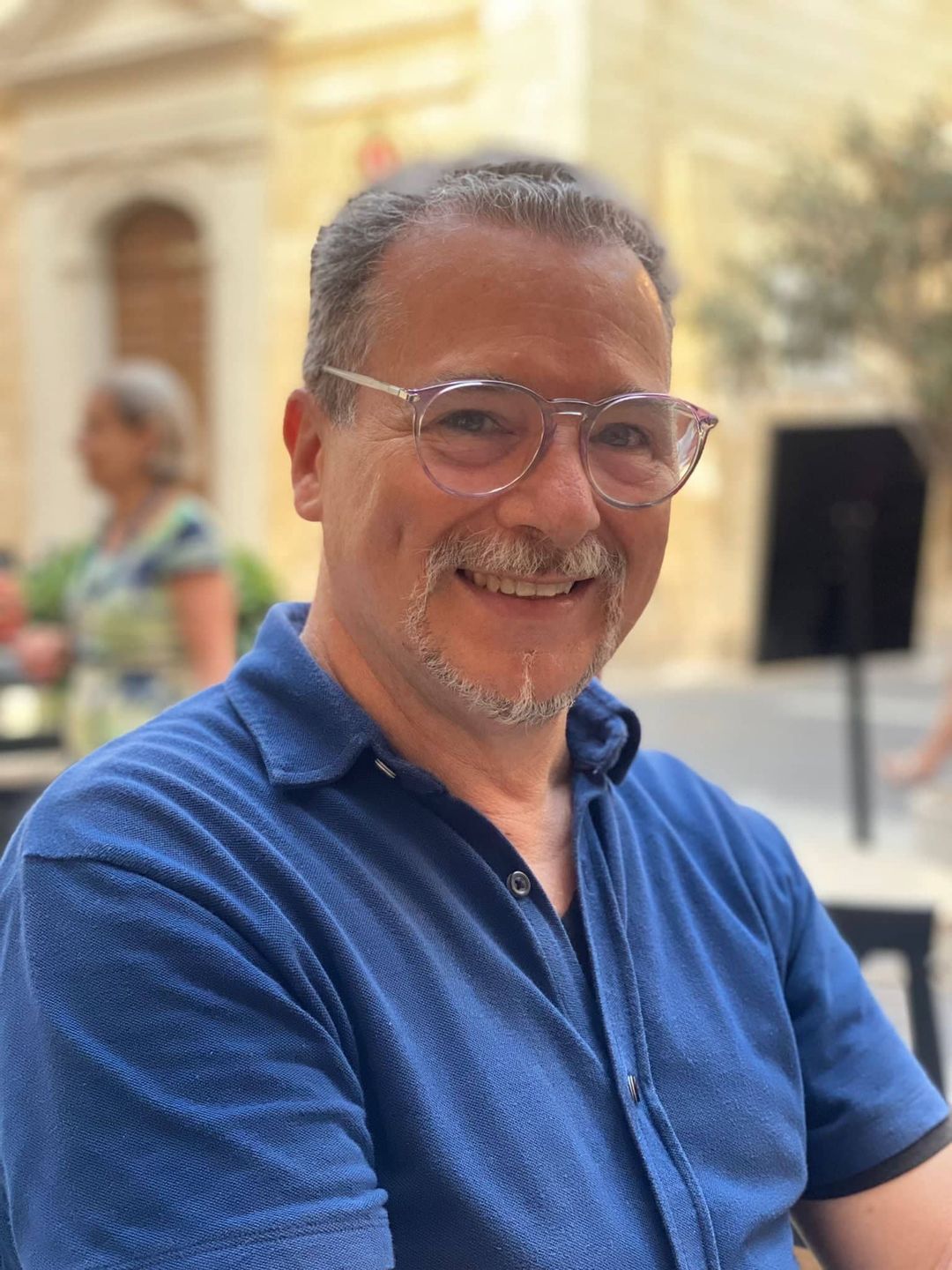
“I paint whenever I get the chance,” says Anthony Patrick Vella, who can be defined as a multifaceted artist. He was born in Malta and during his lifetime he has accomplished many works of art that are in harmony with those Christian values of love and solidarity which have always accompanied him. He is the father of two daughters aged 32 and 28, and is the husband of Maria Rita. For 28 years he has taught art and technical drawing, and till now continues to produce valuable artistic, architectural and interior design works.
“I was born in the main street of Valletta, the capital of Malta, which was built in the sixteenth century and therefore steeped in history. I grew up surrounded by baroque churches and numerous religious events. I also worked as an altar boy for many years. When I was 6 years old, I lost my father and as a result my mother had to fulfil both roles. To support the family, I remember that she would sew until two o’clock in the morning. My mother understood that I was gifted in art, and she sent me to an art school which, luckily, was just up the road from our house.”
Which of your works is the one you are most attached to, which means the most to you?
I would have to say the Adoration Chapel which is particularly close to my heart as a believer in the Catholic faith. It required creating a place for Jesus in the Eucharist, so that the space itself would be a small reflection of a great mystery. For example, there was a groove in the wall through which I wanted to express the link between the past and the present, the history, and therefore God in the past but also the living presence of Him among us today. I like the geometry which is found in the chapel which has a traditional Maltese background.
In New City Magazine (UK), in an interview published in April 2020, you declared that for you art “is an expression of humanity because we don’t live in a vacuum but together with others”. How do you concretely transfer this concept into your paintings?
I start off by speaking about myself: I have so many feelings, so many thoughts. It’s a two-step process: first I try to express what I feel within me, then I understand that it is a collective expression, also the result of the abundance of love I have received over the years. Materially I start to create the work, but I immediately perceive that it becomes something dynamic and greater than me. I can feel it. Apart from this, when I create I do not think but I act. I feel guided and I let myself be carried away.
Can you tell me how an inspiration to do a painting usually arises in you?
Lately I have been doing commissions so there is usually a “brief”, which is a specific request made by the client. But the peculiarity of a commissioned artwork is that it often begins with a phone call, and I personally visit the site; I look around at the space, but I also try to understand what the person who has contacted me has in their heart, so I try to express their desires, also asking which colours and shapes they like.
I become a sort of a chameleon in that situation: if my client prefers Baroque, then I embrace it too, but without changing that which is in my nature. I merge the client’s wishes with my own art preference which leans towards the modern. The result is that we collaborate on creating the work of art. When I am free then there are many things that inspire me. As an artist I come from a classical culture; these are my origins and they come to the surface when I’m sketching, for example, even if it’s design.
How long does it take on average to produce a work?
A long time, for many reasons. Work is one of them: during the week it’s complicated so I normally set aside Saturdays to work on my art. It usually takes me about a month to finish a job but it depends on its size. There are times when I’m free in the afternoon so I can devote myself more to my work. I realize how valid is the saying “God works in an hour”, because there are times when I produce a lot in a short space of time.
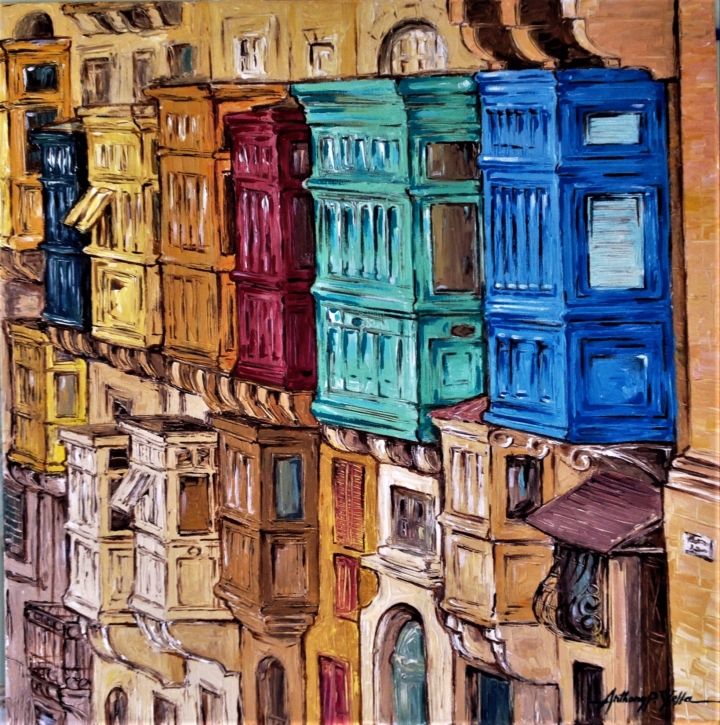
I think that the use of colours requires skill. For this reason, among your works, which are all very beautiful and engaging, I was particularly struck by “Strada Reale”. The description on your website says that the painting depicts some balconies in Valletta. Could you explain to me how it was born and why the choice to use these bright colours, which personally convey a lot of joy to me. Do they represent reality?
The inspiration was born because I lived in a street full of these balconies. In Valletta, many people used to paint their balconies in various colours and this always was struck me. However, I like to play with colours; I like them to be vibrant. I love the light of the sun, as it sets or rises, that reddish tone that it gives to things. These balconies with their colours remind me of my childhood; where I live now there aren’t any.
What was your path to becoming an artist, in the field of study, life and work experience?
In my education system, although it was rigid, there was “seniority”, that is, you passed the levels with practical experience in the field, which is a good thing because sometimes you can have many certificates and not be suitable for the job. After attending art school, I studied to become an assistant architect and architectural designer, and at the same time I attended courses at the “Art & Design Centre” in Valletta. Italian lecturers and industrial designers taught at this institute and their lessons were always very fascinating. Then I started working while also pursuing further studies.
I must admit that being part of the Focolare Movement has given me the opportunity to meet people from many walks of life, people who aren’t only focussed on the here and now. I was able to work well with many colleagues. Over time I have been an assistant architect, art director; I have done many things that have given me joy and satisfaction, I would not change anything, but this does not mean that there weren’t also some “bad moments”. When I was younger I sometimes had an existential crises; I questioned the meaning of life. But I overcame all that and found a happy environment in teaching, where in addition to the relationship built with the students, the relationship with my fellow teachers also enriches me a lot. I try to create dialogue and endeavour to be an apostle of unity.
The emergency situation in the disaster-hit regions of Pakistan, caused by excessive flooding due to severe torrential rains, cannot leave us indifferent especially since we’ve had the possibility of hearing about it first-hand through a Pakistani focolarina visiting Malta.
We had the opportunity to ask Rubina Ashiq about the situation and what our local Focolare communities are doing to respond to this crisis which is described as the worst in the country’s history.
Interview by Maria Bonnici
Rubina Ashiq
Rubina, thank you for being with us today to talk about something that for sure is very close to your heart at the moment. We know that Pakistan is often affected by floods, but what was different this time?
Pakistan is a huge country. It’s 3 times larger than Italy. About 65% of the population live in rural villages with the majority of the people working in subsistence agriculture. Most of these villages tend to be situated along the rivers, so when these floods arrive all the crops are destroyed along with the people’s livelihood.
This time round the floods were more severe due to heavier than usual monsoon rains and melting glaciers which followed a severe heat wave. More than 1,600 people have died since the rains started in mid-June 2022, and some 33 million have been displaced. 700,000 homes have been destroyed.
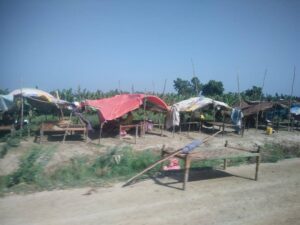
A disaster-stricken region
Entire villages were swept away and thousands of farm animals, such as buffaloes, were also carried away by the water currents. As floodwaters slowly recede, the sheer scale of damage will be revealed and it will be necessary to procure farm animals in order re-cultivate the fields.
These are the consequences. But the greatest problem is that Government services alone, as well as the armed forces which are also deployed, are not enough to reach people in affected areas in order to give the much needed help.
When a disaster like this happens, there is usually a boom in the international media. It grabs people’s attention as distressing images and videos are beamed around the world, but all this while people are dying of hunger or falling victim to illnesses caused by stagnant water – diarrhea, malaria, cholera, dengue fever. Around 3.4 million children are in need of assistance due to malnutrition. There are no hospitals nearby and medicines aren’t available.
The flood victims of Sanghar City and Chak waiting for help to arrive.
What is the Focolare doing to alleviate the suffering?
Most people in Pakistan respond to a crisis such as this. They don’t wait for the Government to do something. Even poor people start to collect clothes and food supplies in order to send to the disaster-stricken areas. They know it’s just a drop in the ocean but they want to help in a practical way. This is something really beautiful.
And this is why the Focolare Movement, through its local communities, has been able to do its part to help. The young people and the volunteers and other members of our Focolare community asked themselves: “What can we do?” A woman volunteer said: “I’m going to look through my whole house to see what I can donate. I’m ready to give even what I myself need.” So they organised themselves into groups and delivered the donated items to the Focolare Centre in Karachi for distribution to those in need.
The Focolare is four hours away by car from the flood-affected zones and the men and women focolarini have been personally delivering food supplies, safe drinking water, medical supplies and hygiene kits. Food collection points and a medical camp have been set up.
One evening, in the Focolare here in Malta, we too asked ourselves, “What can we do?” We wanted to show our solidarity so that the community here in Malta could say, “We’re thinking of you and praying for you.” We wanted to share in their suffering.
Word got around quickly and soon a number of donations and gestures of kindness arrived at our door! We thank everyone for their generosity and solidarity. The donations received will be sent directly to the Focolare in Karachi as they best know where the urgent needs lie.
Rubina, do only Christian communities in Pakistan benefit from this emergency aid?
In actual fact the majority of the people affected by these floods are our Muslim brothers and sisters. Even the local Church has been putting schools and halls at their disposition. Many people we know have been opening up their houses in order to give them hospitality. A Focolare member who is a Christian welcomed fourteen Muslims in his house! And this is a beautiful witness.
We try not only to give them food and clothes but also to let them know that we are close to them in their suffering, that we understand their situation. Even people who were wealthy have lost everything. Some don’t even know the whereabouts of family members. They too lost elderly parents, children, cattle. A flood spares no-one in its path; all people are affected irrespective of their social status or religious affiliation.
How did the Focolare Movement’s international networks become aware of this situation?
Julia and Alessandro, who are responsible for the Movement in Rawalpindi, wrote this heartfelt appeal to Margaret Karram, President of the Focolare Movement:
“(…) While the Focolare Centres and the vast majority of our close members have not been directly affected by the floods, with a few exceptions, there are seriously affected areas around 4 hours away from us which we are trying to reach. Displaced people have started to arrive in the cities where we live, and so reception camps are being organised. So many Church group volunteers are there on the ground giving help, including priests and nuns.
We as Focolare Movement feel that we too should act concretely to reach out and embrace the pain of our brothers and sisters, to love the suffering Jesus in them, also by collaborating with other associations. Everyone is taking action: our young people, the volunteers, the families. We talked about it during the meetings of the local communities to understand what steps to take. It is not easy to act, due to innumerable difficulties, but people have come forward to help because of their knowledge and experience helping the flood victims in 2010. We are in contact with the bishops and with Caritas who are mobilising aid throughout the country.
Each day we receive requests from communities who are without food and shelter. The list of urgent needs is endless. In order to meet these demands, we are counting on the generosity of all those who can offer some financial help in order to help our people (…)”.
And the response from Margaret Karram was immediate: “We assure you that the Focolare Movement worldwide will do everything that is possible to provide relief.”
In fact a fund-raising campaign was immediately launched on the website of AMU (Action for a United World) as well as the Focolare Movement’s international website www.focolare.org.
Anyone wishing to contribute to this emergency fund can do so by visiting these websites.
M. Bonnici (Focolare Movement Malta)
Focolare Movement’s Annual Report 2020-2021
The Focolare Movement has published a comprehensive Annual Report for the period 2020-2021 detailing its works and activities throughout the year.
For the first time ever, the Focolare Movement is publishing a mission balance sheet and has decided to do so in the light of this period of crisis and uncertainty that bears the aftermath of the pandemic and the open wounds of the many conflicts around the world. But it is precisely when the greatest and most common problems appear that a feeling of true fraternity and solidarity seems to emerge between people.
Therefore, rather than being a simple report, this Balance Sheet of Communion aims to give the reader an explanatory narrative of the actions and interventions of the Focolare Movement, highlighting what unites and what still needs to be improved. The Balance Sheet places particular emphasis on the key element that is evident from the name itself: communion.
The lifestyle proposed by the Movement, in fact, is based on the choice of putting love into practice which is rooted in the Gospel. A love that – as the founder of the Focolare Movement Chiara Lubich (1920-2008) said – means loving everyone, being the first to love, “getting into the skin of the other”, in such a way that this love extends until it becomes reciprocal, until it reached the point of becoming communion.
In this perspective, the document aims to highlight the effects of communion itself, of what one has and is, in a voluntary and free sharing. At the same time it seeks to make of itself an instrument that opens up dialogue and communion, as President Margaret Karram said in her introductory speech:
“It is with these sentiments that I wish to offer it to you all so that it too can become an instrument of dialogue, to build bridges and spread a culture and the practice of fraternity. It is so close to my heart that we may learn to live this communion, this exchange better and better, in a relationship of reciprocity that makes us sisters and brothers and promotes an authentic family where diversity enriches us and binds us in a harmonious unity”.
The text is being translated into other languages and will be published soon.
Focolare zone delegates meeting opens with message from Pope Francis
In addition to the joy of being together again in person after the pandemic, an unexpected and affectionate greeting from Pope Francis has arrived to those with overall responsibility for the Focolare Movement around the world, who are meeting in Rome from 10th to 23rd September.
“I am grateful for so much good news. I am close to you personally, and to all of you. I assure you of my prayers, please pray for me too.”
These were the Pope’s words in reply to a letter from Margaret Karram, President of the Focolare Movement, with which she chose to open the meeting of those responsible for the Focolare Movement in the world, together with its General Council.
The President told the 104 people at the meeting that a few days ago she had felt urged to write to the Pope, to thank him for his constant closeness to her and to the Movement, hoping to give him joy. In her letter dated 6th September, among other things, she told the Pope: ‘A year and seven months have passed since I was elected President, and I confide in you that it has been a very demanding time with many challenges to be faced and many decisions to be made. I have understood more and more your words referring to the ‘pruning’ which is necessary for growth and, as I renewed my choice to embrace Jesus crucified and forsaken in this pruning, I perceived that I became more humble, I felt greater hope, and that my unity with you, Your Holiness, was ever stronger, together with the certainty that God is at work.
At the same time, I witnessed a great fruitfulness and, in individuals and communities, I witnessed steps in spiritual growth being taken. I also saw greater care for the ‘least,’ and many tangible actions to help those who suffer the most’. Margaret concluded by assuring the Pope of the prayers of everyone in the Movement.
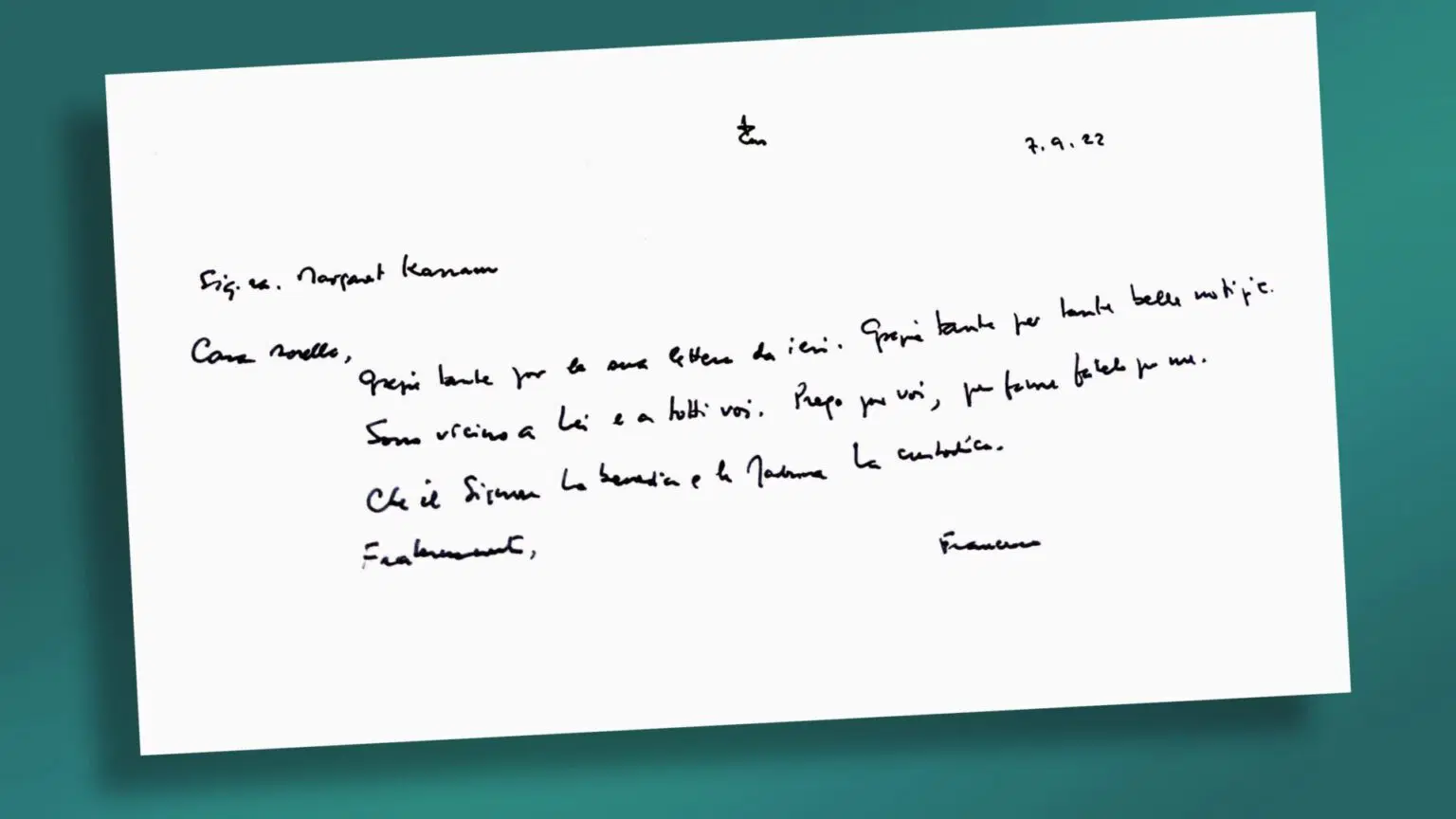
She was very surprised when the following day she received this handwritten reply from Pope Francis:
7.9.22
Ms Margaret Karram
My dear sister,
Thank you very much for your letter to me yesterday. I am grateful for so much good news.
I am close to you personally, and to all of you. I assure you of my prayers, please pray for me too.
May the Lord bless you and may Mary protect you.
Fraternally,
Francis
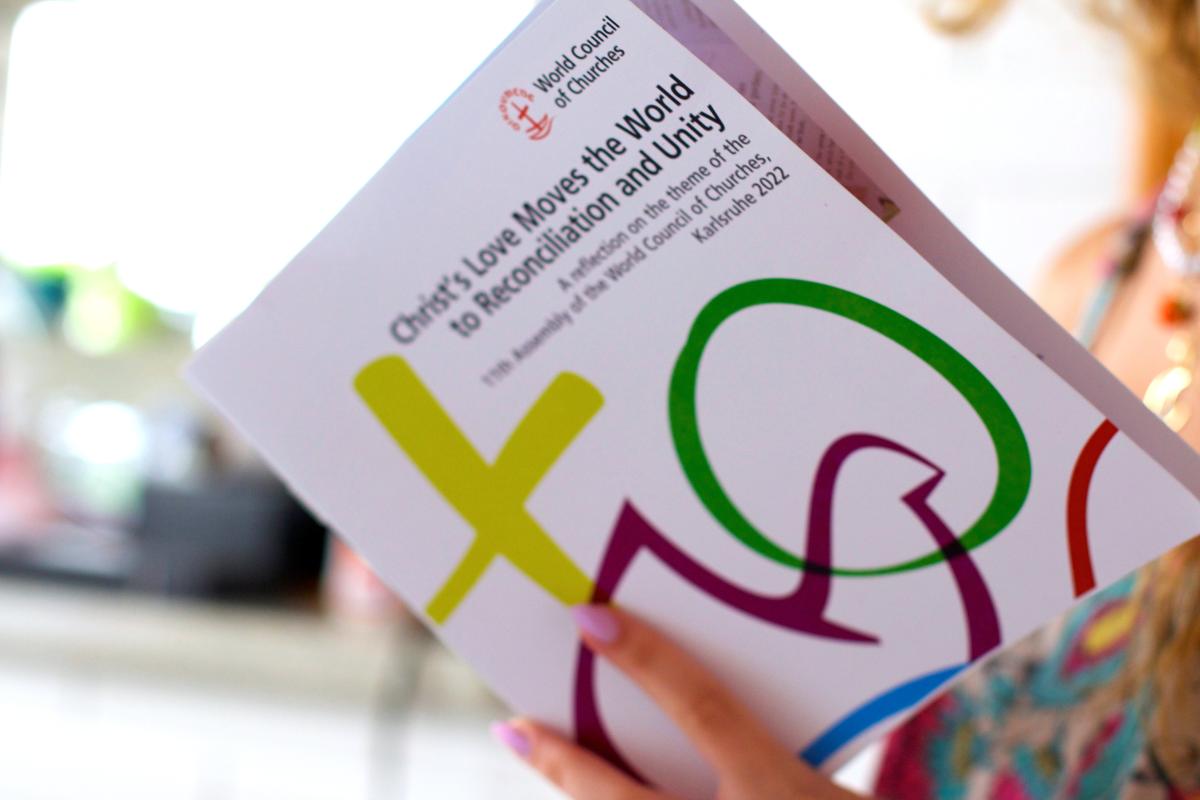
11th Assembly of WCC: Dialogue as a lifestyle
The 11th Assembly of the World Council of Churches runs from 31 August to 8 September 2022 in Karlsruhe, Germany. The Focolare Movement has long been linked to the WCC by ties of friendship and collaboration, which continue in this latest Assembly.
In a world torn apart by conflicts, afflicted by a pandemic which has widened inequalities, overwhelmed by an unprecedented climate crisis, characterized by scientific and technological innovations which often create new disparities between people and regions of the world, does it make any sense to speak of unity? And, if so, what contribution can Christians make to achieve it?
These fundamental questions will be at the heart of the 11th Assembly of the World Council of Churches, taking place at Karlsruhr, Germany from 31 August to 8 September 2022. The Assembly, the highest governing body of the World Council of Churches, is normally convened every eight years. 352 Churches now belong to the WCC, in 110 countries, representing around 500 million Christians. The Assembly will gather around 4,000 participants from all around the world.
For Christians, unity is the fulfilment of Jesus’ prayer “that they may all be one” (John 17:21), words which inspire confidence in the Assembly’s title: “Christ’s love moves the world to reconciliation and unity”. The work of the Assembly springs from reflecting on the great challenges of the planet which have revealed such vulnerability, as well as ethnic, economic and social divisions and injustices. But which have also highlighted the interdependence of individuals and peoples; the responsibility we have towards others in a world in which no-one can save themselves on their own. In this context, the Christian Churches are gathering together for prayer and celebration, for reflection and action. It’s an opportunity to deepen their commitment to dialogue, visible unity and common testimony.
Alongside the official delegates’ program are around 100 workshops and stands hosted by various Churches, Communities and Institutions, including the Focolare Movement sharing its own wide-ranging experience of dialogue. The Focolare stand will be supported throughout the Assembly by the team of “Centro Uno” (which coordinates the ecumenical activity of the Focolare internationally), with Focolare members from Germany, Switzerland, Ireland and Romania. On 5 September at 17:00, they will host a workshop on “Dialogue as a lifestyle: methodology and practice”, offering an experience of dialogue between Christians of different Churches, and between Christians and Muslims. A dialogue involving maximum respect of each one’s identity, prioritizing the engagement of theory with life.
The World Council of Churches came into being on 23 August 1948, originally with 147 member Churches. Its principal aim to enable dialogue as the way and characteristic of authentic Christian life. The Focolare Movement’s links with the WCC go back to 1967 when Swiss Reformed theologian Lukas Vischer invited Chiara Lubich to Geneva. On her third visit, in 2002, Chiara also visited the WCC’s Ecumenical Institute at Bossey. WCC General Secretary Rev. Prof. Ioan Sauca has, on more than one occasion, referred to the importance to the Institute of that meeting with Chiara Lubich and her clarity in addressing the often challenging relationship between identity and unity.
Anna Lisa Innocenti (Focolare Media Office, Rome)
European Mariapolis – Madrid 2022
The European Mariapolis 2022 was held from 24 to 28 July. The event, entitled A Path to Peace, was held at the Mariapolis Luminosa Centre (Las Rozas de Madrid) and brought together almost 200 participants, with a high percentage of young people and representatives from different European countries: Great Britain, Germany, Holland, Belgium, Malta, Portugal, Italy and, of course, Spain.
Some online connections made it possible to welcome in the auditorium, virtually, but with warmth and participation, other contemporary Mariapolis in Portugal, Italy, and Slovakia, where was present a large group of refugees from Ukraine.
The aim of this Mariapolis has been to strengthen the links between the different peoples of Europe, starting from the citizens and civil society, in order to make a real contribution to the fraternity of the continent and to peace.
A series of round tables, dialogue, workshops, sharing of testimonies, trips, and musical and recreational moments, took us all on an inner journey, building relationships of Peace with the help of the great Spanish mystics: St. Teresa of Jesus and St. John of the Cross, as well as Chiara Lubich, founder of the Focolare Movement. The title of the Mariapolis was “Journeying from the Inner Castle to the Exterior Castle”. The Archbishop of Madrid, Carlos Osoro, said after his time spent in the Mariapolis that this motto is “revolutionized by the putting the Gospel into practice”. The inner spiritual life is defined by St. Therese as the Inner Castle. The experience the mystics bring to us is that God dwells within us and in our midst. Chiara Lubich said in one of her meditations: “Here is the great attraction of modern times: to penetrate to the highest contemplation while mingling with everyone, one person alongside others”. Chiara refers to this as the Exterior Castle.
“Look how they love each other…”, is the expression that best reflects the experience of these days, as is said of the first Christian communities,” commented a young man from Oviedo, recently ordained deacon. And then he added: “I have been convinced, through concrete, everyday events, that this has nothing to do with the running of a company, but with the life of a family”.
The testimonies gave a strong ecumenical dimension, such as that of Wim and Elma from the Evangelical Church in Holland; also inter-religious openness through Mardía, a Sufi Muslim, accompanied by her family; the concrete commitment to an integral ecology; the responsibility to build a United Europe evidenced by the Project Europe underway in Brussels with the collaboration of people from Eastern and Western Europe, a journey also highly appreciated by Luis Manuel Romero, Director of the Episcopal Commission for the Laity, Family, and Life of the EEC.
The video of Dr M. A. Shomali, Director and founder of the International Institute of Islamic Studies in Qom (Iran), summed up the meeting as having been a multi-coloured mosaic that filled all those present with hope: “Each one of us is like a tile, which together with others builds universal peace. May God be with you!”
 Andrea Riccardi, historian and Founder of the Community of Sant’Egidio, said, “This document highlights the effects of this communion, of what we have and what we are, in a voluntary and free sharing. And to some extent the more communion there is, the less the effects can be controlled but perhaps the more the Gospel is lived. The Focolare Movement, which has spread silently in many countries of the world, is like a network in society and in the Church, that protects the earth from landslides. We are in a time of human, ecological and religious unease and then there is this network of friendship in the world and here I insist on the value of unity, but a unity that is rooted in so many places in the world, has a much greater value”.
 “Lejn Dinja Magħquda” (Towards a United World) was the title of the “Focolare Open Day” held in Malta on 6 November 2022.
 The goal “towards a united world” was kept in mind for the format of each workshop. It was wonderful to see adults, young people and children working together in the various groups. This in itself was a tangible witness to building a sense of family among everyone.
 “The program was well prepared and responded to today’s needs. Everyone enjoyed the activities. I took part in the spirituality workshop and the brief reflections and personal stories that were shared during the session were very profound.”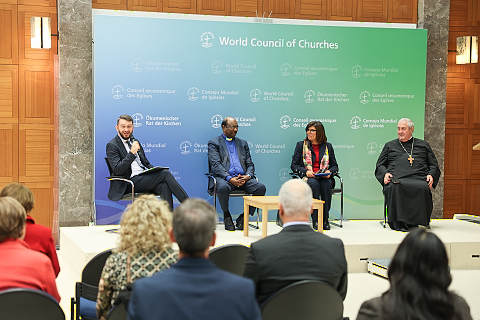
 I start off by speaking about myself: I have so many feelings, so many thoughts. It’s a two-step process: first I try to express what I feel within me, then I understand that it is a collective expression, also the result of the abundance of love I have received over the years. Materially I start to create the work, but I immediately perceive that it becomes something dynamic and greater than me. I can feel it. Apart from this, when I create I do not think but I act. I feel guided and I let myself be carried away.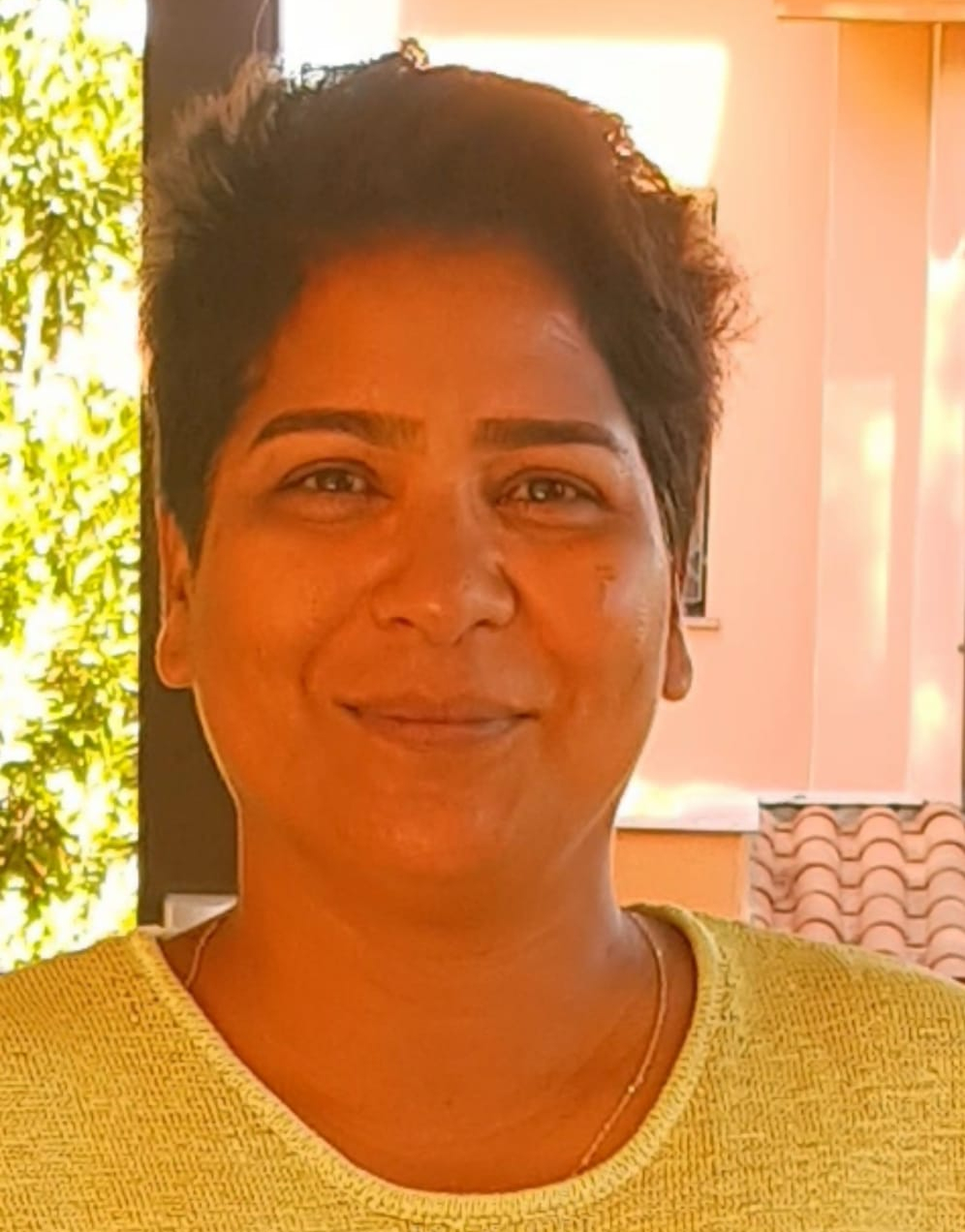
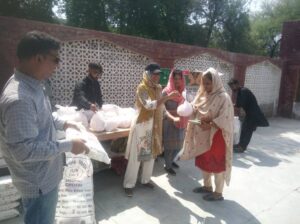
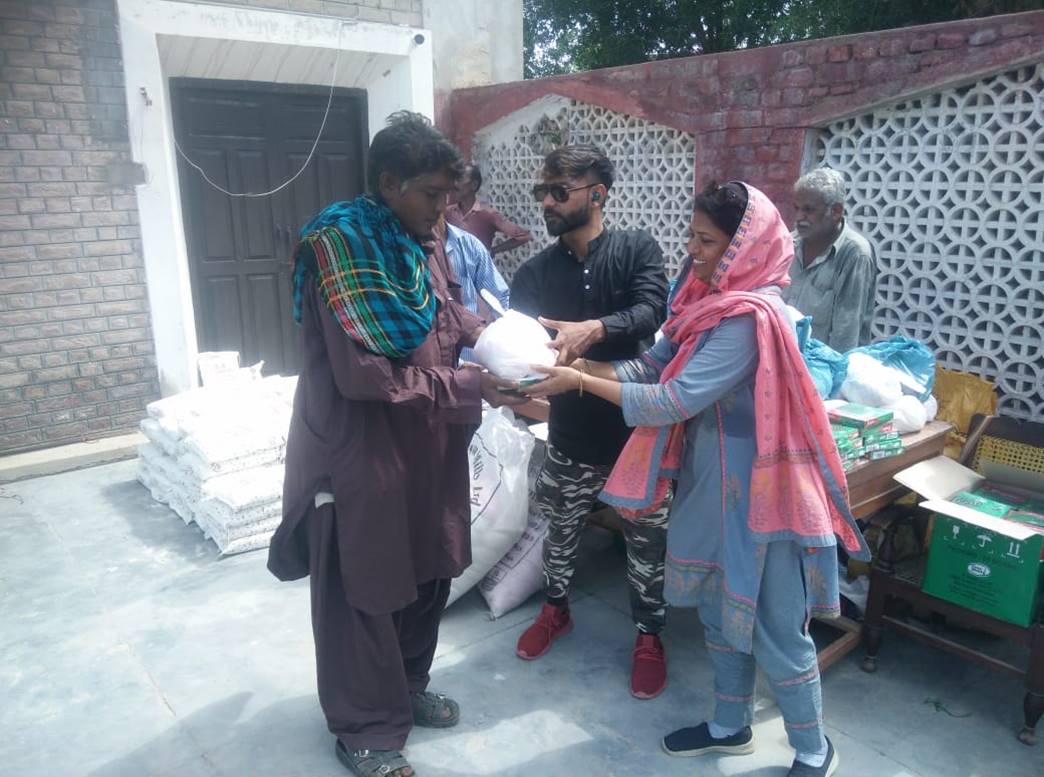 The Focolare is four hours away by car from the flood-affected zones and the men and women focolarini have been personally delivering food supplies, safe drinking water, medical supplies and hygiene kits. Food collection points and a medical camp have been set up.
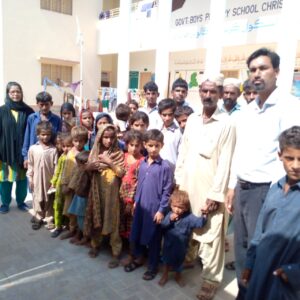 Rubina, do only Christian communities in Pakistan benefit from this emergency aid?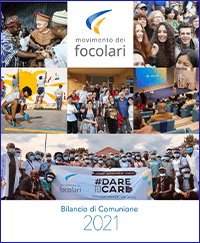
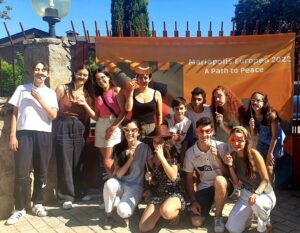 The European Mariapolis 2022 was held from 24 to 28 July. The event, entitled A Path to Peace, was held at the Mariapolis Luminosa Centre (Las Rozas de Madrid) and brought together almost 200 participants, with a high percentage of young people and representatives from different European countries: Great Britain, Germany, Holland, Belgium, Malta, Portugal, Italy and, of course, Spain.