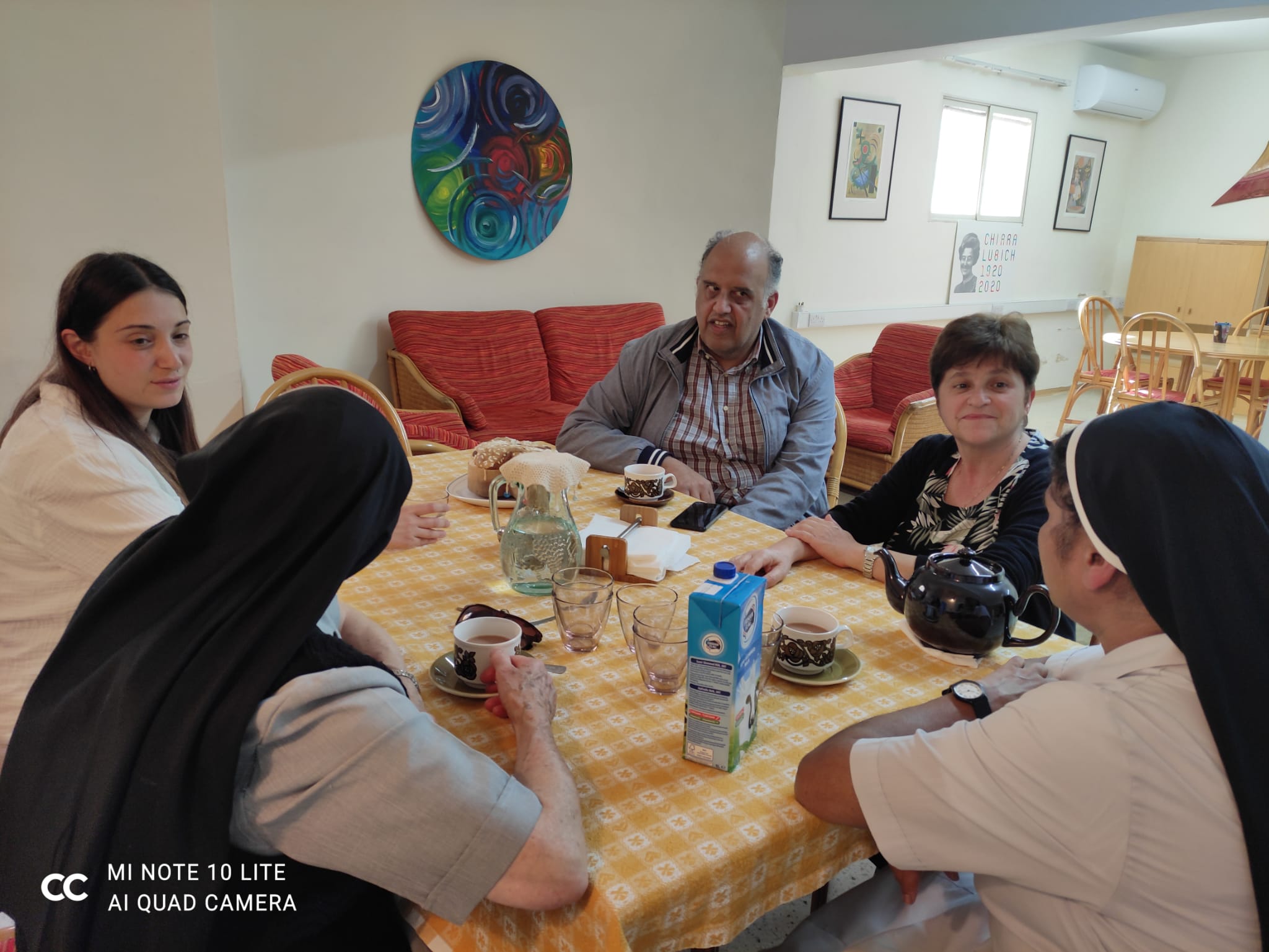
As part of United World Week activities, the collection of goods for the Dare to Care initiative was donated to the Daughters of the Sacred Heart. This religious community was founded in Malta in 1903, and is now also present in India, Kenya, Tanzania, Uganda, Philippines, Italy and USA.
Today we met with Sister Carmelina and Sister Tessie. We had a beautiful moment where they shared their experience working in their home in Zurrieq, where they currently host six boys. They also spoke about their work with children across the island. Then we shared with them the various initiatives held during the United World Week and their main aim. We explained that this year’s events focus mainly on social and environmental ecology.
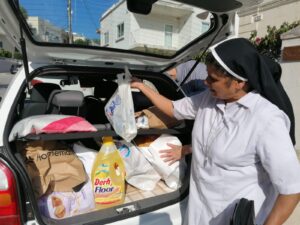
During this meeting we appreciated reciprocally the work done by both entities. It was an enriching experience. At the end of the meeting, we helped the Sisters to load their car with the goods collected during this month’s Dare to Care’s Initiative. They left Kappara with a car jam packed with goods for the children. Next time it will be our turn to visit them in Zurrieq!
Dare to Care team (Malta)
United World Week 2023: Focus on those in need
Dare to Care collection on Saturday, 29th April. This time round it will be held in aid of the St Theresa Home in Nigret, Zurrieq. Please note that the goods will be distributed as part of the United World Week activities during the first week of May.
The Home hosts a number of children aged between 1 to 5 years and unfortunately the Sisters do not always manage to meet the home’s and children’s needs. Please find below the list of food & other items they would require for their service users:
Pakistan: Solidarity in action
The emergency situation in the disaster-hit regions of Pakistan, caused by excessive flooding due to severe torrential rains, cannot leave us indifferent especially since we’ve had the possibility of hearing about it first-hand through a Pakistani focolarina visiting Malta.
We had the opportunity to ask Rubina Ashiq about the situation and what our local Focolare communities are doing to respond to this crisis which is described as the worst in the country’s history.
Interview by Maria Bonnici
Rubina Ashiq
Rubina, thank you for being with us today to talk about something that for sure is very close to your heart at the moment. We know that Pakistan is often affected by floods, but what was different this time?
Pakistan is a huge country. It’s 3 times larger than Italy. About 65% of the population live in rural villages with the majority of the people working in subsistence agriculture. Most of these villages tend to be situated along the rivers, so when these floods arrive all the crops are destroyed along with the people’s livelihood.
This time round the floods were more severe due to heavier than usual monsoon rains and melting glaciers which followed a severe heat wave. More than 1,600 people have died since the rains started in mid-June 2022, and some 33 million have been displaced. 700,000 homes have been destroyed.
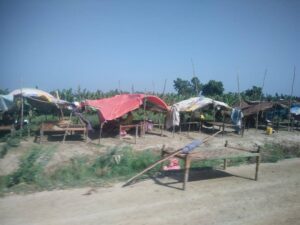
A disaster-stricken region
Entire villages were swept away and thousands of farm animals, such as buffaloes, were also carried away by the water currents. As floodwaters slowly recede, the sheer scale of damage will be revealed and it will be necessary to procure farm animals in order re-cultivate the fields.
These are the consequences. But the greatest problem is that Government services alone, as well as the armed forces which are also deployed, are not enough to reach people in affected areas in order to give the much needed help.
When a disaster like this happens, there is usually a boom in the international media. It grabs people’s attention as distressing images and videos are beamed around the world, but all this while people are dying of hunger or falling victim to illnesses caused by stagnant water – diarrhea, malaria, cholera, dengue fever. Around 3.4 million children are in need of assistance due to malnutrition. There are no hospitals nearby and medicines aren’t available.
The flood victims of Sanghar City and Chak waiting for help to arrive.
What is the Focolare doing to alleviate the suffering?
Most people in Pakistan respond to a crisis such as this. They don’t wait for the Government to do something. Even poor people start to collect clothes and food supplies in order to send to the disaster-stricken areas. They know it’s just a drop in the ocean but they want to help in a practical way. This is something really beautiful.
And this is why the Focolare Movement, through its local communities, has been able to do its part to help. The young people and the volunteers and other members of our Focolare community asked themselves: “What can we do?” A woman volunteer said: “I’m going to look through my whole house to see what I can donate. I’m ready to give even what I myself need.” So they organised themselves into groups and delivered the donated items to the Focolare Centre in Karachi for distribution to those in need.
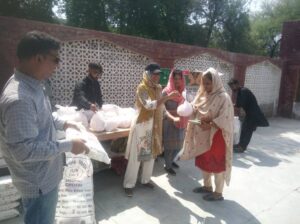
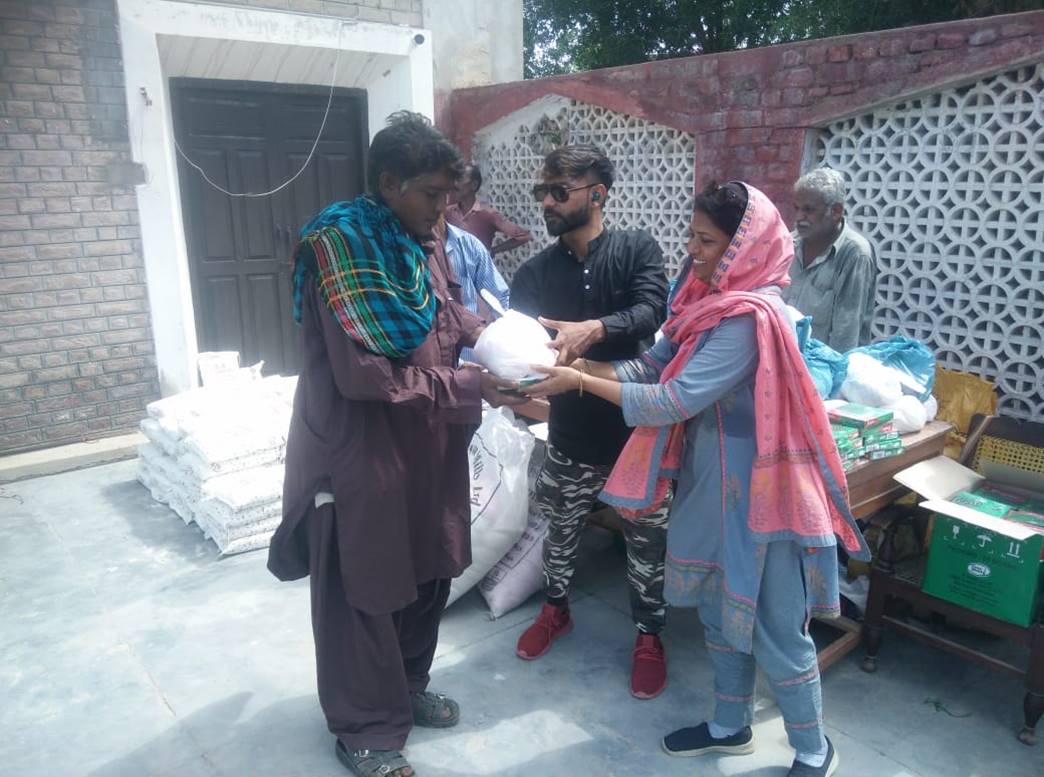
The Focolare is four hours away by car from the flood-affected zones and the men and women focolarini have been personally delivering food supplies, safe drinking water, medical supplies and hygiene kits. Food collection points and a medical camp have been set up.
One evening, in the Focolare here in Malta, we too asked ourselves, “What can we do?” We wanted to show our solidarity so that the community here in Malta could say, “We’re thinking of you and praying for you.” We wanted to share in their suffering.
Word got around quickly and soon a number of donations and gestures of kindness arrived at our door! We thank everyone for their generosity and solidarity. The donations received will be sent directly to the Focolare in Karachi as they best know where the urgent needs lie.
Rubina, do only Christian communities in Pakistan benefit from this emergency aid?
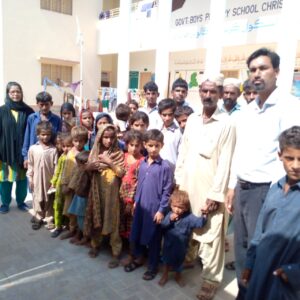
In actual fact the majority of the people affected by these floods are our Muslim brothers and sisters. Even the local Church has been putting schools and halls at their disposition. Many people we know have been opening up their houses in order to give them hospitality. A Focolare member who is a Christian welcomed fourteen Muslims in his house! And this is a beautiful witness.
We try not only to give them food and clothes but also to let them know that we are close to them in their suffering, that we understand their situation. Even people who were wealthy have lost everything. Some don’t even know the whereabouts of family members. They too lost elderly parents, children, cattle. A flood spares no-one in its path; all people are affected irrespective of their social status or religious affiliation.
How did the Focolare Movement’s international networks become aware of this situation?
Julia and Alessandro, who are responsible for the Movement in Rawalpindi, wrote this heartfelt appeal to Margaret Karram, President of the Focolare Movement:
“(…) While the Focolare Centres and the vast majority of our close members have not been directly affected by the floods, with a few exceptions, there are seriously affected areas around 4 hours away from us which we are trying to reach. Displaced people have started to arrive in the cities where we live, and so reception camps are being organised. So many Church group volunteers are there on the ground giving help, including priests and nuns.
We as Focolare Movement feel that we too should act concretely to reach out and embrace the pain of our brothers and sisters, to love the suffering Jesus in them, also by collaborating with other associations. Everyone is taking action: our young people, the volunteers, the families. We talked about it during the meetings of the local communities to understand what steps to take. It is not easy to act, due to innumerable difficulties, but people have come forward to help because of their knowledge and experience helping the flood victims in 2010. We are in contact with the bishops and with Caritas who are mobilising aid throughout the country.
Each day we receive requests from communities who are without food and shelter. The list of urgent needs is endless. In order to meet these demands, we are counting on the generosity of all those who can offer some financial help in order to help our people (…)”.
And the response from Margaret Karram was immediate: “We assure you that the Focolare Movement worldwide will do everything that is possible to provide relief.”
In fact a fund-raising campaign was immediately launched on the website of AMU (Action for a United World) as well as the Focolare Movement’s international website www.focolare.org.
Anyone wishing to contribute to this emergency fund can do so by visiting these websites.
M. Bonnici (Focolare Movement Malta)
Chiara Lubich: A harmonious relationship with nature
The 4th of October, feast of St Francis of Assisi, the patron saint of ecology, was the concluding day of the “Season of Creation”, the annual celebration of prayer and action for our common home. Together the various Churches and ecclesial communities around the world unite to protect and defend creation. Chiara Lubich invites us in this writing to have the right relationship with the environment.
(…) Proposals are being made from many quarters to heal our sick world. (…) Young people are particularly sensitive to this issue and feel the need for radical changes in our relationship with the environment, in the relationship between individuals and states, and in the application of scientific knowledge. They also realise that environmental protection and peace-building are only possible if practised on a global scale. They are convinced that to reach the ideal of a united world, the primacy of people over science and technology must be highlighted. …
This means making a practical contribution, even a small one, to solving major problems. Our young people have understood this and have already started various initiatives that express a personal and collective ecological awareness in many respects, for example in the purchase of products that do not have a negative impact on the environment, in removing waste that pollutes the environment and in all choices that derive from a deep respect for nature.
It is by starting with small local problems that a moral conscience is formed, which can then tackle problems on a global scale. After all, ecology is a challenge that can only be met by changing mind-sets and forming consciences.
Many in depth scientific studies have shown that there is no lack of technical and economic resources to improve the environment. What is missing, however, is the additional mindfulness, a new love for humanity, that makes us all feel responsible for everyone, in the common effort to manage the earth’s resources in an intelligent, just and moderate way. Let us not forget that God the Creator has entrusted the earth to all men and women, and not just to one people or one group of people. The distribution of goods in the world, aid to the poorest nations, solidarity between North and South and between rich and poor is the other side of the ecological problem. …
The Bible, in its account of creation, teaches us that only in harmony with God’s plan do nature and human beings find order and peace. If people are not at peace with God, the earth itself is not at peace. …
If we discover that all creation is a gift from a Father who loves us, it will be much easier to find a harmonious relationship with nature.
At the same time if we also discover that this gift is for all members of the human family, and not only for some, we will be more careful and respect something that belongs to the whole of humanity, present and future.
Chiara Lubich
(Letter from Chiara Lubich to Nikkyo Niwano, founder of the Buddhist organization Risshō Kōsei Kai – 1990, in POLI, R. e CONTE, A., Vita, salute, ambiente tra speranza e responsabilità, [Life, health, environment: between hope and responsibility] Cittá Nuova, Roma, 2021, pp. 32-34)
Interview with Glenn Bugeja on the Dare to Care Project
Sandra Cortis interviews Glenn Bugeja, one of the main protagonists of the “Dare to Care” project in Malta
Focolare Centre, Kappara, 24 September 2021
Interviewer: Sandra Cortis
Sandra Glenn, thanks for coming this afternoon to share your experience of Dare to Care with our community in Malta. I thought maybe you can share certain with us experiences of this project.
Glenn Thank you for this opportunity. As you mentioned the Covid situation made us think how we can continue living concretely the Gospel. At that particular time there were a lot of requests from various NGOs asking for food, and a lot of food banks were being set up so we thought it was the right opportunity even for us to give a lending hand.
So we started with started with monthly collections among our people, but which were then extended to relatives and friends, and contacts, where we were collecting food for one particular NGO a month. We were choosing the last Saturday of the month. We used to send a notice to our people. We would also contact the NGOs and tell them that we are going to do a collection for their NGO, for their service users and asked them what they needed, for example there were NGOs that needed toiletries rather than food, because they had received quite a lot of food the previous month.
So there was also this opportunity to create this relationship and contact with these various NGOs. Then we invited the members of the Movement, and also their relatives and friends, to bring over the items at our Focolare Centre and we also used to invite them to come over. It was an opportunity also to get to know them, for them to get to know us. That was it.
Some who were suggesting “But why don’t you do it bi-monthly?” But we insisted that it was the right opportunity to continue doing it month after month, and it was always a success; month after month it was always a success.
Sandra
Good. Individuals reached out in several way to the needs of the community apart from the food collection. I personally believe that the sharing of good practices helps a lot and gives a ray of hope; it encourages us when we hear of others, what’s happening, what one is doing. How was this translated to the community, to us Maltese who are citizens?
Glenn Yes, as you mentioned, our people were ready to help in all ways and means. I remember one particular experience of one of our volunteers who gave her second home to a person who had met her on the bus stop. This particular person needed a house where to stay, because she was forced out by her previous tenant, and this volunteer gave her her house and I questioned myself, “Am I ready to do this?” And as I was mentioning our people tried to support in all ways and means and we were recounting these experiences, sharing them on our website and we also created a Dare to Care page where we were sharing the best practices amongst our people.
Sandra I’m sure the Webinar was the result of all the collaboration and the relationships which we have built throughout this year in particular. Maybe you can share with us?
Glenn When we were discussing what activity to do for United World Week – this time round it was with the theme of Dare to Care – we had the idea of holding a Webinar, an exchange Webinar between those NGOs that had benefitted from our action, of the food collection, came to our mind. So we invited all the NGOs with whom we had worked in the past and we invited them for an exchange. We gave them the opportunity to present themselves, to present the work they are doing and also recount how we helped them with our donation. It was a good opportunity for our people to get to know more these NGOs, all the brilliant work that they are doing, but it was also an opportunity for these NGOs to get to know more each other and also to see how we can collaborate together.
They were very grateful for our donations, even for contacting them, for asking them what they need in particular, because as I mentioned before, we were paying attention to give them the right things for their service users. And they showed this gratitude in many ways, especially by posting on their Facebook pages, or on their social media channels, letters of appreciation for our collection, including photos of the collections that we made. And even the last collection we made was very much appreciated by a particular NGO and also told that many families that were hit by Covid are still benefitting from the donations that we are giving through these monthly contributions.
Sandra So, it seems that we have experienced the reality of the Gospel of sharing and giving concrete love to our neighbours in need.
Glenn I’ll just quote one line from this particular NGO who said: “St Vincent de Paul says that the poor are the icon of Christ. And Pope Francis says that the poor are the veritable face of the invisible God.”
I think this says it all, so I conclude with this line!
Sandra Thanks Glenn for all this sharing and I would like to thank all the community for their concrete love.
From the sharing of material goods to offering spiritual and emotional support, all efforts seem a drop in the ocean of the Covid-19 tragedy in India. Yet local communities continue to go ahead with faith in God and mutual trust.
“It has been exactly one week since we tested positive. We are not looking up any information on the Internet and we are not allowing ourselves to watch the news or complain about anything. We are taking it one day at a time. Getting better. Your prayers, messages, good wishes and food full of warmth have continued to give us strength and we can feel the closeness and support of each and every one of you. We continue to offer thanks for the smallest blessings we have been given.”
This WhatsApp message shared by a family from the Focolare community in Mumbai has been a ray of hope and courage in these dark times. Not a day goes by without receiving news of the death of colleagues, friends and sometimes even family members. This is in addition to the constant reminders through all the media of collapsing systems and families unable to assure dignity for their sick or deceased loved ones.
With a population of 1.3 billion people, a high rate of cases was expected in India. For a whole year, until last April, the country managed to curb the spread through various measures, from strict lockdowns to contact tracing and mass vaccinations. But now the situation is worsening daily, as the virus mutates in various parts of the country and the public health system struggles to keep up with an unprecedented demand for medicines, oxygen and ventilators.
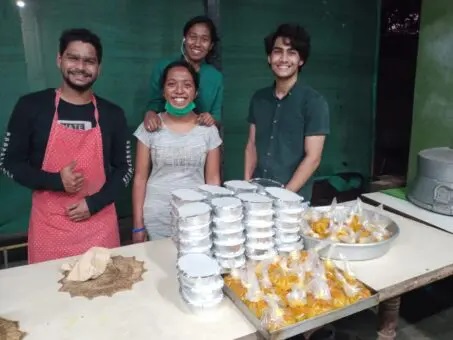
During the pandemic, the Focolare community has worked tirelessly and relaunched a nationwide communion of goods to show solidarity and offer financial help to those who have lost their jobs or need funds for daily provisions. The Focolare’s Udisha project in India has been able to reach out to nearly 80 families in some of Mumbai’s low-income communities, providing them with food, medicine, school fees, books, house rent, electricity bills, etc. Amidst the raging second wave, some young people continue their work for the #DaretoCare project by serving home-cooked meals to the homeless once a fortnight.
With the aim of saving lives, much of the effort and energy of the Focolare communities is now focused on health care. When an urgent request came from the Holy Family Hospital in Mumbai for oxygen concentrators for their 160-bed Covid ward, the community quickly found sponsors for two machines and is now looking for more.
As the second wave continues to hammer home its full force, the Focolare families have felt the need to support each other more closely and have begun to connect daily to pray together for half an hour, finding much needed support in the pain, helplessness and even loneliness of some. As in the early days of the Movement, when the community in Trent (Italy) discovered that God is Love even in the raging of the Second World War, online prayer with the Indian community is becoming a powerful way of expressing their being one family, all equal and united in God’s love.
Annabel Dsouza from Mumbai, India
I understood in a new way God’s great love for us
One of our friends, from the Fratenity of Charles de Foucauld, relates:
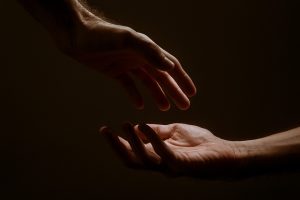
“It was quite early in the morning when I heard the phone ringing. When I answered, I found that it was one of the Jesuit fathers asking for my help as a nurse; two fathers in his community were tested positive for the corona virus. That night before I went to bed, I asked Jesus to make use of me according to His will. He was quick in answering my prayer. And as in reality there was nothing to hold me back, I could respond to his call; I felt that at this time of the pandemic I had to put aside my aches and pains and help to ease the suffering of those around me. Although some family members were not very happy about my decision as they were afraid of the danger caused by the virus, I started going to this community to give my help.
I found out that help was really needed, and I began to give my service as best as I could, seeing to medicines, food and other health needs. This time I did not have to go far to a mission land in a distant country to serve; I was serving in a place where missionaries who had worked for years in various countries around the world, were now in a tiny room, alone, away from the life they were accustomed to. Their gratitude, their silence, their smile, spoke and led me to reflect. I felt that God was speaking to me and my heart was filled with joy and peace.
I lived a very special experience. Divine Providence revealed itself to me even through the Christmas presents donated by some of my friends who were happy to join in this adventure of love for others. I understood in a new way God’s great love for us; I realised that He came to dwell among us to show us that path of love – a path often lived in silence – that makes us all truly one family. I can say: I felt my life being renewed in silence!
R.F (Malta)
Caring Heroes
Four stories of those who “dare to care” every day: because there is no need to wait for World Peace Day to build a more united world.
“May we never yield to the temptation to disregard others, especially those in greatest need, and to look the other way; instead, may we strive daily, in concrete and practical ways, “to form a community composed of brothers and sisters who accept and care for one another” The concluding words of Pope Francis’ message for January 1st 2021, the 54th World Day of Peace.
.These words are a revolutionary program for the lives of people and peoples for 2021 in which infinite hopes for peace are placed; a peace which goes from the fight against poverty, to a greater dignity of the person, to working to resolve all forms of conflict, and lastly (but not least) the safeguarding of the planet.
We start this year 2021 with stories we have entitled ‘caring heroes ‘: people like us, or those who live next door to us, who have not missed out on precious opportunities to love and be close to others in the most diverse areas. The operating ground for caring is vast: it is as big as the world.
Teens for Unity (Mexico) – “We wanted to carry out a project that had both a social and environmental impact, and we came up with the idea of collecting plastic cups to donate to a foundation that takes care of people suffering from cancer, to help them with the proceeds of our collection. In this way we have helped to respect the environment by recycling plastic and helping these people undergoing treatment. To date we have made 23 deliveries with a total of one million cups collected in less than a year! In addition to this we have collected recyclable waste and, with the proceeds, delivered food to the hospital, clothes to people with limited resources and helped nursing homes. We also planted trees in some parts of the city.
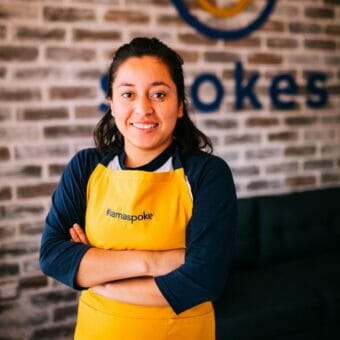
Rolando (Guatemala) – Rolando is the owner of Spokes Cafe . Two years ago, he visited a shelter near his neighbourhood and met Madelyn, to whom he offered work as a barista. He explains: “We try to make our café a springboard for young people like Madelyn, teaching them a trade, so as to break that vicious circle and prepare them to face the world with dignity. Often, they decide to go on to university, and this fills us with joy”.
Madelyn is 21 years old and went to the shelter with her sister. Those who live there are mostly young victims of abuse and exploitation. Some have even been part of a human trafficking scheme. Although the young women are safe in this shelter, many suffer from the stigma attached to living in such a place, and rarely manage to find decent work. Madelyn says that she has always found it difficult to communicate with people: “I still have a long way to go but I am learning little by little. Working here I have discovered a sense of responsibility and that behind every customer there is a person. This job has marked a turning point in my life”.
Maria Liza (Philippines), Chief Prosecutor, Tacloban – The Social Development Centre for Children (SDCC) is a shelter for children located in the northern part of Tacloban City, the island that was severely affected by Typhoon Haiyan in 2013. Today, the centre is in dire straits due to lack of funding. Maria Liza recounts: “So, we went to our mayor and proposed, to start raising funds to cope with the lack of food and medicine, but we also took on board reporting instances of child abuse. But the most important achievement was that we managed to bring the centre to the attention of the public. If we hadn’t gone in there, no one would have admitted to what their living conditions were like. This has created a kind of public ‘concern’ so that the city administration can really take care of these children”.
Stefania Tanesini
A Christmas tree for the refugees
Anna with Francis Scifo at Bon Pastur
When Miriam told us she had a large seven foot Christmas tree which she wished to donate, I immediately started thinking how to make the best use of it. I had been wondering how to bring Christmas love to the refugees at Bon Pastur home, Balzan. We visit them once a month, and for Christmas usually we have a small party. But with Covid-19 this would not be possible this year.
Suddenly I realised, what Jesus wanted-a Christmas tree for the Bon Pastur home, where 250 refugees live, they are young families with babies and children. They would surely appreciate a little Christmas cheer in their home. Miriam was very glad when I told her. Francis, the administrator of the home was also very welcoming.
So I took the tree, and told him I wished it to be put up at the entrance, so that all the refugees would lighten their hearts, and the hearts of the passers-by. Giuliana, another friend promptly offered the decorations, and Jane quipped in with the lights. Elizabeth, my Anglican friend, who also joins us on our monthly visits, came along with gifts for all. We managed to greet an Eritrean father with his four year old daughter when we went there, and the Serbian security guard took photos of us in front of the tree. We all came back home with our hearts overflowing with joy.
How true it is what Pope Francis tells us that the true Christmas spirit is felt when we go out of our selves for others, as Jesus did for us, especially for the poorer and more marginalised members of our society.
ACC
A smile is never lost on anyone
As the months with Covid-19 continue with one wave after another, I noticed that some people on the streets were not looking happy in spite of the fact that we are not in lockdown like so many other places.
I wondered whether they were being affected by anxiety or depression especially as I have heard that there are many mental health issues at the moment and I admit that I am also having to struggle not to get carried away by such feelings.
I therefore decided that I would consciously try to smile more to passers-by and hopefully this will encourage them to smile back and feel better.
A couple of weeks passed and a lady who distributes communion in church stopped to talk to my husband and I as we were out walking. We hardly know her but she was keen to talk about how she is spending her day in these unusual times. We both listened and then thanked her for sharing. She seemed happy and then turned on me and said ‘Keep on smiling!’
I realised that my smiling had not gone unnoticed and decided to share my experience with others like me who live for a united world. They seemed to like the idea, so now we will hopefully have even more people smiling on the streets.
 As part of United World Week activities, the collection of goods for the Dare to Care initiative was donated to the Daughters of the Sacred Heart. This religious community was founded in Malta in 1903, and is now also present in India, Kenya, Tanzania, Uganda, Philippines, Italy and USA.
 During this meeting we appreciated reciprocally the work done by both entities. It was an enriching experience. At the end of the meeting, we helped the Sisters to load their car with the goods collected during this month’s Dare to Care’s Initiative. They left Kappara with a car jam packed with goods for the children. Next time it will be our turn to visit them in Zurrieq!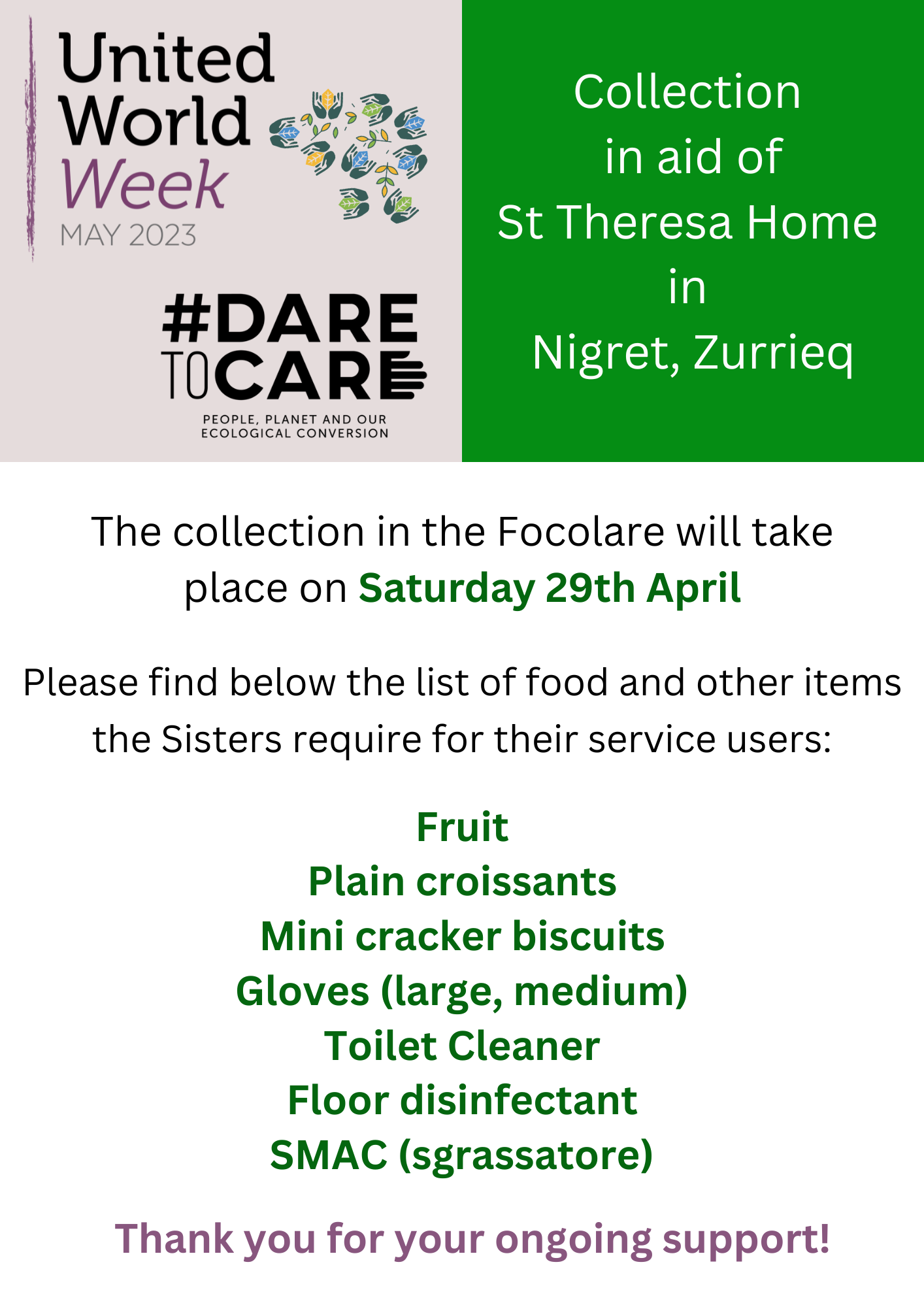
 The Focolare is four hours away by car from the flood-affected zones and the men and women focolarini have been personally delivering food supplies, safe drinking water, medical supplies and hygiene kits. Food collection points and a medical camp have been set up.
 Rubina, do only Christian communities in Pakistan benefit from this emergency aid?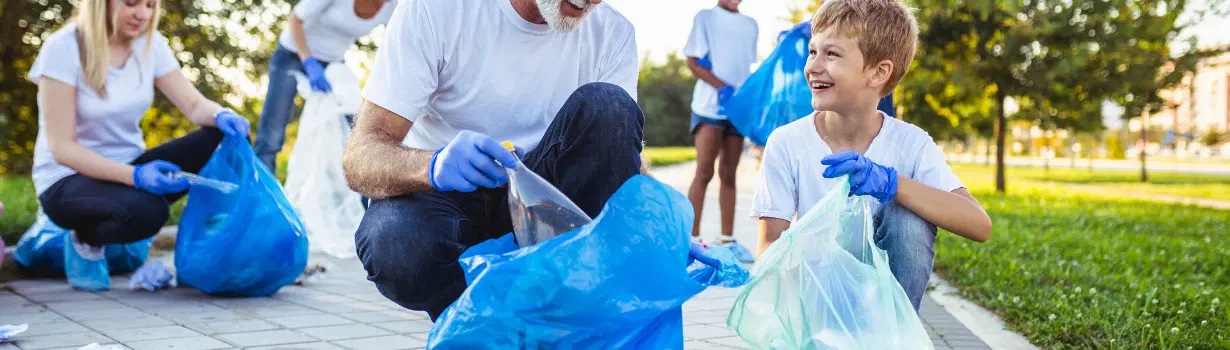

 “It was quite early in the morning when I heard the phone ringing. When I answered, I found that it was one of the Jesuit fathers asking for my help as a nurse; two fathers in his community were tested positive for the corona virus. That night before I went to bed, I asked Jesus to make use of me according to His will. He was quick in answering my prayer. And as in reality there was nothing to hold me back, I could respond to his call; I felt that at this time of the pandemic I had to put aside my aches and pains and help to ease the suffering of those around me. Although some family members were not very happy about my decision as they were afraid of the danger caused by the virus, I started going to this community to give my help.
 Rolando (Guatemala) – Rolando is the owner of
 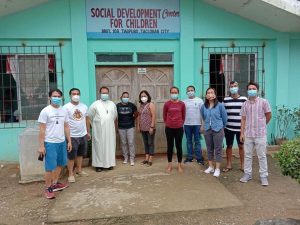 Maria Liza (Philippines), Chief Prosecutor, Tacloban – The Social Development Centre for Children (SDCC) is a shelter for children located in the northern part of Tacloban City, the island that was severely affected by Typhoon Haiyan in 2013. Today, the centre is in dire straits due to lack of funding. Maria Liza recounts: “So, we went to our mayor and proposed, to start raising funds to cope with the lack of food and medicine, but we also took on board reporting instances of child abuse. But the most important achievement was that we managed to bring the centre to the attention of the public. If we hadn’t gone in there, no one would have admitted to what their living conditions were like. This has created a kind of public ‘concern’ so that the city administration can really take care of these children”.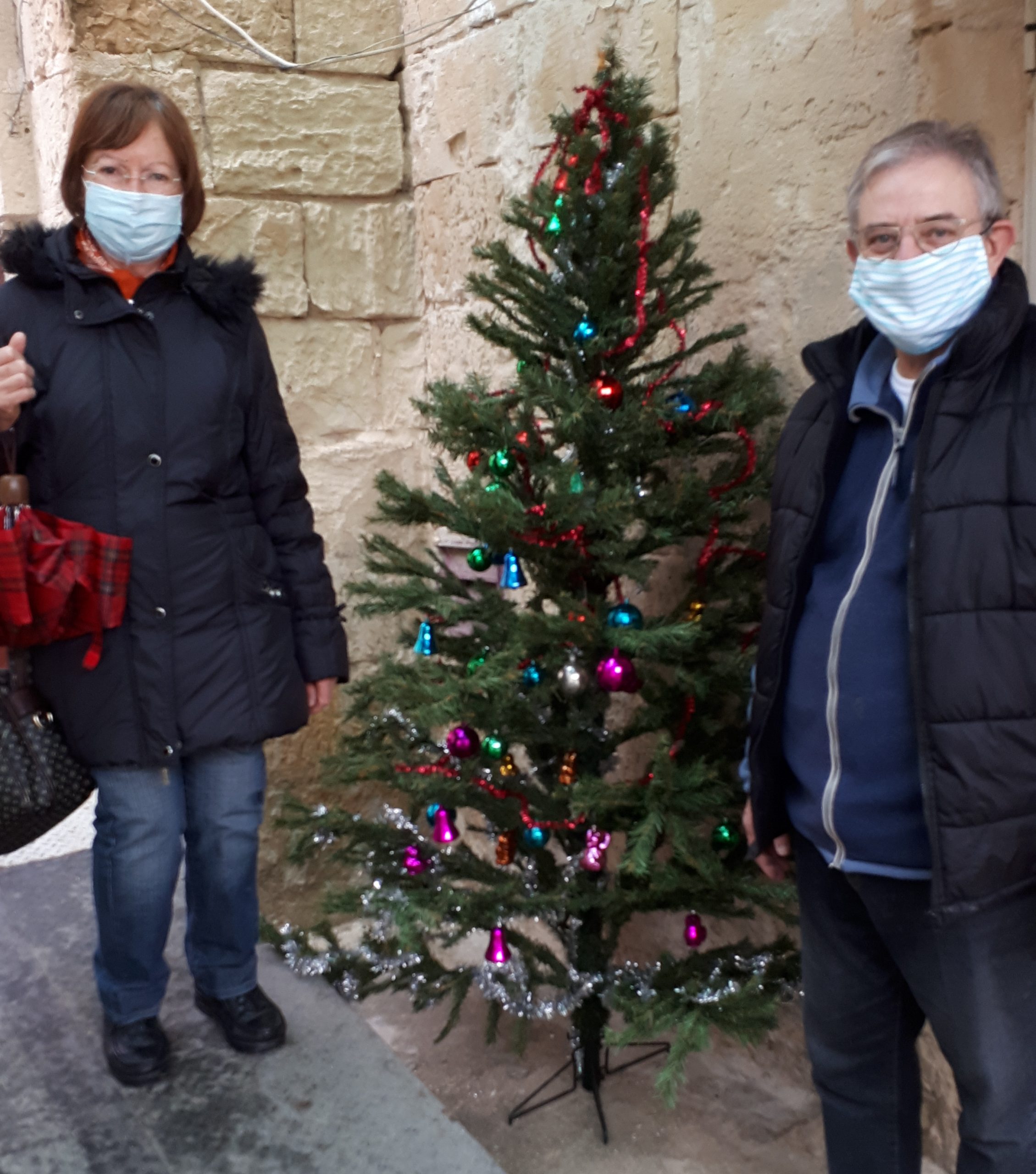
 As the months with Covid-19 continue with one wave after another, I noticed that some people on the streets were not looking happy in spite of the fact that we are not in lockdown like so many other places.