Why another biography on Giordani?

This is the question we asked  Prof. Alberto Lo Presti and Dr Elena Merli, members  of the Igino Giordani Centre, editors of “Igino Giordani: an unarmed hero” (Città Nuova Publications).
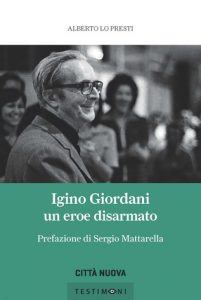
So many biographies have been written about Igino Giordani. Why another one?

Elena Merli: The previous biographies cover a limited time span of Giordani’s life. The first biography was written in 1936; then there was the one written by Tommaso Sorgi, a friend of Giordani who studied him in great depth. Sorgi wrote an inspired and detailed biography that deals with Giordani’s life from birth to 1948. Other biographies analysed  Giordani’s life from a particular perspective: historical, spiritual, political…. They are all valuable; they are a great richness, but this biography deals with a holistic perspective of his life. It speaks about aspects that were very little explored until now, namely: his family life, his deep relationship with Chiara,  the  particular period of intense illumination that was “Paradise ’49”. Even his experience as a member of the Dominican Third Order had not yet been explored in depth. Some of the political background of his life had not yet emerged, nor were some of his intimate choices and delicate passages of his personal life. I would like to point out particularly the novelty of a chapter dedicated to what he jokingly called “Giordania”, that is, his family. I think many will enjoy reading about the secrets of Igino’s lively family situation.

The first thing that strikes you in this book is its prestigious preface signed by Sergio Mattarella, the President of the Italian Republic. Why him?

Alberto Lo Presti: It is good to know a few things from behind-the-scenes. First of all, Sergio Mattarella knew Igino Giordani personally, and he says something about this in the preface. Then, one must remember that his father, Bernardo Mattarella was the author of the first biography written in 1936. So, all this helped to ask him  write the preface.

Then, we think that Sergio Mattarella is interpreting the role of President of the Republic as a source of unity in Italy and in the international field. During this  health crisis, he has been a figure of stability and high morality.

Giordani gave  witness to unity in politics and harmony among people. The parts of the book dedicated to his political commitment describe his behaviour during the war and in the post-war period, under bombings and fascism, amidst the rubble of reconstruction and social distress. Those times were not any calmer or more peaceful than the ones of today. Giordani’s steadfastness can still help us to understand where to go today.

This volume is the result of intense archival research work. Do we know everything about Giordani now?

Elena Merli: We have an impressive amount of material, documents, correspondence, and also audio and video recordings of many of Giordani’s talks, public and confidential ones, transcribed and sorted out. All these proved extremely useful to discover details about his personal life.

Who knows how many more new and interesting discoveries we can still make by exploring the archive! Many are already in this book. I’ll mention just one: details about Giordani’s last years, when he lived in this building, the International Centre of the Focolare Movement. At that time, the Focolare community of Antonio Petrilli occupied the first floor of this building, and in 1974, after the death of his wife Mya, Giordani moved to live with this community. These unpublished details reveal Igino’s faithfulness to community life and the depth of his humanity.

To whom is this book addressed?

Alberto Lo Presti: It addresses all those who want to solve the mystery of mysteries, that is, of how to be totally donated to God while immersed in the ordinary things of the world.

Giordani managed to do this and he traced the way for us. He always questioned himself about it ….. but when he met Chiara Lubich he also found the answers. For Igino, Chiara was the answer to all his existential questions. He studied early Christian writers, medieval theologians, modern theologians, great spiritual figures, yet he found the answers in Chiara and in the spirituality of communion.

I would like to recount one of the many anecdotes, which many do not know; one can find it in the book.

Giordani had such a great desire to donate himself to God that at the end of the 1920’s he joined the Dominican Third Order. But he was not satisfied … the rule for members was at least one Mass a month, a sermon by one of the monks and nothing more. He wanted to be more involved in religious life. So he submitted his idea to the monks: rent a flat where they could all meet: “you in your cassock (the monks’ cassock) and we, (the lay members) in our trousers. Thus, we can have some community life together”. He was told that this was not in the norms of the Dominican order and it stopped at that. What Giordani yearned for at the end of the 1920’s became a realty through Chiara; it was the focolare. Yes, in 1928 when such episodes happened, he was dreaming of the focolare. Incredible, isn’t it?

Edited by Lorenzo Russo

Publication available from  Città Nuova


Easter greetings from Margaret Karram, President of the Focolare

Despite the global pandemic, Easter is still a time to pass from death to life and darkness to light through love for our neighbour. The strength that comes from solidarity and universal brotherhood help us to keep alive the hope for a united world. Easter greetings from Focolare President, Margaret Karram, and many others all over the world.

Watch the video with subtitles in English, Spanish, French, Italian and Portuguese.


The new governing body of the Focolare Movement

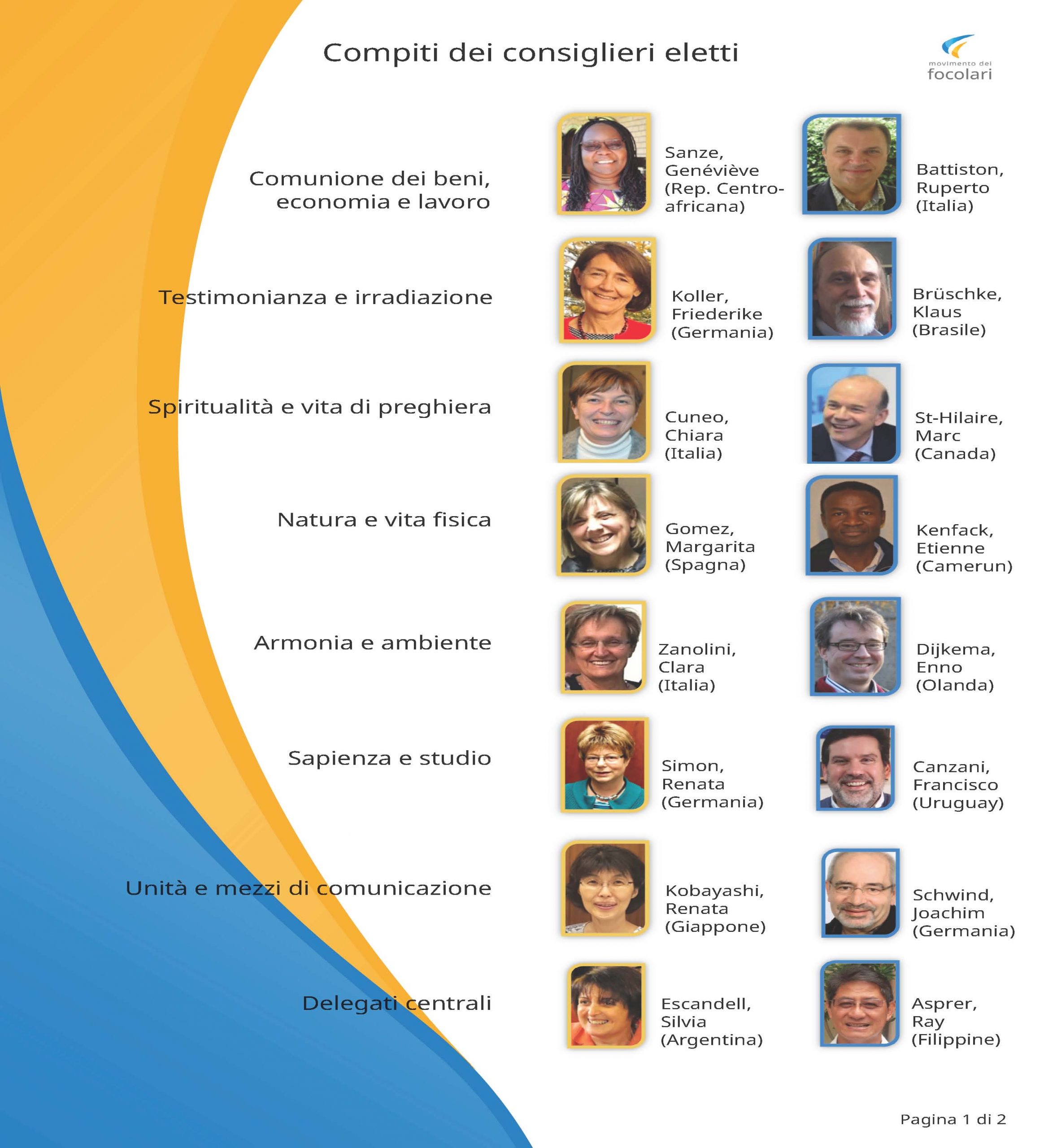
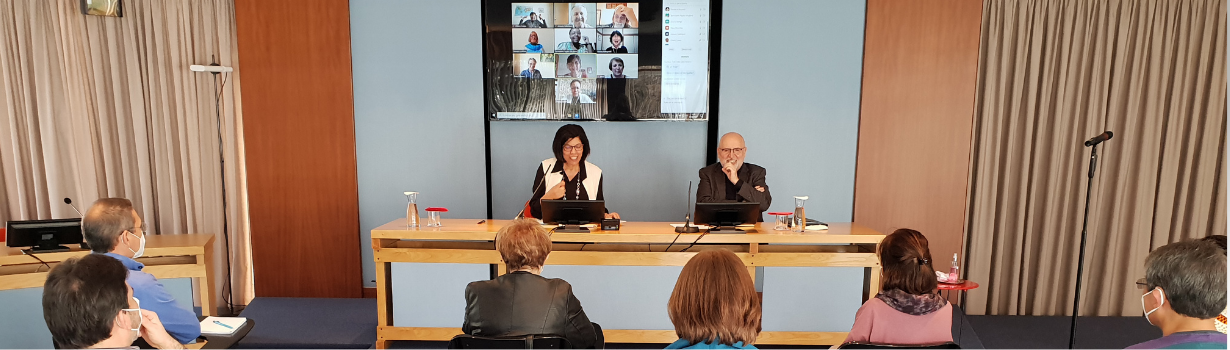
The governing body of the Focolare Movement consists of the president, Margaret Karram (Holy Land) and the co-president, Jésus Moran (Spain), together with 22 general councillors and Noreen Lockhart (Great Britain) and Flavio Roveré (Brazil), who were elected by their respective sections as responsible for the women and men focolarini worldwide.

The 22 councillors elected by the General Assembly 2021 come from 17 countries and 4 continents. They are aged between 52 and 70 years and represent the multiculturalism that distinguishes the Focolare. Many of them have lived not only in their country of origin but also in other geographical contexts. This is important in order to understand the characteristics, needs and challenges of the countries in which those who recognize themselves in the Focolare’s message of unity live.

According to the Movement’s General Statutes, the task of this body is “to ensure and increase unity throughout the Movement, directing it towards the fulfilment of its aims and taking care of coordination among its various parts.”

On Tuesday 2 March, President Margaret Karram gave the elected councillors the new areas of responsibility to follow in the life of the Movement both in its different aspects and in its different geographical areas.

On this occasion she reiterated her desire that the “Centre of the Movement”, like all its governing bodies, be characterized by a profound spirit of fraternal service born of mutual evangelical love.


Margaret Karram: the new President of the Focolare Movement

See Press Release


The election, which required a two-thirds majority of those present, took place on Sunday 31 January, and has been approved by the Dicastery for the Laity, Family and Life, in accordance with the Movement’s Statutes.

The new President – who by Statute will always be a woman – is to guide the Movement through the next six years.

The current General Assembly of the Focolare Movement, which elected the new President, is being conducted entirely online due to the pandemic. It began on January 24 and will conclude on February 7, 2021. It’s the third General Assembly since the death of founder Chiara Lubich.

359 people are taking part around the world. They represent some of the different cultures, generations, vocations, members of different churches and religious faiths who are part of the Focolare Movement.

With the election of the President, on February 1 the Co-President will be elected, who according to the Statutes must be a Focolarino priest, then the councillors who will collaborate in the central governance of the Movement.

Lorenzo Russo – Focolare Communications Office


A Centenary which concludes, but does not end

22 January 2020 -22 January 2021: the Centenary year of Chiara Lubich’s birth ends today. 365 days, marked by the pandemic, quite different from what has been planned, but they were ones that opened new paths and new perspectives.

‘Celebrate to meet’ was the motto chosen for the Centenary of the birth of Chiara Lubich (1920-2020), the founder of the Focolare Movement. A year ago, there were many initiatives planned in different parts of the world to celebrate this event, little thinking that a pandemic would crop up and leave its mark on it, but indeed it did not stop it. In some cases, it has even enhanced the possibilities of ‘meeting’ Chiara.

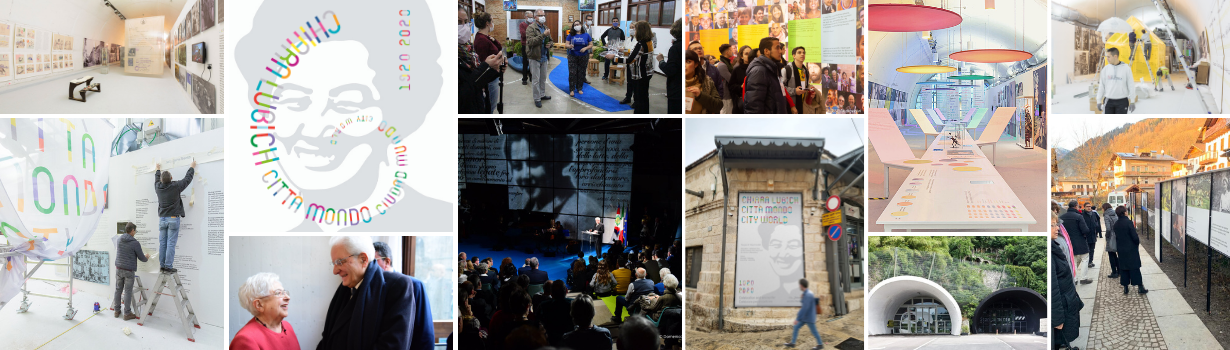
Let us go back to the beginning. The Centenary celebrations started on December 7, 2019 when the exhibition “Chiara Lubich World-City” was inaugurated at the Galleries in Trent, Lubich’s hometown. This inauguration was held under the patronage of the President of the Italian Republic, and it was promoted by the Historic Museum Foundation of the Trent region in collaboration with the Chiara Lubich Centre. Maria Voce, the President of the Focolare Movement was awarded the “Seal of St. Wenceslas” by the Autonomous Province of Trent on that same day. On the following day, a separate section of the exhibition, dedicated to the years 1949-1959, was inaugurated in Tonadico, in the municipality of Primiero San Martino di Castrozza (Italy).

In the following weeks, similar exhibitions, enriched with the local touch, were launched in other countries. The exhibition in Nairobi (Kenya) highlights the Movement’s development in Africa, while a section of the one in Jerusalem is dedicated to Lubich’s relationship with this city and her dream that is now becoming a reality: a centre of spirituality, study, dialogue and formation for unity.

Chiara Lubich was born on January 22. In 2020, precisely on this date, Rome celebrated her birth centenary through an evening dedicated to her, while it was twenty years before when the Italian capital conferred on her its honorary citizenship. Francesco Rutelli, the former mayor of Rome said: “On that 22nd January 2000, Chiara pronounced her committment to work more and better for Rome, by promoting concrete mutual love everywhere. What could be more beautiful than making her words our own, today?”

A few days later, Sergio Mattarella, the President of the Republic addressed the gathering during the Centenary event that was held at the “Chiara Lubich” Mariapolis Centre in Cadine (TN). Besides Maria Voce, the president of the Movement, Jesús Morán, the co-president and the local authorities, there were more than 900 people present. Another 20,000 watched the live streaming transmission. In his speech Mattarella highlighted fraternity, applied to civil and political activity, as the distinctive feature of Chiara Lubich’s spirituality.

Trent also provided the setting for the first part of the international conference: “A Charism at the service of the Church and humanity“. 7 Cardinals and 137 Bishops, friends of the Focolare Movement from 50 countries, participated in this conference, the second part of which was held in the international Focolare small town of Loppiano (Incisa Figline in Valdarno – Italy). In his message, Pope Francis warmly welcomed this conference, expressing “gratitude to God for the gift of the charism of unity through the witness and teaching (…) of Chiara Lubich”.

During the same days, another event linked to the Centenary took place at the Mariapolis Centre in Castel Gandolfo. More than 400 religious men and women, consecrated and lay Catholics – including a group from the Orthodox Church – from 100 religious families in 33 countries were the protagonists at the event: “Charisms in Communion: Chiara Lubich’s Prophecy“, a workshop for dialogue among different charisms promoting communion between religious families through the spirituality of unity.

Then the pandemic began to spread in countries all over the world. And this meant change even for the Centenary: some events had to be cancelled, others were moved to the web. The Trent exhibition has been enriched with a virtual itinerary. Thanks to an intergenerational team, the one planned in Brazil has been transformed, and an itinerary dedicated to Chiara Lubich is now being launched on social media through social profiles @focolaresbrasil (Facebook, Instagram and Youtube). Web-based initiatives have allowed many more people to visit the exhibitions dedicated to Lubich than the ones where one would have actually been able to go to a place to see.

But there were other events that could still take place: such as the issue of two postage stamps dedicated to Chiara Lubich in the Czech Republic and the Competition for Italian schools on the theme: “One city is not enough”. A number of schools participated in this competition that was promoted by the Chiara Lubich/New Humanity Centre and by the Foundation of the Historical Museum of Trentino, in collaboration with the Ministry of Education, University and Research. The prize-giving ceremony will be held on February 16, 2021.

The lockdown forced the International Focolare Centre in Rocca di Papa (Italy) to close its doors during certain periods in 2020. But since a few months, visits have been made possible in compliance with current health regulations. One of the most important visits was that of His Holiness the Patriarch of Constantinople Bartholomew I, who came to pray at the tomb of Chiara Lubich.

There were also various new publications linked to the Centenary and events to present and promote them, both in presence and via web, namely: the twenty-ninth edition of the book “Meditations” by Chiara Lubich; two texts from the series “Works of Chiara Lubich” published by Città Nuova: “Conversations through link-ups” edited by Michel Vandeleene and “Talks in the civil and ecclesial sphere” edited by Vera Araújo; and the new biography about Chiara Lubich, the way of unity, between history and prophecy, written by Maurizio Gentilini. The English edition of the biography by Gentilini was also presented at the Italian Consulate in Mumbai, India, during a web event dedicated to Chiara Lubich’s centenary. Stefania Constanza, the Italian Consul in Mumbai, Vinu Aram, director of the Shanti Ashram in Coimbatore and Maurizio Gentilini took part in this web event.

A “mixed” approach was chosen – partly in “presence” at Trent and partly online – for the study meeting about “Chiara Lubich in dialogue with the world. A linguistic, philological and literary approach to her writings”. This was organised by the Chiara Lubich Centre and the Study and Research Group on Linguistics, Philology and Literature of the Abbà School (Interdisciplinary Study Centre of the Focolare Movement) together with experts from various countries. Some of the papers are available in the section “Conference Documents” on the Chiara Lubich Centre website.

On January 3, 2021, almost when the centenary year was coming to its end, Rai Uno, the main Italian television network presented the TV-movie “Chiara Lubich. Love conquers all”. The director of this movie was Giacomo Campiotti, while Cristiana Capotondi played the role of Chiara Lubich. 5 million 641 thousand viewers watched the film that was made by Rai Fiction and Eliseo Multimedia. Then, many others in other countries of the world were able to see it thanks to RaiPlay and Rai Italia.

And today, January 22, 2021, the Centenary comes to its end. But does it really end? Recently, when Maria Voce, the president of the Focolare Movement spoke about this, she said that ‘the living encounter with Chiara cannot be limited to 100 years, to a centenary year. It is not over; it will continue as long as there are people from Chiara’s family on earth who will continue to witness that Chiara is alive, that Chiara’s charism still has something to say to the world”.

Anna Lisa Innocenti


Christmas during the pandemic

My neighbour from Ghana

In the apartment below me I have a tenant from Nigeria. We often chat and I have come to regard him almost as part of my family. In Christmas week I asked him whether he would be working on Christmas day, given that he is a Christian. However, he said that he would be off work. I therefore told him that I would be preparing some food for him.
On the day I took him a three course meal. I prepared lasagna, chicken with potatoes and vegetables and a specially decorated dish with different kinds of traditional Maltese Christmas sweets. He was very happy with the meal and I was also happy to know that he would have a good lunch while I went off to eat at my son’s house.

Christmas at my son’s home

My son has been separated for sometime now and is raising his oldest daughter on his own. During all this time however I have kept in regular contact with his ex wife and, although I know that there is not much chance of their coming together again, I made sure they kept in touch and that the children felt comfortable with both parents. She was always welcome at my home but never  visited. Time passed and this woman now has a partner. I had only met him a few times. My son, however decided to invite the couple for Christmas lunch, such is the relationship that he has with his ex-wife.

I was also invited and since I had been self-isolating for so many months, I was a bit hesitant in accepting. However, he was adamant that I would not spend Christmas alone so I accepted and helped him with the menu. We had agreed to eat out on the spacious verandah and try to keep as much distance as possible. My grand-daughter also invited a friend of hers who is an orphan and did not have anyone to share Christmas lunch with. I saw this as an opportunity to love all these people and gladly spent the day with them. At table I was put next to my son’s ex-wife’s partner and I did my utmost to find topics to talk about with him so that he would feel at ease.

I could not believe that I was actually doing this. Could I possibly be so unfeeling so as to accept this outsider and partner of my son’s wife into our family? However, given the type of relationships that  we had built over the years, it seemed like the natural thing to do – to love him simply as another Jesus. After lunch, most of them went out to deliver presents while I offered to stay home and clear up. My granddaughter’s friend offered to help and we found lots to talk about while washing the dishes. For tea we shared lots of sweets that I had prepared and some had actually ordered extra helpings as take-aways. It was a beautiful day where everyone was happy to love and accept the others just as they are.

M.A. (Malta)


Caring Heroes

Four stories of those who “dare to care” every day: because there is no need to wait for World Peace Day to build a more united world.

“May we never yield to the temptation to disregard others, especially those in greatest need, and to look the other way; instead, may we strive daily, in concrete and practical ways, “to form a community composed of brothers and sisters who accept and care for one another” The concluding words of Pope Francis’ message for January 1st 2021, the 54th World Day of Peace.

.These words are a revolutionary program for the lives of people and peoples for 2021 in which infinite hopes for peace are placed; a peace which goes from the fight against poverty, to a greater dignity of the person, to working to resolve all forms of conflict, and lastly (but not least) the safeguarding of the planet.

We start this year 2021 with stories we have entitled ‘caring heroes ‘: people like us, or those who live next door to us, who have not missed out on precious opportunities to love and be close to others in the most diverse areas. The operating ground for caring is vast: it is as big as the world.

Teens for Unity (Mexico) – “We wanted to carry out a project that had both a social and environmental impact, and we came up with the idea of collecting plastic cups to donate to a foundation that takes care of people suffering from cancer, to help them with the proceeds of our collection. In this way we have helped to respect the environment by recycling plastic and helping these people undergoing treatment. To date we have made 23 deliveries with a total of one million cups collected in less than a year! In addition to this we have collected recyclable waste and, with the proceeds, delivered food to the hospital, clothes to people with limited resources and helped nursing homes. We also planted trees in some parts of the city.

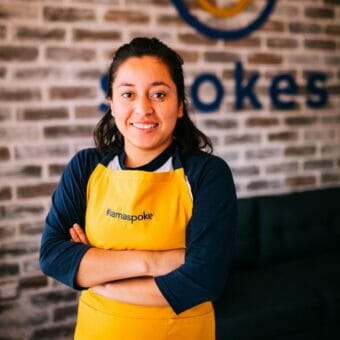
Rolando (Guatemala) – Rolando is the owner of Spokes Cafe . Two years ago, he visited a shelter near his neighbourhood and met Madelyn, to whom he offered work as a barista.  He explains: “We try to make our café a springboard for young people like Madelyn, teaching them a trade, so as to break that vicious circle and prepare them to face the world with dignity. Often, they decide to go on to university, and this fills us with joy”.
Madelyn is 21 years old and went to the shelter with her sister. Those who live there are mostly young victims of abuse and exploitation. Some have even been part of a human trafficking scheme. Although the young women are safe in this shelter, many suffer from the stigma attached to living in such a place, and rarely manage to find decent work. Madelyn says that she has always found it difficult to communicate with people: “I still have a long way to go but I am learning little by little. Working here I have discovered a sense of responsibility and that behind every customer there is a person. This job has marked a turning point in my life”.

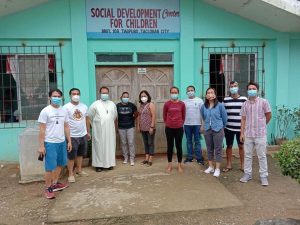
Maria Liza (Philippines), Chief Prosecutor, Tacloban – The Social Development Centre for Children (SDCC) is a shelter for children located in the northern part of Tacloban City, the island that was severely affected by Typhoon Haiyan in 2013. Today, the centre is in dire straits due to lack of funding. Maria Liza recounts:  “So, we went to our mayor and proposed, to start raising funds to cope with the lack of food and medicine, but we also took on board reporting instances of child abuse. But the most important achievement was that we managed to bring the centre to the attention of the public. If we hadn’t gone in there, no one would have admitted to what their living conditions were like.  This has created a kind of public ‘concern’ so that the city administration can really take care of these children”.
Stefania Tanesini


Film about Chiara Lubich: “Love conquers all”

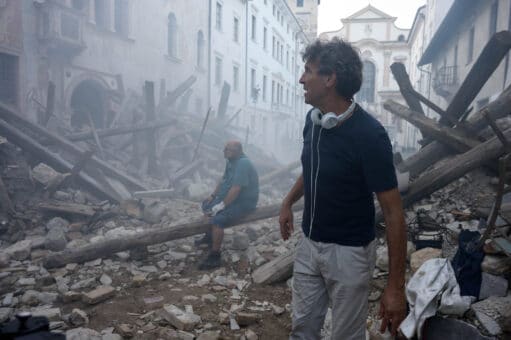
What is the main idea behind the film production “Chiara Lubich, love conquers all”? What does the story of the beginnings of the Focolare Movement have to say in today’s world? Announced at a press conference, it will be televised on on RAI Uno. on 3 January 2021.

An extremely topical film, which has something to say to all of us, by offering the universal fraternity brought by Chiara Lubich as an antidote to the evil in today’s world. This, in a nutshell, was the message that emerged today during the press conference for the presentation of the TV Movie “Chiara Lubich, l’amore vince tutto” (“Chiara Lubich, love conquers all”) to be broadcast on Rai Uno (Italy’s number one national channel) on 3 January, during prime viewing time.

The press conference was attended by the director of Rai Uno – Stefano Colletta, the head of Rai Fiction – Maria Pia Ammirati, Eliseo Multimedia producer – Luca Barbareschi, the leading actress – Cristiana Capotondi and the actress Aurora Ruffino. Maurizio Fugatti, the president of the Province of Trent where the film was shot, also spoke.

“It is a film that in this period of great suffering which is so hard for us just like this Covid period, becomes a powerful metaphor of hope and courage. A group of young people who decide to believe in a dream. When? During the war”. This was the gamble Luca Barbareschi decided to take in producing the story of Chiara Lubich.  “I hope this film is seen in a light where the figure of Chiara (…) becomes a symbol of simplicity and passion, of courage, of the desire to bring people back together. The symbol of the hearth (focolare), being around the fire, around a light”.

Italian screenwriter, Giacomo Campiotti, agreed, whilst admitting that this had been the most difficult script he had ever written, an exciting undertaking nevertheless. “I tried to make my contribution by telling a story for everyone,” he explained. “Chiara Lubich is by no means a story just for the Christian world. Her idea was to speak to everyone”.

Recalling that Chiara’s motto was the Gospel phrase “That all may be one” (cf. Jn 17:21), he added: “Chiara did not want to found anything but each of us has incredible power.  When a person begins to realise what they believe in, they create a magnetism around them that changes the world.  This is what great characters have done. And these characters can be of great help, a great inspiration to everyone.”

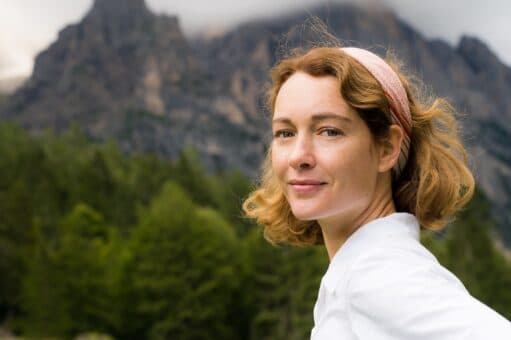
“I take home a really beautiful experience of great spirituality, few things have been as all-encompassing,” confides Cristiana Capotondi. For the leading actress, Chiara Lubich is someone who has always remained young, “because she had the strength to challenge conventions and stereotypes, open doors, talk to the Jewish world, talk to the Islamic world, talk to the Orthodox Church.  It is as if she had no memory, no superstructures. I personally find this very youthful. When we grow up we become structured, we start having fears. She was a woman who had no fears. At this current moment in history, I believe her message has extraordinary political strength.

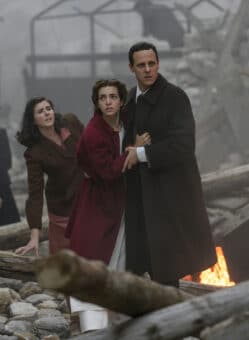
Aurora Ruffino who plays an important role as one of Lubich’s first companions said she was struck by how Chiara and her companions also lived with the uncertainty of tomorrow: “A situation similar to what we are living today. In spite of this, she was absolutely certain that things would go well, that God would somehow find a way to make things go well for her. That really struck me. (…) When you do good it always comes back to you. And she lived absolutely certain of this”.

Stefano Coletta is in no doubt as to why RAI Uno chose to open 2021 with this project: “The film condenses the story of Chiara Lubich in a very straightforward manner and without rhetoric.  The story of a woman who had truly encountered God and had encountered him in action, rather than in mysticism and contemplative activity. She was a very practical woman who lived during a very complicated time like the war with an almost political conviction that every encounter deserved attention, curiosity and intelligence. It is no coincidence that she was a sign of ecumenical dialogue right to the end; she encountered extremely diverse spiritualities without prejudice”.

For Maria Pia Ammirati, the story told in the film has a hagiographic character, but not in the usual sense of the word. “Like all real hagiographies, the saints are first and foremost normal men and women. That’s why 2021 is getting off to a really good start.

This story is a viaticum and a positive start in a situation that we know is dark and allienating. Chiara’s design was that of rapprochement, starting from small societies, solidarity, the common good and love, as it says in the film’s title”.

 Stefania Tanesini

(International Focolare Website)


A Christmas tree for the refugees

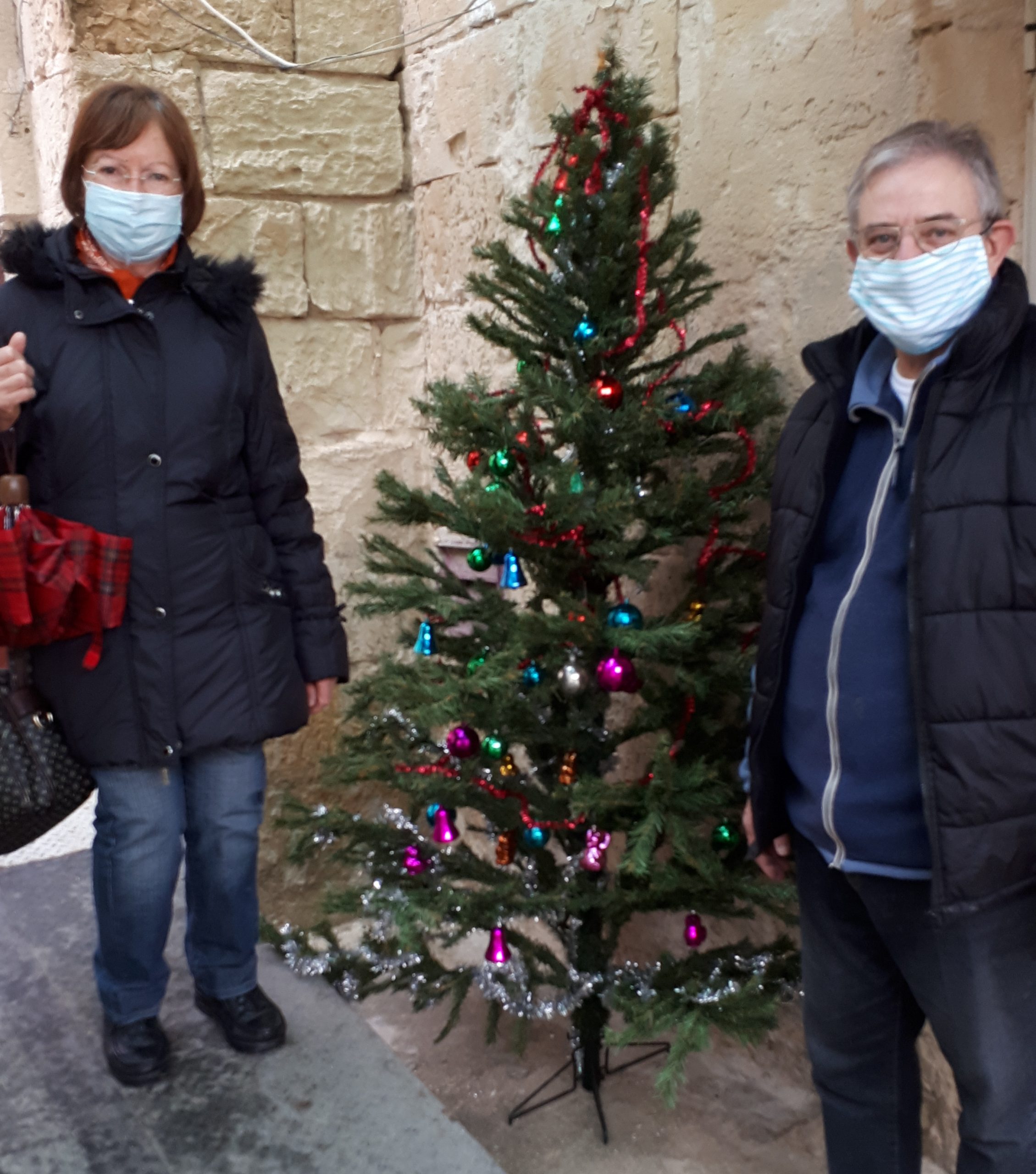
Anna with Francis Scifo at Bon Pastur

When Miriam told us she had a large seven foot Christmas tree which she wished to donate, I immediately started thinking how to make the best use of it. I had been wondering how to bring Christmas love to the refugees at Bon Pastur home, Balzan. We visit them once a month, and for Christmas usually we have a small party. But with Covid-19 this would not be possible this year.

Suddenly I realised, what Jesus wanted-a Christmas tree for the Bon Pastur home, where 250 refugees live, they are young families with babies and children. They would surely appreciate a little Christmas cheer in their home. Miriam was very glad when I told her. Francis, the administrator of the home was also very welcoming.

So I took the tree, and told him I wished it to be put up at the entrance, so that all the refugees would lighten their hearts, and the hearts of the passers-by. Giuliana, another friend promptly offered the decorations, and Jane quipped in with the lights. Elizabeth, my Anglican friend, who also joins us on our monthly visits, came along with gifts for all. We managed to greet an Eritrean father with his four year old daughter when we went there, and the Serbian security guard took photos of us in front of the tree. We all came back home with our hearts overflowing with joy.

How true it is what Pope Francis tells us that the true Christmas spirit is felt when we go out of our selves for others, as Jesus did for us, especially for the poorer and more marginalised members of our society.

ACC


Happy Christmas to all!

Copyright Chiara Lubich Centre, December 2020