A Christmas of goodness

Christmas greetings by Maria Voce, President of the Focolare Movement.

Happy Christmas, Happy Christmas to you all!

For sure this Christmas, in a pandemic year! Christmas in the midst of a pandemic. We see terrible things, poverty to the point of starvation and increasing hunger in many places; we see wars that are partly hidden, partly ongoing; we see climate disasters, changes that are putting our common home at risk.

And so all this makes us say: Jesus came into this world; Jesus came; he became a human person and he took charge of this world, and he came by way of love to show us his love. And so, on the one hand it makes us feel humble before the greatness of this love, and grateful to him who has shown us this love. And on the other hand, it urges us to do something like him, it urges us to look around, to reach out to everyone, starting with the most marginalised, the poorest, humblest, most abandoned, migrants, those who are alone, the sick, children, all those in need. And he also urges us to love them with all that we can: by sharing our affection, our thoughts, our communion of goods and even taking risks at times, risking our lives as he did,

And so this will truly be a Happy Christmas, that is, a good Christmas, a Christmas of goodness, a Christmas that because it’s goodness also becomes a Christmas of peace, hope and joy. Happy Christmas to you all.

Maria Voce


November Word of Life

“Blessed are those who mourn, for they will be comforted.” (Mt 5:4)

for ages 4-8 | for ages 9-17 | Print | Audio

Is there anyone who has not mourned at some time during his or her life? Is there anyone who has not known other people whose sorrow has overflown into tears? Nowadays the media brings images from all over the world into our homes, and we risk becoming so accustomed to seeing suffering that we could become indifferent towards the river of pain that seems to surround us.

There were times when Jesus himself wept (see Jn 11:35 or Lk 19:41); he also witnessed the tears of his people who suffered as a consequence of the foreign occupation of their land. Many people flocked to him — the sick, poor, widows, orphans, sinners, people everyone else avoided. They wanted to hear his Word and be healed, in body and soul.

In the Gospel of Matthew, Jesus is the Messiah who fulfils God’s promises to Israel and for this reason he proclaims:

“Blessed are those who mourn, for they will be comforted.”

Jesus is not indifferent to our tribulations and sufferings. He wants our hearts to be healed from the bitterness of selfishness; he wants to fill our loneliness and to give us strength in all we do.
This is what Focolare founder Chiara Lubich wrote in a commentary on this Gospel phrase: “With these words, Jesus does not want to lead people in sorrow toward an attitude of simple resignation by promising them a reward in the future. He is thinking about the present. In fact, his kingdom is already here, even if not definitively so. It is present in Jesus who has overcome death by rising again after dying in great affliction.

“It is also present in us, in our hearts as Christians: God is in us. The Trinity dwells within us. And so we can already experience the happiness that Jesus promised. … Sufferings remain but there is new energy to face the trials of life and to help others who are struggling in some way. There is new strength to overcome sufferings and to see and welcome them as a means of redemption as Jesus did.”

“Blessed are those who mourn, for they will be comforted.”

We can learn from Jesus how to be witnesses and instruments of the Father’s tender and creative love for one another. His teaching is the beginning of a new world where the very roots of our coexistence are healed. It attracts God’s presence among us, and this is an inexhaustible source of consolation that dries every tear.

Lena and Philippe from Lebanon shared their experience with friends from their community who are living in other parts of the world:
“Dear friends,
“Thank you for your very special Easter wishes this year. We are well and we are careful not to expose ourselves to the virus. However, we are on the front line at ‘Parrainage Liban’ [an organization that helps families in need in Lebanon, irrespective of race or religion, to become self-sufficient] and so we can’t stay at home all the time. We go out about every two days to ensure the urgent needs of some families can be met: they need money, clothes, food, medicine etc. …

“Even before Covid-19, the economic situation in the country was very difficult and now, like everywhere in the world, it has worsened. But providence is not lacking: last week a Lebanese man who now lives abroad sent us money. He asked Lena to ensure that twelve families have proper meals three days a week for the whole month of April. This was a beautiful confirmation of the love of God who is never outdone in generosity.”

Letizia Magri

Each month the Focolare chooses a Scripture passage as a guide and inspiration for daily living. The commentary on it was originally written by founder, Chiara Lubich (1920–2008). Today this Word of Life, written by an international commission and translated into 96 different languages, reaches several million people worldwide.

Read more:
Lubich, Chiara, “The foolishness of love,” Essential Writings, New City Press: 2007, pp. 96—97.
Lubich, Chiara, “Look at Jesus Forsaken and you will find the answer,” On the Holy Journey, New City Press: 1988, pp. 140—142.
Next month:
“The Lord is my light and my salvation— whom shall I fear?” (Ps 27:1)


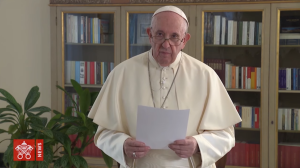
Pope: “Foster dignity and combat poverty to care for creation.”

In a message to members of the Focolare Movement at a conference on Integral Ecology, Pope Francis says the common good of the human family and the created world demands urgent action against poverty and injustice.

Pope Francis on Friday told participants in an online conference that we live in a time in which there is the urgent need for a new and more inclusive socio-economic paradigm that reflects the truth that we are “a single human family.”
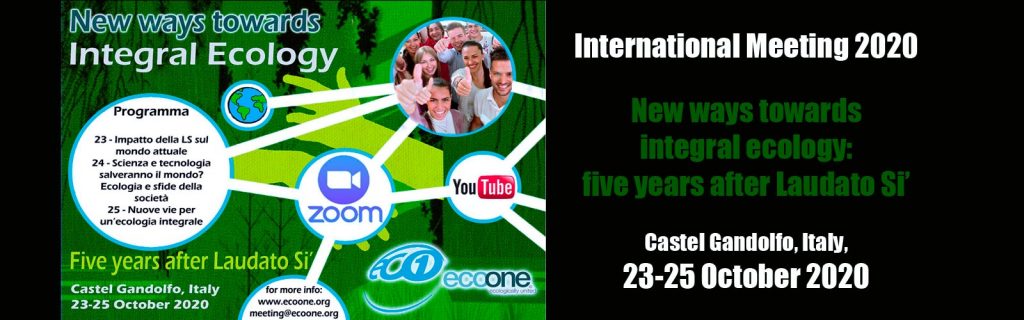
His words came in a  message to an international on-line Meeting, an event that is part of the year-long observance of the 5th anniversary of the Encyclical Letter Laudato si’.

“New ways towards Integral Ecology”

The Meeting, entitled “New ways towards Integral Ecology” was organized by “EcoOne”, the ecological initiative of the Focolare Movement in collaboration with the Dicastery for Promoting Integral Human Development and the Global Catholic Climate Movement.

He noted that the meeting addresses “a relational vision of humanity and care for our world from a variety of perspectives: ethical, scientific, social and theological,” and said he trusts that the Focolare Movement will be able to do much to promote awareness for the issue.

Charism of unity

The Pope recalled the conviction of Chiara Lubich, the foundress of the Movement, according to whom “the created world bears within itself a charism of unity.”

May her perspective, he said, “guide your work in the recognition that “everything is connected” and that “concern for the environment needs to be joined to sincere love for our fellow human beings and an unwavering commitment to resolving the problems of society” (Laudato si’, 91).

One human family

The Pope highlighted the need, today, to raise awareness that we are a “single human family, fellow travellers sharing the same flesh, children of the same earth which is our common home” (Fratelli tutti, 8).

He said that this solidarity demands “a firm willingness to develop and implement practical measures that foster the dignity of all persons in their human, family and work relationships, while at the same time combating the structural causes of poverty and working to protect the natural environment.”

The need for conversion

The Pope concluded calling for a profound interior conversion, both on a personal and communal level.

As we examine the great challenges of our time he said, including the contribution religion can make to the environmental crisis, “it is essential to break with the logic of exploitation and selfishness and to promote the practice of a sober, simple and humble lifestyle (see Laudato si’, 222-224).

Source: Vatican News


Melita Theologica Journal: “Two Magnetic Personalities Bridging the Twentieth and the Twenty First Centuries”

The Faculty of Theology and the Theological Students’ Association has just published the latest edition of Melita Theologica which is dedicated, in the words of Hector Scerri, the Co-Editor of this Issue, to “Two Magnetic Personalities Bridging the Twentieth and the Twenty First Centuries”, namely John Paul II and Chiara Lubich. The latest edition of this peer reviewed journal, which has been published continuously since 1947, brings together 7 original articles from established local and international universities.

The first article, written by Paul Sciberras, a senior lecturer in Biblical Studies at the University of Malta, deals with the interpretation of “In Our Image, Our Likeness” in John Paul II and Chiara Lubich. Judith Povilus, Emeritus Professor of Logic and Foundations of Mathematics, writes about the “Prophetic Insight of Chiara Lubich”, while Brendan Leahy, Bishop of Limerick and formerly Professor of Systematic Theology at Maynooth, writes about how these two authors highlighted the Church’s Marian Profile.

The Ecumenical Legacy of John Paul II is addressed by Annemarie C. Mayer, Professor of the Study of Theology, Religion and Contemporary Culture at Leuven, while Piero Coda, professor of Trinitarian Ontology and member of the International Theological Commission as well as the International Commission for Theological Dialogue between the Catholic Church and the Orthodox Church, pens his thoughts on the converging thoughts of these two authors on the dynamic principles of ecumenism after Vatican II.

A quarter of a century has passed since John Paul II’s Ut unum sint, and Jorge Alejandro Scampini, Professor of Dogmatic Theology in Buenos Aires, gives us his reflections on the ecumenical movement after the publication of this landmark encyclical. Finally, Joseph Ellul, who lectures in Ecumenism and Islamic Studies both in Malta and at the Angelicum in Rome, gives an insightful overview of John Paul II and Christian-Muslim relations.

For orders and enquiries contact Melita Theologica


Myriam, a martyr for peace

Her smile, her joie de vivre, her commitment towards justice and peace are words that come to mind when one recalls Myriam Dessaivre, 26 years old, who lost her life on Sunday, August 9 in Niger.

Myriam and five other French youth were killed, together with the Nigerian driver and guide who accompanied them when they were visiting the Kouré giraffe reserve, 60 km southeast of the capital Niamey. These youth were on a humanitarian mission, with the NGO Acted, in a country that faces multiple crises and ranks at the bottom of the human development index.
Myriam, a martyr for peace, obtained a first degree in communication and information at the Catholic Institute of Toulouse and then a Master’s degree in peace studies at the Paris-Dauphine University. She specialized in political conflict resolution and the title of her thesis was: “The Colombian State and the FARC: is reconciliation possible?” She furthered her studies in this field through work in Colombia, Tunisia and Chad.

During a Peace Movement national council meeting held on June 18, 2016, Myriam spoke about the choice of her studies. She was then 21 years old. Today, her strong and meaningful words impress us even more. We quote what she said at the end of her talk: “I have the impression that there is a growth in the number of young people of our generation who want to promote peace.   I think that social networks are contributing towards this, not only through the abandunce of bad news, but also because of the increase in some sort of “global solidarity”. Anger caused by horrible happenings, such as terrorist attacks, wars in the Middle East and famine, is transmitted instantly through social networks, and we are directly affected. We come to the point of asking ourselves: “When do I go there?” So, I’m not surprised that more young people seek professions that engage in work for peace. May be, we are simply looking for the means to live in a better world”.

Myriam learnt more about building this better world through the Focolare spirituality and her commitment as a member of the Focolare Youth Movement. Her father, Jean-Marie, who died in 2014, was a volunteer. Her friend Sophie, who was very upset, said: “She was my best friend. I met her during a Mariapolis in Lourdes, when I was 13. With her, you could have a good laugh about anything”. And she continued to testify: “She had strong convictions and defended the values of peace and justice. Her work was not easy, but she was passionate about it and it fulfilled her. It warms my heart to think that however unfair, terrible and violent her death was, it was not without meaning. She gave her life for what she believed was right.”

Carl, another friend of hers, described Myriam “as a radiant, humble and beautiful person who gave her life to serve life, peace and others”. Speaking about what her death meant to him, he said: “I realize that the message she composed through her life is being delivered to us thanks to her departure to heaven. In one way or another, each one of us gets a daily provision of bad deeds and/or the lack of doing something about them; this is the marytrdom of evil”.

Anne-Marie, a focolarina who knew her said: “Myriam fulfilled her dream, she satisfied her passion by joining her experience to her commitment in this field”.  And she continued: “For the 120 Gen representatives from all over the world, who met for an online congress from August 7 to 14, it was evident that Miriam had to be the precious guardian angel for their Project #Daretocare,  aimed at promoting initiatives on active citizenship in the fields of social justice, politics and economics”. Anne-Marie remarked: “It seems as if now Myriam  is telling us: ‘Move on! Don’t waste time on useless things!”

 Emilie Tévané, for Nouvelle Cité  


A smile is never lost on anyone

As the months with Covid-19 continue with one wave after another, I noticed that some people on the streets were not looking happy in spite of the fact that we are not in lockdown like so many other places.
I wondered whether they were being affected by anxiety or depression especially as I have heard that there are many mental health issues at the moment and I admit that I am also having to struggle not to get carried away by such feelings.

I therefore decided that I would consciously try to smile more to passers-by and hopefully this will encourage them to smile back and feel better.

A couple of weeks passed and a lady who distributes communion in church stopped to talk to my husband and I as we were out walking. We hardly know her but she was keen to talk about how she is spending her day in these unusual times. We both listened and then thanked her for sharing. She seemed happy and then turned on me and said ‘Keep on smiling!’

I realised that my smiling had not gone unnoticed and decided to share my experience with others like me who live for a united world. They seemed to like the idea, so now we will hopefully have even more people smiling on the streets.

S.C.


A letter from the Lebanon Focolare community

Grateful for the solidarity received and committed together with other various religious communities to help the country rise again and be a messenger of peace. 

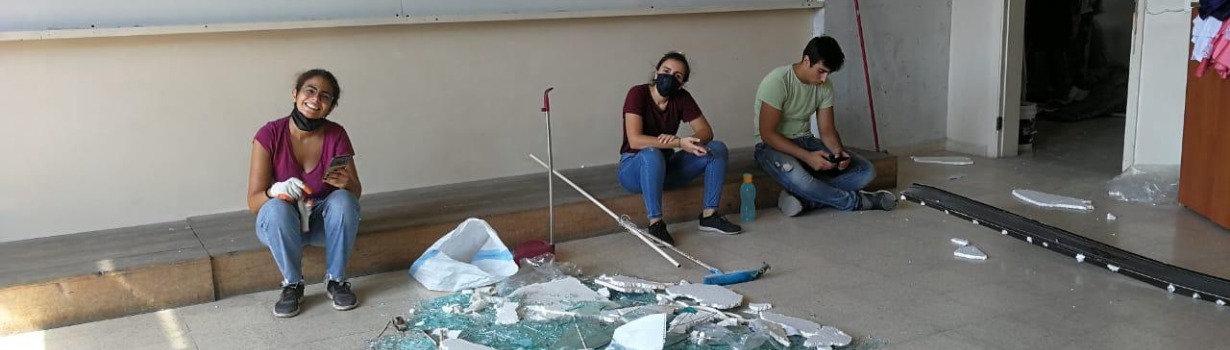
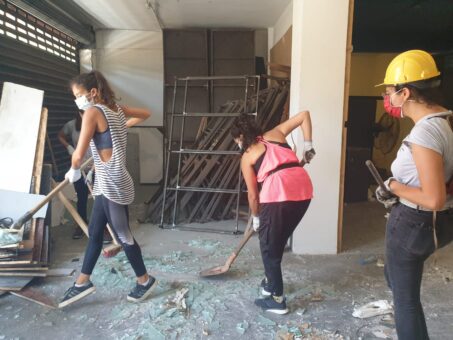
We all know that Lebanon is still under a great shock. And Beirut is an unrecognizable city with apocalyptic scenes: destruction, high tensions, distress, anger and even violent episodes.

A few days ago, a letter arrived from this country that has been hit with such widespread destruction. It comes from the Lebanon Focolare community and it is addressed to Focolare members worldwide.

The letter reads: “With these words, each one of us would like to express a personal thank you to each  one of you. We are deeply and immensely moved by the immediate closeness shown to us from all parts of the world, from old and young, far and near, through phone calls and messages”.

Members of the Focolare Community continue to say: “Every morning, when we wake up and continue to discover the massiveness of the catastrophe, the material damage, the number of hospitals badly damaged and rendered nonfunctional, the polluted air we breathe, we feel like ‘survivors’. Each one of us could have been right there at the scene of the drama. And maybe some of us were, but a providential hand made them change place. However, we all feel that a new life has been given to us, as a young woman, just out of an elevator gutted with the explosion, said”.

They continue to relate that in the streets, where everything seems to cry out despair, “many people from north to south, members of various religious communities, are working hard to clear the rubble. Each one, in his own way, is a living witness that the ‘resurrection’ will win over the death of the city, the country, the dreams of many”.

They conclude: “Together with you, we want to move ahead so that a Lebanon that passes on a message of peace, unity and universal brotherhood and be a model of a united world, will be reborn”.

Compiled by Anna Lisa Innocenti

Source: www.focolare.org


The first TV film about Chiara Lubich

A film about Chiara and the beginnings of the Focolare Movement will be aired on RAI UNO, the flagship Italian TV channel, in Autumn.

“Can the power of a girl’s dream and her faith change the world ?” This is the keynote on which the Italian director Giacomo Campiotti bases the film in which he narrates the story of Chiara Lubich, the young teacher from Trent, who in her early twenties lived the hardships and anguish caused by the Second World War. Lubich felt called to build a better world, a more united one, and since then she set herself the goal to build bridges between people, irrespective of their race, nation or religious belief.

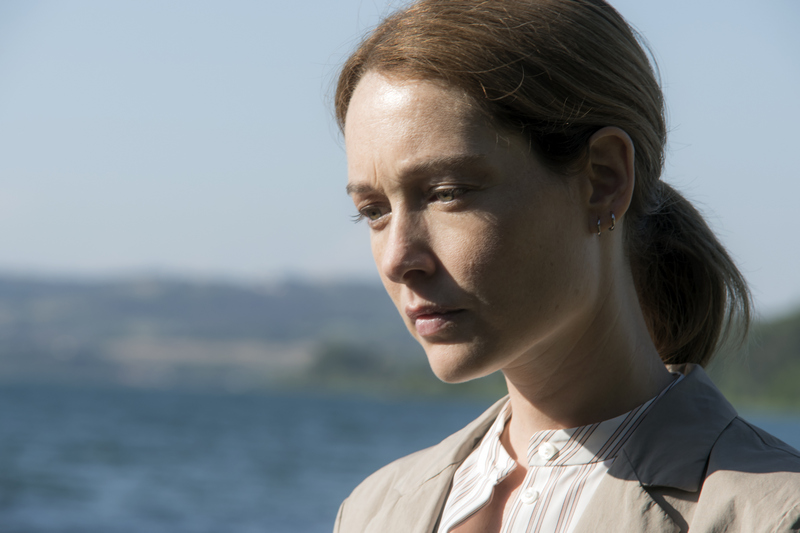
This biography TV movie, the first to be made on Chiara Lubich will focus on the early years, those between 1943 and 1950. It is a co-production by Rai Fiction and Casanova Multimedia, produced by Luca Barbareschi. Cristiana Capotondi, an established Italian actress will play Chiara in the movie, while Sofia Panizzi and Valentina Ghelfi will also be in the cast. The shooting of the film will begin in Trent in a few days’ time, and it will start with “the times when the war raged” and “everything collapsed” and only God remained, as Chiara herself related in one of the very first stories about the Focolare Movement’s beginning.

In the press release issued about the movie one reads: “Today, the tenacity in a figure like Chiara makes us consider the other person as an opportunity, a gift, a bearer of a seed of truth to be valued and loved, no matter how far apart we may be. Universal brotherhood is a prerequisite for dialogue and peace. Chiara’s message does not belong only to the Catholic world. She has contributed towards the value and role of women not only in ecclesiastical institutions but also and above all outside them”.

Cristiana Capotondi, the Italian actress, who is portraying Chiara Lubich in the film.

This movie will relate the story of the very first years, the foundation years, when Chiara realised that God was showing her the way to be followed and she responded, followed by an ever increasing number of people, who took roads that from Italy led to the whole world. It will also be a journey that speaks of the historical, social and ecclesial circumstances that Chiara experienced during the Second World War, the very first years after the war and the pre-conciliar years with ferments that stirred Catholicity.

The director and producers intend and want to relate all about “the young revolutionary girl, who shared everything with those in need”. ANSA news stated this on July 27 and continued to say that “she read the Gospel without the presence of a priest; she was considered as harmful to the society of her time and so she was forced to report about her work to the Holy Office. She passed through the most difficult test of her life when she was asked to abandon the Focolare leadership. But the stone she threw into the pond could not be stopped and created wider circles, so years later, when Paul VI came to rehabilitate the Focolare Movement, it had already spread throughout the world”.Stefania Tanesini


Understanding God’s Ways

Andrew Camilleri is a member of the Focolare Movement. Read his story in an article published by the Seminary Vocations Centre: “Understanding God’s Ways”

“The wish to become a priest sprouted within me when I was still very young. It was a very interesting process and it is only now that I can realise what God’s plan for me was. As it happened, I met the spirituality of communion as lived through the Focolare Movement through one of my friends. Life amongst the youth and the Focolare Movement community attracted me towards the Church and more so to participate in the Sacraments. I discovered how important unity within the church is and I wished to work hard towards this aim and to extend this to have a more united world.
I clearly remember myself sorting out my room before I go out and feeling that I could give away everything to God, giving up all my plans and projects just to follow Him. I felt that this was the nicest gesture that I could ever do with my life, even though I had a very promising career in front of me, not to mention the wish to start and maintain a wonderfully strong relationship.

I shared this experience with my spiritual director, who in turn encouraged me to attend the school of formation in Rome to make sure I could understand my feelings better. I accepted the offer and just a month later I was in Rome together with other young people from all over the world. This was a wonderful time which I hoped would never be over. Deep within me I did feel a yearning for a vocation but I had not yet discovered what this was. So, every evening, I used to go in front of the Holy Tabernacle praying and asking God to show me the way. Despite my continuous prayers, I still had not yet understood what my yearning was for. I recall my last visit to this chapel where I remember myself telling God: I trust You, and I will do as You tell me because You know me much better than I know myself.

The following morning, I was at the airport and I spent a whole day trying to find and book a seat on the plane back home to Malta. Although I could have very well remained stranded without any capital to use for a hotel, I could feel I was very happy and at peace with myself. The following morning, I kept on trying to find a possible empty slot and at one point I just found a little quiet corner and said the Rosary. It was then that without any prior warning I felt Our Lady invite me to follow her son’s footsteps. I immediately accepted and instantly found an empty slot on the plane back to Malta. I had been under the impression that all passengers were all flesh and blood like my other human brothers.

This was Good Friday and I had arrived home at about two; it was the time when I was wavering between attending the Good Friday service. I overcame the temptation to stay at home to rest and instead opted to attend the service to enkindle the grace within me, knowing very well that the kissing of the cross was essential to me.

After having shared this experience with my spiritual director, it seemed like a new adventure had just unfolded in front of me. I left for my formation as a Focolarino in Loppiano, Florence as soon as I finished my studies at the University of Malta. After two years studying there, I was requested to go to Asia and I ended up spending 18 years there. I spent these past 14 years in the Centre for the Movement of the Focolare and I am now preparing myself to be ordained as a priest.

Andrew Camilleriandrewcamilleri1@gmail.com

See also

Ordination ceremony:


Run4Unity with a difference!

This virtual edition of Run4Unity 2020, held during the Covid-19 pandemic, was truly an exercise in promoting and living unity concretely. The time zones and connections were ably coordinated.

“The goal of Run4Unity is to experience, at least for a day, peace and unity of the human family by promoting the Golden Rule. A world-wide relay race, from 11 am to 12 noon at different time zones, “passing the baton” from one zone to the other to symbolically extend a rainbow of Peace over the world.

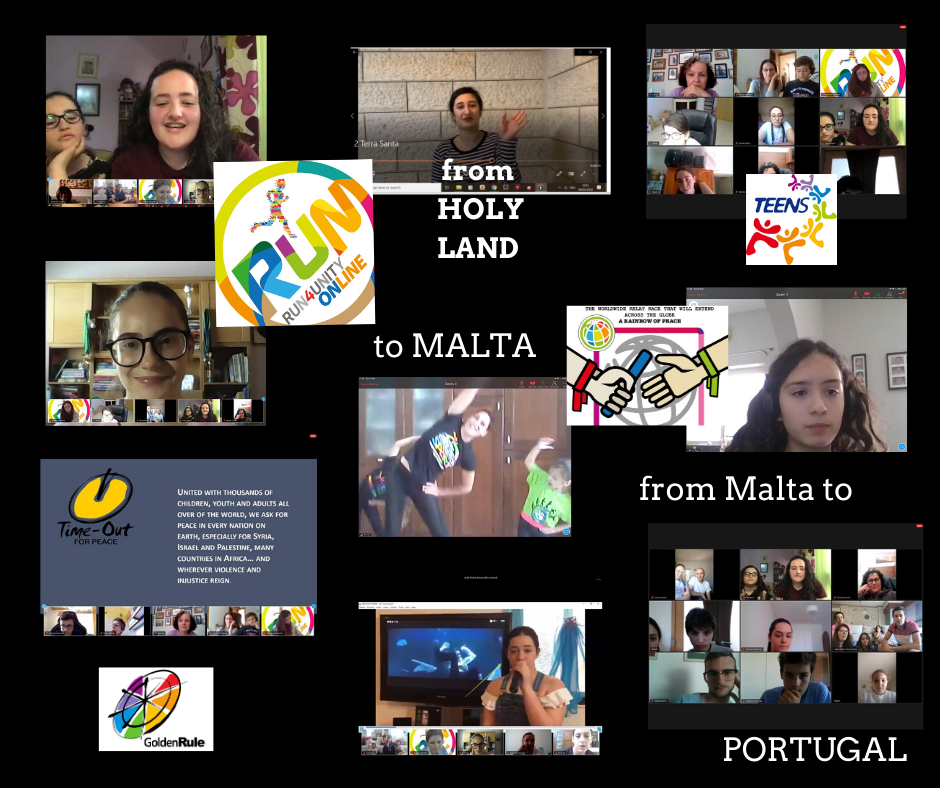
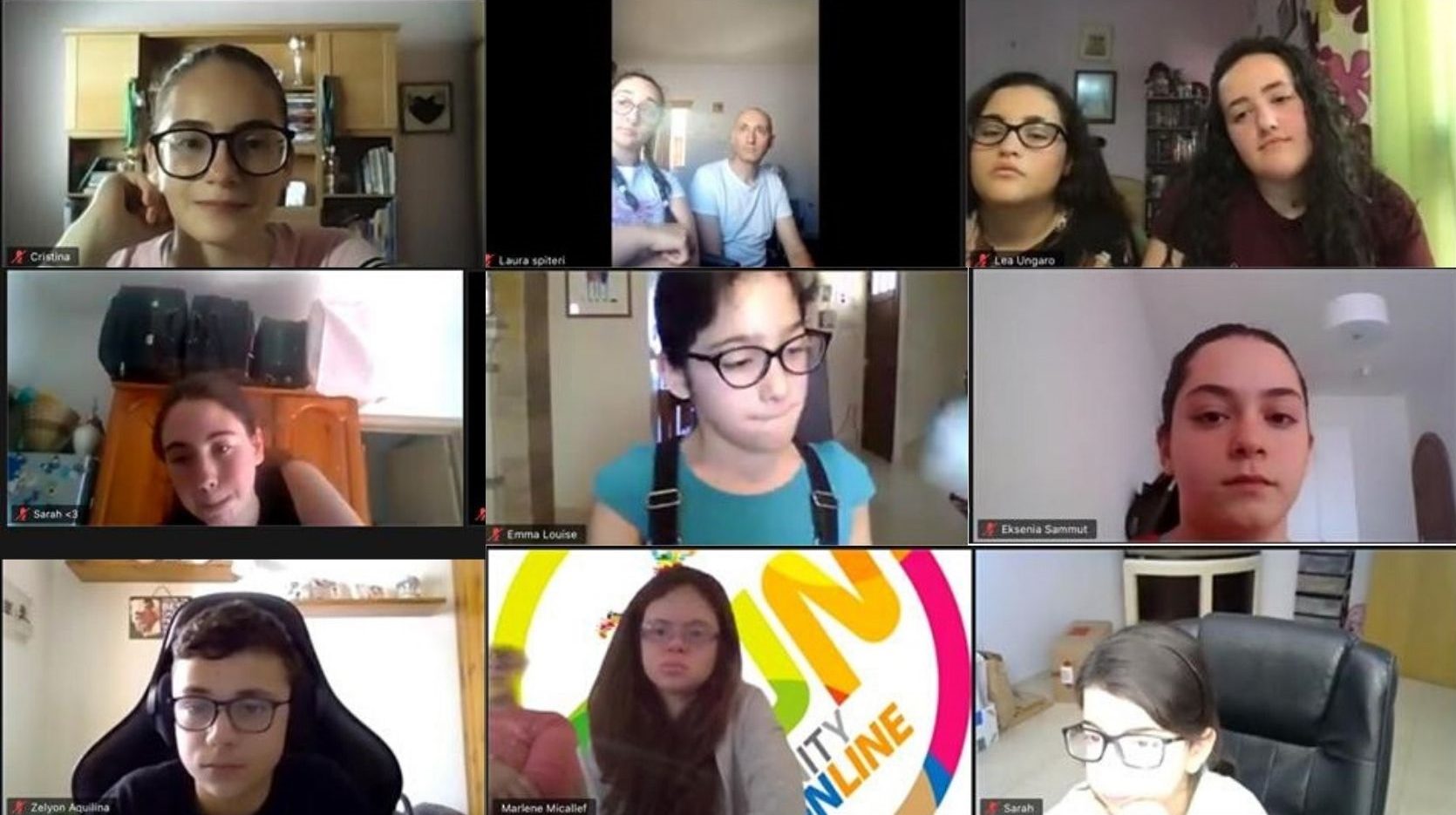
In Malta, this was exactly how a sunny Sunday morning on the 3rd of May 2020 was spent. Due to COVID-19 restrictions, we could not do it as we usually do, together in the open air but we were still together and moreover as one big family. The number of participants went up to more than 50 connected people. Teens, children and youth, joined by parents and grandparents, all took the initiative to actively participate.

We were also joined by some teens from Portugal and their families, to whom we then passed the baton. We, in turn, received the baton from Holy Land: two of us, Maya and Lea, were part of a ZOOM meeting with Holy Land. They spoke to a Maltese focolarina and the teens there and in other countries as well. Marja from Bethlehem gave us a message. At one point there was a melting pot of cultures, languages and religions – all united by Love.

The zoom relay in Malta gathered together Teens for Unity and friends, family members of the Focolare and youngsters from M.U.S.E.U.M – the Society of Christian Doctrine. It was a joy to be all together!

The teens4Unity introduced us into Run4Unity’s aim, using video clip with images of past Run4Unity in Malta and all over the world. We certainly couldn’t miss our online sporting event: a Physical Exercise Workout with our friend Elwanda. All the participants had to move their furniture and probably, move out of their comfort zone to unite in this exercise.

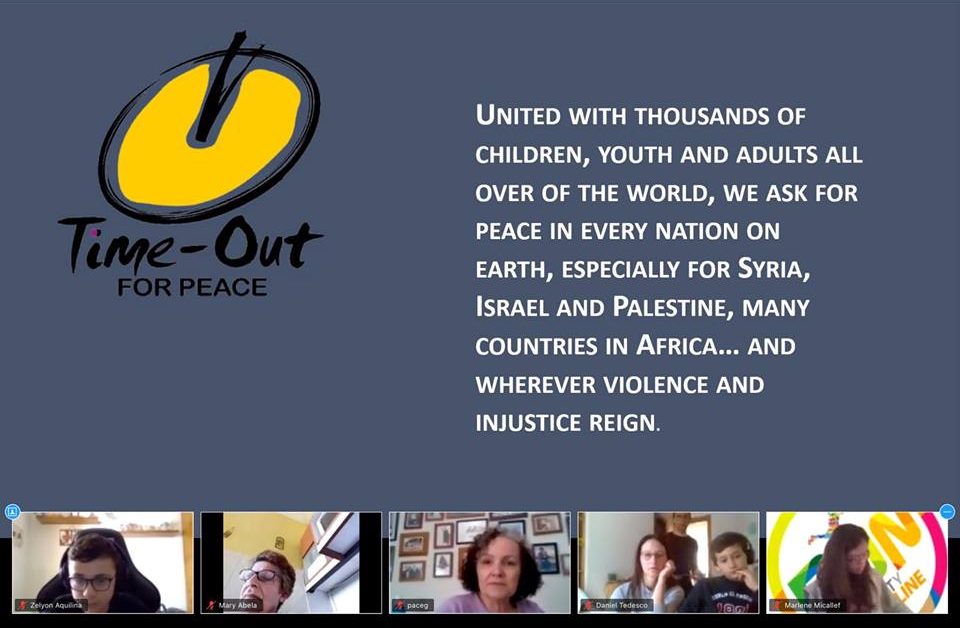
The TIME-OUT, our moment of prayer together for PEACE, concluded our special RUN4Unity during COVID-19 pandemic.

This edition of Run4Unity 2020 was truly an exercise in promoting and living unity concretely. The time zones and connections were ably coordinated.

Thanks and gratitude go to the organisers and all those who made our run4unity appointment possible! Let’s continue building bridges of unity wherever we are.