Towards new times: all people as one family

What effects has this pandemic had on life in society and in the Church? What did it bring about in the Focolare Movement? How can we live these new and as yet unknown times that await us? An open dialogue with Maria Voce. From an interview with Radio Inblu (Italy).

Q: As from 18th May, Mass can be celebrated again (with a congregation present), by taking all necessary precautions of course. Could you comment briefly on this?
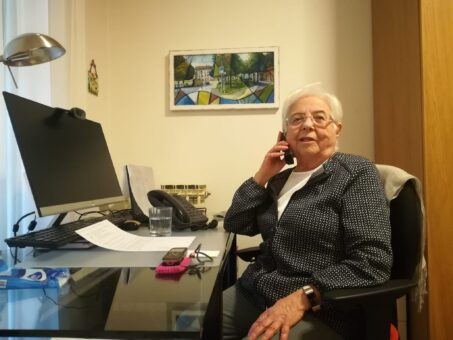
Maria Voce: We have always followed the Pope’s Mass and there have been very many opportunities to pray together online. But we cannot hide the fact that Christianity is an embodied religion. We feel the need to be physically present at the liturgy, to participate more directly and actively in the sacraments of Christianity. So we certainly missed participating in the Eucharist in a real way and this gift is now being given back to us.

So we are ready to do all that is required, to take precautions in order not to miss this opportunity.

Q: Of course, many things have happened during this time. We have had to review our behaviour and what we buy. What do you think the pandemic is bringing out in social life and therefore also in church life?

Maria Voce: It is bringing out beautiful things but there can also be bad things.

A first thing worth emphasizing is equality among all. The pandemic has shown that faced with this small virus that we have been hit by, we are all the same. It has affected the powerful as well as the poor, the rich and those who have nothing, children as well as adults, those in prison and those outside. So in this sense we are all truly equal.

At the same time the pandemic has also revealed many inequalities that are not created by the fact of being human, but are created by different cultures, by prejudices and by lifestyles. So some people can afford treatment and others cannot; some people have homes where they can isolate themselves and others are forced to live with several people in a very small space. Some people have lost their jobs and can draw on savings set aside in a bank account; others don’t have anything to draw on and when they lose their jobs, they and their families are in danger of going hungry.

So, unfortunately, inequalities have become even more obvious. And this should make us reflect, because it’s clear that these inequalities are not wanted by God, nor are they willed by human nature. They are due to the ill will of people who have not been able to manage correctly the gifts that God has given us all. We need to make up for these inequalities so as not to find ourselves, when the pandemic is over, in a worse state than we were before. Instead, we want to come out of this having gained from realising the need for equality and make programs that respect the equal dignity of all.

Q: What about the church community?

Maria Voce: For the church community, I feel this period has highlighted what is essential, because so many things have fallen by the wayside. We have seen that church walls are not essential but that living the Church as communion is essential. We’ve seen that going every day to visit Jesus in the sacrament of the Eucharist is not essential, but it is essential to love our neighbour; it is essential to answer with love to the people near us; it is essential to seek out inspiration for our lives from Jesus’ words in the Gospel. Many things have fallen away even on an ecclesial level.

However, this has done us nothing but good, because it spurs us towards the rebirth of which Pope Francis continually speaks, to the resurrection and the completely new start we can make in truly reforming the Church in a vital way, not in an institutional or formal way.

Q:  Which of these essentials is most essential?

Maria Voce: The most essential thing is to keep in mind that we are one human family. Being part of one human family must push us all to take care of each other and take care of creation, which is the only house this one human family is living in. We must care responsibly, attentively, precisely because Christianity makes us look at this reality also in a responsible way. We are all members of a family but we are all responsible for this family. Therefore, every person in this family is important; everyone has rights but they also have duties. There is a collective responsibility.

I think this must push us to make proposals, to put forward programs, to see what can be done to truly include everyone. We must propose ways forward both in the economy and in politics, ways that can truly look to the common good, not to the good of one group or another, not to the interests of one side or the other but to the good of all. So proposals should be put forward that aim towards a communion of goods on a more universal level.

Then the Church itself – and we too, in fact, as Focolare Movement – is universal, it has no boundaries. In a certain sense, the Church competes on equal terms with the virus. The virus is not afraid of borders but neither is the Church; the Church is universal because it is God’s family on earth.

We must look to this, God’s family, to see how to make it truly be one family. We must see how to create structures that enable the integral development of all, which respect the history, culture and way of life of each people, without coercing them into developing according to our models or our plans. At the same time, we should make available to each other all the talents with which God has endowed every people, every culture and every person. We can make them available to each other so that all together we can make the world become a common home that is ever more beautiful and ever more worthy of being inhabited by the children of God.

Q:  Maria Voce, what reactions has this time brought about in Focolare Movement? How have you been reflecting on this?

Maria Voce: The same reactions as everyone, in the sense that we too, from one day to the next, found ourselves not being able to organise our lives, neither personally nor as a Movement. So we had to change all our programs. It is an important year for us because it is the centenary year of Chiara Lubich’s birth. We have the General Assembly of the Movement planned for the month of September and several preparatory meetings for the Assembly were scheduled. All this ground to a halt from one moment to the next, from one day to the next, so we found ourselves completely unable to foresee, plan and think what could be done. Naturally, this was a shock.

At the same time, Chiara Lubich taught us to live the present moment, wanting to do only what God asks us to do. Therefore we want nothing other than His will and to seek together – precisely by listening to each other and trying to understand the needs of all – to hear together what God wanted to tell us through this circumstance. In doing this, first of all we changed all the programs, thinking always not only of the needs of the people who were supposed to participate in the programs, but also of the needs of those who would perhaps suffer economic losses from the changes, who would experience upheavals; there were many things of this kind.

We did this and did it joyfully, without letting ourselves be overwhelmed by the situation. And now we are seeing that it was all in God’s plan, because it has led us to greater simplicity in life, to reviewing our lifestyles, to a greater sense of moderation when deciding whether to buy something now or not. We have put off acquiring something we had planned to buy, delaying or deciding against it entirely in order to make that sum of money available for more immediate needs.

It led us to seeing how all our families are and how they are coping at the moment. Many of our people, like others, have lost their jobs and don’t know how to manage. This has brought about a more complete, open and transparent communion of goods among all. So we have communicated more about the various needs but also about what Providence has sent us. Truly we can say that Providence has shown us once again that it is true, that it is a reality, that the Father sends what is needed to his children if his children want to live for him and in mutual love.

So, in a way, he has given us the light to see the driving force that moves us, this love which is the love that God has placed in our hearts, not as focolarini but as people, as human beings. For us focolarini, this light takes on many colours because it becomes love that leads to unity, a love that enables us to give our lives for one another and risk everything. This really is something that has energised the Movement throughout the world.

The Movement, like the Church, is also universal, so we suffered what our people in China were suffering, what those in America, the Middle East, everywhere, or in Italy were suffering. And we lived all these things together so that people who had more gave to those who had less. Aid has come from China, Korea, Japan, the Middle East and Syria. Maybe it was aid in terms of encouragement and good wishes, but everyone said that this great family that lives the Ideal left to us by our founder, Chiara Lubich, wants to be one. Through unity we want to help the world become one.

From an interview with Alessandra Giacomucci for the Ecclesia (Radio InBlu) column, 8 May 2020


World day of prayer for humanity

With the day of interreligious prayer on May 14th, the Higher Committee for Human Fraternity reminds us that the current pandemic has marked a point of no return: our future will be secure only by looking to the common good, not to the good of one group or another, not to the interests of one side or another but to the good of all.” 
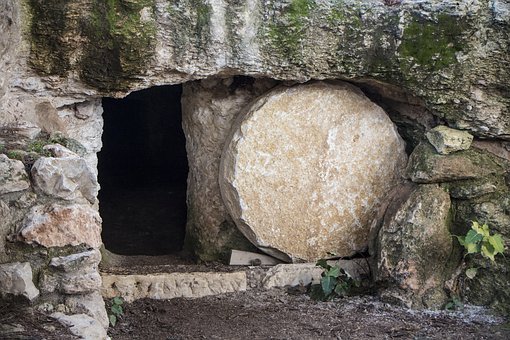
Thus, Maria Voce, president of the Focolare Movement, affirmed the Movement’s full participation in the day of prayer for humanity, which was proclaimed also by Pope Francis on Sunday, May 3rd, asking that: “On this coming 14th May, believers of all religions should unite spiritually for a day of prayer, fasting, and works of charity, to implore God to help humanity overcome the coronavirus pandemic.”

“We are one big family,”Maria Voce added, “formed by Christians, by believers of various religious traditions, together with people without specifically religious beliefs. I encourage everyone to live Thursday, May 14th, in a spirit of prayer – according to their respective faiths and traditions – of fasting and concrete commitment to help those close to us, especially the weakest and marginalized. We will do this at the local level, as every community deems best, always abiding by the directives in force, and in a spirit of true and effective fraternity.”

“We are certain that the prayers lifted up to God by his sons and daughters will be heard, for the good of the great family of humankind; and that the trial we are all experiencing will truly make us stronger in the shared pilgrimage of life.”

Stefania Tanesini

Source: www.focolare.org

Photo credit: George Martell/The Pilot Media Group (https://www.flickr.com/photos/bostoncatholic/12138496174)


Word of Life for April

“Blessed are those who have not seen and yet have come to believe” (Jn. 20:29).

The Gospel of John describes the occasions when the Risen Jesus appeared to the apostles, to Mary Magdalene and to the other disciples. Jesus bore the marks of the crucifixion but his appearances filled the hearts of those who saw him with joy and hope again. On one of these occasions, the apostle Thomas was missing. The others, who had seen the Lord, told him about this wonderful experience, perhaps because they wanted to transmit the same joy to him. Thomas, however, could not accept the testimony of others; he wanted to see and touch Jesus for himself.
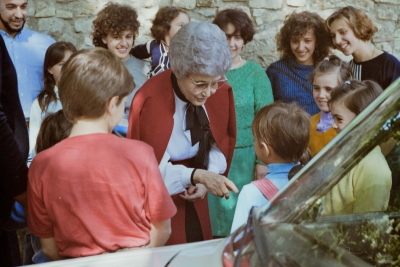
And this is what happened a few days later: Jesus appeared again to a group of disciples when Thomas was present. The latter proclaimed his faith, his total belonging to the Risen One, by saying, “My Lord and my God!” Jesus answered him,

 This Gospel was written after the eyewitnesses to the life, death and resurrection of Jesus had died.  The transmission of the Gospel message to subsequent generations was based on the testimony of those who, in their turn, had received the proclamation. Herein lies the beginning of the Church, the people of God who continue to proclaim the message of Jesus by faithfully transmitting and living his word.

We too have met Jesus, the Gospel and the Christian faith through the words and witness of others and we have believed. For this reason “we are blessed”.

Blessed are those who have not seen and yet have come to believe

 To live this Word it is helpful to recall a passage written by Focolare founder, Chiara Lubich: “He wants to confirm in us –  and in everyone who did not live at the same time as Jesus – the belief that we all share in the same reality as the apostles. Jesus wants to tell us that we are not at a disadvantage in comparison with those who actually saw him. The fact is we have faith and this is the new way of “seeing” Jesus.  With faith we can approach him, understand him and meet him in the depths of our heart. With faith we can discover him when two or more people are united in his name, or in the Church which is his continuation […]. These words of Jesus are an invitation to revive our faith, not to wait for support or signs of progress in our spiritual lives and not to doubt the presence of Christ in our lives and in history, even though he may seem far away from us. […]. He wants us to believe in his love, even if we find ourselves in difficult situations or if impossible circumstances prevail upon us.[1]

Anne is a young Australian woman who was born with severe hearing loss. She says, “During my adolescence, I wondered why I was still alive because the burden of my disability was so great. My parents, who live the Word of Life, always gave me the same answer, ‘Anne, God loves you immensely and has a special plan for you.’ They helped me avoid being closed in on myself and totally blocked by my physical difficulties.  They encouraged me to ‘be the first to love’ as God had done with us. I have seen that many situations around me have changed:  people have become more open towards me and towards others. My father gave me a personal message that he told me to open after his death.  He had written just one sentence, ‘My night has no darkness’. It is my daily experience: every time I choose to love and serve those around me, there is no more darkness and I can experience the love that God has for me.’

Letizia Magri

[1] Chiara Lubich Word of Life April 1980

Related experience: “My Night has no Darkness” (Source: www.focolare.org)

https://soundcloud.com/user-63571203/april-2020


Chiara’s legacy: “Be a Family”

Were I to leave this earth today, and were you to ask me for a final word about what our Ideal is, I would have to say, certain that it would be understood in its deepest sense: “Be a family”.

Are some among you suffering from spiritual or moral trials? Be understanding to them, as a mother would, and even more. Enlighten them through your words and through your example. Do not allow them to miss the warmth of a family, but rather increase it.

Are any among you in physical pain? May they be our preferred brothers and sisters. Suffer with them. Try to understand their pain completely. Share with them the fruits of your apostolic activities so that they may know that, more than anyone else, they have contributed to them.

Are any among you approaching their final moments of life? Imagine you are in their place, and do for them what you would want done for yourself, until their very last breath.

Are any of you rejoicing because of a success, or for any other reason? Rejoice with them, so that their consolation may not fade and their hearts not close up, so that their joy may belong to everyone.

Are some moving to another place? Do not let them leave without filling their hearts with a single legacy: the sense of a family, so that they may take it with them wherever they go.

Never place any kind of activity, either spiritual or apostolic, before the spirit of being a family with the brothers or sisters with whom you are living.

Wherever you go to bring Christ’s ideal, to spread this immense family of the Work of Mary, you can do no better than to try to create, with discretion and prudence, but with solid conviction, the spirit of a family. It is a humble spirit; it wishes the best for everyone; it is not proud… to sum up, it is true, complete charity.

So, were I to leave this world today, in fact, I would let Jesus in me repeat to you: “Love one another… so that all may be one.”

Chiara Lubich


(Source: Essential Writings, New City Press, p.48, “A legacy: Be a family”)


Ecumenical initiative: “Light a candle”

Download pdf

Presidents of Churches Together in England have issued a call to prayer in the light of the Coronavirus pandemic. This is for all churches and people of prayer to join on Sunday 22nd March, Mothering Sunday. They write:

This Mothering Sunday, 22nd March, we are calling all churches to a National Day of Prayer and Action. At such a time as this, when so many are fearful and there is great uncertainty, we are reminded of our dependence on our loving Heavenly Father and the future that he holds.

At 7pm this Sunday, light a candle in the windows of your homes as a visible symbol of the light of life, Jesus Christ, our source and hope in prayer.

Whether you are continuing to worship as congregations or not, we have the great privilege and freedom to be able to call upon God, wherever we are, individually and corporately, for healing in our nation. We would pray for all in leadership at this time, making decisions about the containment of the COVID-19 virus, for those working in health and social care, and especially for the most vulnerable, whether elderly or those with underlying health conditions.

There are already stories being told of wonderful acts of kindness across neighbourhoods. Alongside your prayers, take the opportunity to telephone or email someone who is isolated, buy some additional food for your local food bank, or offer to deliver shopping for an elderly neighbour. We may not be able to touch physically, but we can make connections in so many other ways.

In the meantime, do please attend to all the government health advice that will be issued, and look out for resources from your specific church governing bodies. At least for those of us in the global North, we do seem to be in unusual times, and wisdom and flexibility about worship gatherings are a key part of our Christian discipleship during this period.

We note that this call to prayer and action comes on Mothering Sunday: a time of thankfulness, remembering especially mothers who have served us, often in very costly ways. It is also a very mixed day for many. For some the remembrance is painful, and for others Mothering Sunday is a reminder of disappointment or loss. In many ways, this period under the shadow of the coronavirus will be prompting similarly diverse reactions and so it seems especially appropriate that the call to prayer is made this Sunday. At this time of uncertainty join in with the National Day of Prayer and Action, lighting a candle of hope.

“Cast all your anxiety on him, because he cares for you” 1 Peter 5:7

Presidents of Churches Together in England

Archbishop Justin Welby,

The Archbishop of Canterbury Cardinal Vincent Nichols,

The Cardinal Archbishop of Westminster Revd Dr Hugh Osgood,

The Free Churches Moderator Archbishop Angaelos of London, CTE President for the Orthodox Churches

Pastor Agu Irukwu, CTE Pentecostal President


Maria Voce: “Nothing can stop us from loving”

A video-recorded message from Maria Voce, Focolare President, to the Movement’s communities around the world, for 14th March, the anniversary of the death of Chiara Lubich.

Watch video on Vimeo

https://vimeo.com/397455179


Jesús Morán: “We are living in a time of grace”

Jesús Morán, Co-president of the Focolare Movement, in his homily during the Mass celebrated behind closed doors, on 14 March 2020, and transmitted via streaming shared the following thoughts:

“(…) In these last few weeks, which have also been during Lent, a thought overwhelmed my soul: the vanity of all things, the insecurity of our ability to deeply understand reality, life and the course of history. In fact, it only took a virus, a non-cellular microorganism, to put in jeopardy all our great reasoning and our security, our economic plans, our political strategies; to trigger panic worldwide and highlight the woes of so-called globalization. As a newspaper headlined a few days ago, using football jargon: Coronavirus 1 – Globalization 0. That is the sad truth.

When thinking about the things that have been written in recent years on the phenomenon of culture in our times, the countless analyses and counter-analyses about the evolution of history and so on, I felt dismay and an almost paralyzing sadness. But it was then that I made a formidable rediscovery: Revelation, the Word of God addressed to humanity in human words and intelligence; the thought of God expressed in human words about the depths of life and history; a breath of understanding. In fact, I think that only the Word of God can provide us with answers for the period we are living in, because it alone preserves an eternal wisdom that goes beyond the times without losing its meaning. In the light of Revelation we realize something as overwhelming as it is paradoxical: that we are living a time of grace.

Wisdom! This is the right solution. This is indeed the time of wisdom, a time for wisdom; a vision of reality that moves on other tracks, which is extremely imperative and indispensable today. (…)

Wisdom that leads to an understanding of reality enlightened by love and that, precisely for this reason, triggers a formidable movement of living as one family. Truly God can do prodigious things, even in the midst of evil. He defeats it with his plan of love.

Chiara’s life spanned almost a century and she lived it like a river of wisdom that watered the earth. She was attentive to the events of history and did not stop at what was on the surface of things, but went into depth and looked above to draw on the thought and vision of God and from God. That is why she paid no attention to anything but His Word.

Unity, in fact, is God’s plan for humanity; it is the testament of Jesus, the Incarnate Word. Now we can see how much this word, unity, because it is anchored in Revelation, goes beyond the passing events, times and eras of history. It represents a vision of meaning that involves the past, present and future. It is a prophetic perspective that can activate the best energies of men and women of all latitudes, cultures, ethnicities and social conditions. Strengthened in unity we can transform the “globalization of indifference” into the “globalization of fraternity”.

The match is not over. Of one thing we are certain: God’s mercy will triumph.”

Jesús Morán


Important announcement regarding the Centenary Mass for Chiara Lubich

Due to recent developments regarding Covid-19 in our country, the Centenary Mass for Chiara Lubich, which was to take place on Saturday 14 March, has been postponed. Future date to be announced.


March Word of Life

Word of Life

for ages 4-8 | for ages 9-17 | Audio

           “In everything do to others as you would have them do to you;
for this is the law and the prophets.”
(Matt. 7:12)

 When making important decisions in life, how often do we look for a “compass” to ensure that that we make the right choice?  As Christians, how often do we ask ourselves what is the very essence of the Gospel message, the key to enter into the heart of God and live as his children here and now?

These words of Jesus provide a clear answer and are easy to understand and put into practice.  They are taken from Matthew’s Gospel and are part of the great Sermon on the Mount which records Jesus’ teachings on how to fully live the Christian life. His teaching is summarised in this concise statement.

Nowadays, there is a need for meaningful but brief and effective messages:  we could welcome this Word as a precious tweet to constantly keep in mind.

“In everything do to others as you would have them do to you; for this is the law and the prophets.”

To better understand what to do for others, Jesus invites us to put ourselves in their shoes; he did just this when, out of love for us, he took on our human nature.

If we ask ourselves what we expect from our parents, children, work colleagues, politicians and spiritual leaders, we realise that we would like welcome, listening, inclusion and support in material needs. In addition, we would also like sincerity, forgiveness, encouragement, patience, advice, guidance and education …. For Jesus, it is the inner attitude which then gives rise to practical action and leads to the fulfilment of all of God’s Law and all the richness of the spiritual life.

This Word is the “Golden Rule”, a universal teaching contained in the different cultures, religions and traditions that humanity has developed over the passage of time. It is the basis of all authentically human values that lead to peaceful coexistence, with just and supportive personal and social relationships.

“In everything do to others as you would have them do to you; for this is the law and the prophets.”

This Word encourages us to be creative and generous, to take the initiative for the benefit of everyone and to build bridges even towards people who we do not count as friends. Jesus himself said and did just this. It asks us to avoid being closed in ourselves so that we can be credible witnesses of our faith.

Chiara Lubich encouraged us to do this when she wrote: “Let’s try. A day lived this way is worth a lifetime… We will be filled with a joy we have never felt before…God will be with us because he is with those who love… Sometimes we may slow down and feel discouraged and be tempted to stop… But no! Have courage! God gives us the grace we need and so we can always start again. If we persevere we will see the world around us slowly change. We will understand that the Gospel makes life fascinating. It brings a light into the world, it gives flavour to our existence and contains the principle for solving all problems. And we will not feel at peace until we communicate our extraordinary experience to other people – to friends who can understand us, to relatives, to anyone with whom we feel compelled to share. Hope will be reborn.” [i]

“In everything do to others as you would have them do to you; for this is the law and the prophets.”

Ramiro was one on the longest standing workers in his team. He heard that new colleagues were about to join them in their office.

He asked himself, “If I were to enter this office for the first time, what would I like to find? What would make me feel at ease?”   He began to create more space and involved other colleagues in finding more desks.  They worked together to create new and welcoming workstations so that when the newcomers arrived, they found a positive atmosphere and a united working community.

Letizia Magri

[i] Chiara Lubich, Word of Life, April 1978

https://soundcloud.com/user-63571203/march-2020


February Word of Life

Immediately the father of the child cried out, “I believe; help my unbelief!” (Mk.9:24)


for ages 4-8 | for ages 9-17 | Print | Audio

Jesus was making his way to Jerusalem.  He was with his disciples who he had begun to prepare for this decisive appointment. He was going to meet with rejection by the religious authorities, be condemned to death by the Romans and then be crucified and rise again. This was very difficult for Peter and his other followers to understand but Mark’s Gospel enables us to gradually comprehend Jesus’ mission.  The vulnerability of his suffering will be the means of salvation for humankind. On the journey, Jesus met many people and because of his openness, he understood their needs.  Here we see him responding to a father who was crying out and asking him to heal his son who had serious difficulties.  The child was probably suffering from epilepsy. For the miracle to happen, Jesus had to make a request.  He asked the father to have faith.

Immediately the father of the child cried out, “I believe; help my unbelief!“

The father shouted his answer in front of the crowd that had gathered around Jesus.  His words seemed almost contradictory.  This man, like us, understood how fragile faith can be; it was difficult for him to trust completely in God’s love and in his plans for each of his children. However, it is also true that God trusts us all and does nothing without our contribution, without our freely given “yes” to him.  He asks us to do our part even though this may be very small.  He asks us to recognise his voice that speaks through our conscience, to trust him and, as a consequence, to begin to love.

Immediately the father of the child cried out, “I believe; help my unbelief!“

We are often immersed in a culture than regards aggression as the key to success.  This aggression can be expressed in a variety of ways. In contrast, the Gospel presents us with a paradox.  We can look on our weaknesses, our limits and our fragility as the starting point in relating to God and in participating with him in the greatest of challenges – the unity of the entire human family. Throughout his life, Jesus taught us about the logic of service and of taking the “lowest” place.  This is the perfect position to transform what could seem defeat into victory that is not transitory and selfish but enduring and shared by all.

Immediately the father of the child cried out, “I believe; help my unbelief!“

Faith is a gift.  We can and must persevere in asking for it so that we can collaborate with God in giving hope to others. Chiara Lubich, the founder of the Focolare, wrote, “To believe and to feel that God looks at us and loves us means that every prayer, everything that happens whether good, bad or indifferent, every illness, every single thing […] is seen by God.  If God is Love, then the most logical thing we can do is trust him completely. We can confide in him often and tell him about our concerns, our proposals and all the things we plan to do.  Each one of us can abandon ourselves to his love with complete confidence that we will be understood, comforted and helped. […] We can say to him, ‘Lord, let me stay in your love. Don’t let me live for a single moment without feeling, recognising and knowing – through faith or from experience – that you love me and you love everyone.’  Then, we can continue to love. Loving makes our faith become solid and steadfast.  We will not only believe in God’s love, we will also feel it within our souls and we will see ‘miracles’ happen around us.” [i]

Letizia Magri

[i]  C. Lubich. Word of Life October 2004

https://soundcloud.com/user-63571203/february-2020