Pentecost Ecumenical Service: “One Fire – Many Logs”

Christians Together in Malta -Malta Ecumenical Council (CTM) held their annual Pentecost Ecumenical Service on 13 June at St Paul’s Anglican Cathedral, Valletta. The theme of the service was: “One Fire – Many Logs.”

It was a beautiful uplifting service, crafted together with the help of several members of CTM. There are currently 27 members in CTM belonging to 10 different Christian churches.

The Chairman of CTM Rev. George-Alexandru Popescu, Romanian Orthodox, was ably assisted by Joe Aquilina, of the Catholic Charismatic Renewal Movement in Malta. The Focolare Movement was officially asked to present one of the items of the service, viz: some reflections from Chiara Lubich on the Holy Spirit.

The service commenced with a welcome from the Chancellor of the Anglican Cathedral, Canon David Wright, and a hymn, “Come down, O love divine” sung by a choir of the Anglican Cathedral.

Rev. Popescu then welcomed the congregation to the service, followed by Byzantine songs about the Holy Spirit  sung by members of the Ecumenical Patriarchate of Constantinople. We could follow the English translation.

We were then regaled by a surprise, a song, “Shout to the Lord” sung in Chinese and English by a choir of around 20 youths male and female from the Chinese Christian Church, accompanied by two players on electric pianos. It was really original and beautiful. The families of these youths were also present around 80 persons in all.

After a reading from the Anglican church, two members of the Focolare Movement, Jacqueline England and Enrico Overend, read three reflections by Chiara Lubich on the Holy Spirit. Then a member of the Scots Church read from Acts 2: 1-21. These were followed by a Maltese song ” River” that was sung also in English and Italian. Another reading from the Gospel was read by a member of the German Evangelical Church (Lutheran).

A beautiful homily was delivered by Rev Stephan Attard, Dean of the Faculty of Theology at the University of Malta. He stepped in at the last minute, as the original speaker was unwell.

Another reflection followed by the Serbian Orthodox Church.

We then all recited the Our Father, each in their own language, led by Rev Hector Scerri of the Roman Catholic church.

The final song was sung in Malayalam by members of the Syro-Malabar Church. There were around 20 young men and women who sang “Spirit of the Soul” to beautiful Indian music played on an electronic instrument.

A collection was held during the last song to be given to Medicins Sans Frontiers to help them in their work in war zones.

At the end we had a surprise address by a female Evangelical pastor, who was visiting with her husband. Then Rev. David Wright invited the congregation to refreshments prepared by the Anglican congregation.

It was a beautiful celebration of unity in diversity, all of us united as brothers and sisters in Christ, and so diverse in culture and language. I thank God for this unique experience in which my soul reaches out beyond my church and country, to global love and unity.

Anna Caruana Colombo

Photos courtesy of Rev. A. Popescu


Pope Francis: “A revolutionary journey that did much good for the Church.”

480 representatives of world faiths took part in the interreligious conference promoted by the Focolare Movement which began on 31 May at the Mariapolis Centre in Castel Gandolfo, Rome, and which concluded on the 4 June in Assisi. A delegation of 200 participants was received in audience by Pope Francis.

The international interreligious conference “One Human Family”, promoted by the Focolare Movement, has just concluded with a pilgrimage of fraternity to Assisi. There were 480 people present from 40 countries, speaking 12 languages.

In the city of peace, the prayer for fraternity, justice and reconciliation for all peoples in conflict resounded as a solemn pact, welcomed and pronounced by the participants, each according to their own faith.

Among them were rabbis, imams, Catholic priests, Theravada and Mahayana Buddhist monks, as well as Jewish, Muslim, Christian, Hindu, Buddhist, Sikh, and Baha’i lay people, and believers of traditional African religions, of all generations.

The conference was organised by an interreligious team that centred its program on the supreme good of peace, which is extremely threatened today.

“The experience we are living is incredible, it’s an experience of family and there is the presence of the divine,” say Rita Moussallem and Antonio Salimbeni, coordinators of the Focolare Movement’s Centre for Interreligious Dialogue. “When we had the idea of this conference, we could not have imagined all that was about to happen: the conflict in the Holy Land and the flare-up of crises in other parts of the world. Yet, it is precisely today that dialogue is more necessary than ever. We talked about the steps needed to build peace, but the emphasis was above all on the actual experience that we are living and that we want to bring to the world. On the other hand, it is the tangible encounter with the other that transforms the many polarizations into relationships.”

The program

Meeting, listening, steps of reconciliation, sharing the pain of peoples were the characteristic of this conference that alternated between panel discussions led by experts and dialogue groups among the participants. Politics and international diplomatic action, economics, artificial intelligence and the environment were the topics discussed, all in the perspective of peace. Numerous academics and experts from many cultures, religions and backgrounds addressed the conference. We will name but a few: Ambassador Pasquale Ferrara, Director General for Political and Security Affairs at the Ministry of Foreign Affairs and International Cooperation, Chief Rabbi Marc Raphaël Guedj, Muslim theologian Shahrzad Houshmand Zadeh, Dr. Kezevino Aram, President of the Indian organisation ‘Shanti Ashram’, Rev. Kosho Niwano, President-designate of the Japanese Buddhist movement Risho Kossei Kai, Mr. Fadi Shehadé, founder of the RosettaNet Project, former CEO of ICANN, the economist Luigino Bruni, Indian philosopher Prof. Priya Vaidya, Islamic theologian Adnane Mokrani, Indonesian Prof. Dicky Sofjan of the International Centre for Law and Religious Studies, Prof. Fabio Petito, Professor of Religion and International Affairs at Sussex University (UK) and many others.

Ambassador Ferrara emphasized, “Religions have a fundamental role to play today. Contrary to what the realists of international relations say, war is not the normal condition of humanity. Religions can perform the role of the ‘critical conscience’ of humanity and can address politics, pointing out what the priorities are. There is a need for political imagination; to imagine the future of this planet in a constructive, new, creative way. We need to cultivate something that is currently missing in international relations, which is trust.”

There were also many rich sessions dedicated to personal testimonies, projects, actions focused on collaboration between people and communities belonging to different religious faiths, for peace and in support of the needs of their respective peoples.

An Audience with Pope Francis

On the 3rd of June, a delegation of 200 participants was received in audience by Pope Francis, who in his speech defined the journey started by Chiara Lubich with people of different religions as: “A revolutionary journey that did much good for the Church.” “The foundation of this experience,” the Holy Father further affirmed, “is the love of God expressed through mutual love, listening, trust, hospitality and getting to know one another, all the while fully respecting each other’s identities.”

“While these words give us deep joy,” commented Margaret Karram, President of the Focolare Movement, “we also feel the responsibility to do much more for peace. This is why we want to work to strengthen and spread the culture of dialogue and of “care” for people and for creation. The Pope confirmed this to us when he said that dialogue between religions is a necessary condition for world peace. In such terribly dark times like these, humanity needs a common space to make hope tangible.”

Stefania Tanesini

Photos: © CSC Audiovisivi – Caris Mendes e Carlos Mana, Vatican Media, RKK.

Source: Focolare Official International Website


May Word of Life

“Whoever does not love does not know God, because God is love” (1 John 4:8).

for ages 4-8 | for ages 9-17  | Print | Audio


The first letter of John is addressed to Christians who live in a community in Asia Minor and it encourages them to restore fellowship because they are divided by different doctrines. The author exhorts them to keep in mind what has been proclaimed ‘from the beginning’ of Christian preaching and repeats what the first disciples saw, heard and touched when they lived together with the Lord. By doing this, the community will be in communion with the first disciples and, therefore,  with Jesus and the Father. [i]

“Whoever does not love does not know God, because God is love.”

The author gives a reminder of the very essence of the revelation received by believers:  he emphasizes that, in Jesus, God first loved us and totally took upon himself human existence with all its limitations and weaknesses. On the cross, Jesus shared in our separation from the Father, experiencing it in his own flesh. He brought healing through the total gift of himself, in loving  without limits or conditions. His words and his life show us what love truly is.  From Jesus’ example we understand that to truly love involves courage, hard work and the risk of facing adversity and suffering. But those who love in this way, participate in God’s life and experience his freedom and the joy of self-giving. By loving as Jesus loved us,  we become aware that we become free from ourselves and from the selfishness that closes the door to communion with our brothers and sisters and with God.

 “Whoever does not love does not know God, because God is love.”

The human heart has always longed, perhaps unconsciously, to know God who created us and who knows us in the deepest way possible. If God is love, by loving like him we can glimpse something of this truth. We can grow in the knowledge of God because we essentially live his life and walk in his light. And this is fully accomplished when love is mutual. For if we love one another, ‘God abides in us.’ [ii]  When this happens, it is similar to two electric poles coming into contact and producing light.

“Whoever does not love does not know God, because God is love.”

Chiara Lubich said, ‘To witness that God is love is the great revolution we are called to offer  to the modern world which is experiencing  extreme tension  just as the early Christians bore testimony to this in the pagan world of their time’. How can we do this? How can we live this love that comes from God?

‘By learning from his Son to put it into practice… in particular, let us focus on serving our neighbours, especially those closest to us, beginning with little things, with the most humble kinds of service.  Let us make the effort, following Jesus’ example, to take the initiative in loving, being detached from ourselves and embracing all the small or big crosses that this might entail. In this way,  we too will soon reach that experience of God, that communion with him, that fullness of light, peace and inner joy which Jesus wants us to have.’[iii]

“Whoever does not love does not know God, because God is love.”

Santa often visited a care home for the elderly that was run by a Catholic association. One day she and a colleague called Roberta met Aldo, a tall, very cultured and very wealthy man. Aldo looked sternly at the two young women and said,  ‘Why do you always come here? What do you want from us? Why don’t you just let us  die in peace?’ Santa didn’t lose heart and told him, ‘We are here for you, to spend some time together, to get to know each other and become friends.’

They continued to visit the home regularly. Roberta recounts, ‘That man was particularly closed in on himself and dejected. He did not believe in God. Santa was the only one who was able to get close to him,  gently listening to him for hours.  She prayed for him and, on one occasion, gave him a rosary which he accepted.’  Later, Santa learnt that he had spoken her name as he was dying. The pain of his death was lessened by the fact that he died peacefully, holding the rosary she had given him.’

Compiled by Silvano Malini and the Word of Life Team

[i] Cf. 1Jn 1:1-3
[ii] Cf 1Jn 4:12
[iii] C. Lubich Word of Life May 1991


March Word of Life

“Create in me a pure heart, O God, and renew a steadfast spirit within me.” (Ps. 51[50]:10.

The phrase of Scripture offered to us during this Lenten season is part of Psalm 51. In the twelfth verse, we find the poignant and humble invocation, ‘Restore to me the joy of your salvation and grant me a willing spirit, to sustain me.’ The passage in which the sentence is found is known as the ‘Miserere’. In this text, the author begins by exploring the hidden places of the human soul in order to understand its deepest nuances. On one hand, there is an awareness of a deep inadequacy in our relationship with God but, at the same time, there is an insatiable yearning for full communion with the One from whom all grace and mercy proceed.

Create in me a pure heart, O God, and renew a steadfast spirit within me.”

The Psalm takes its cue from a well-known episode in David’s life. He has been called by God to care for the people of Israel and to lead them on the paths of covenant obedience; however, he transgresses during his mission. After committing adultery with Bathsheba, he ensures that her husband, Uriah the
Hittite, an officer in his army, is killed in battle. The prophet Nathan reveals to him the seriousness of his guilt and helps him acknowledge it. This is the moment when he confesses his sin and is reconciled with God.

“Create in me a pure heart, O God, and renew a steadfast spirit within me.”

The psalmist describes the king using heartfelt forms of invocation that flow from his deep sense of repentance and total trust in divine forgiveness: ‘erase,’ ‘wash me,’ ‘cleanse me.’ In particular, in the verse that interests us, he uses the verb ‘create’ to indicate that complete deliverance from human frailty is possible only for God. It expresses the realization that only God can make us new creatures with ‘pure hearts’, filling us with his life-giving spirit, giving us true joy and radically transforming our relationship with him, with other people and with nature and the cosmos through a ‘steadfast spirit’.

“Create in me a pure heart, O God, and renew a steadfast spirit within me.”

How can we put this word of life into practice? The first step is to recognize that we are sinners in need of God’s forgiveness and to have an attitude of immense trust in him. Maybe our repeated mistakes make us feel discouraged and tempt us to close us in on ourselves. When this happens, we should try to keep the door of our heart open, at least a little.

In the early 1940s, Chiara Lubich wrote to someone who felt unable to go beyond her own limitations: ‘You need to remove every other thought from your soul and believe that Jesus is drawn to us when we humbly and lovingly confide in him and tell him our sins. What we have and do is wretched; there is only one attitude God will show us: mercy. Our souls can be united with him only by offering him as our gift, as our only gift, not our virtues but our sins! … If Jesus came to earth, if he became man, if he longed for one thing alone… it was to be a Saviour, to be a Physician! It is the only thing that he wanted.’ (i)

Create in me a pure heart, O God, and renew a steadfast spirit within me.”

Then, once freed and forgiven and mindful of the help we receive from others, because Christians find strength in the community, let us set out to concretely love our neighbour whoever they may be. ‘What is asked of us is mutual love, service, understanding and sharing in the sufferings and joys of others. We are asked for a love that covers and forgives all, and which is typical of the Christian.’ (ii)

Finally, Pope Francis says, ‘God’s forgiveness… is the greatest sign of his mercy. It is a gift that every forgiven sinner is called to share with every brother and sister he meets. All those whom the Lord has placed beside us, family, friends, co-workers, parishioners… everyone needs, as we do, the mercy of God. It is beautiful to be forgiven, but you too, if you want to be forgiven, forgive in turn. Forgive!…Be witnesses to his forgiveness, which purifies the heart and transforms life.’ (iii)

Augusto Parody Reyes
and the Word of Life Team

(i) C.Lubich ‘Letters 1943-60’. New City 2022
(ii) C. Lubich. Word of Life May 2002
(iii) Pope Francis. General Audience, 30 March 2016


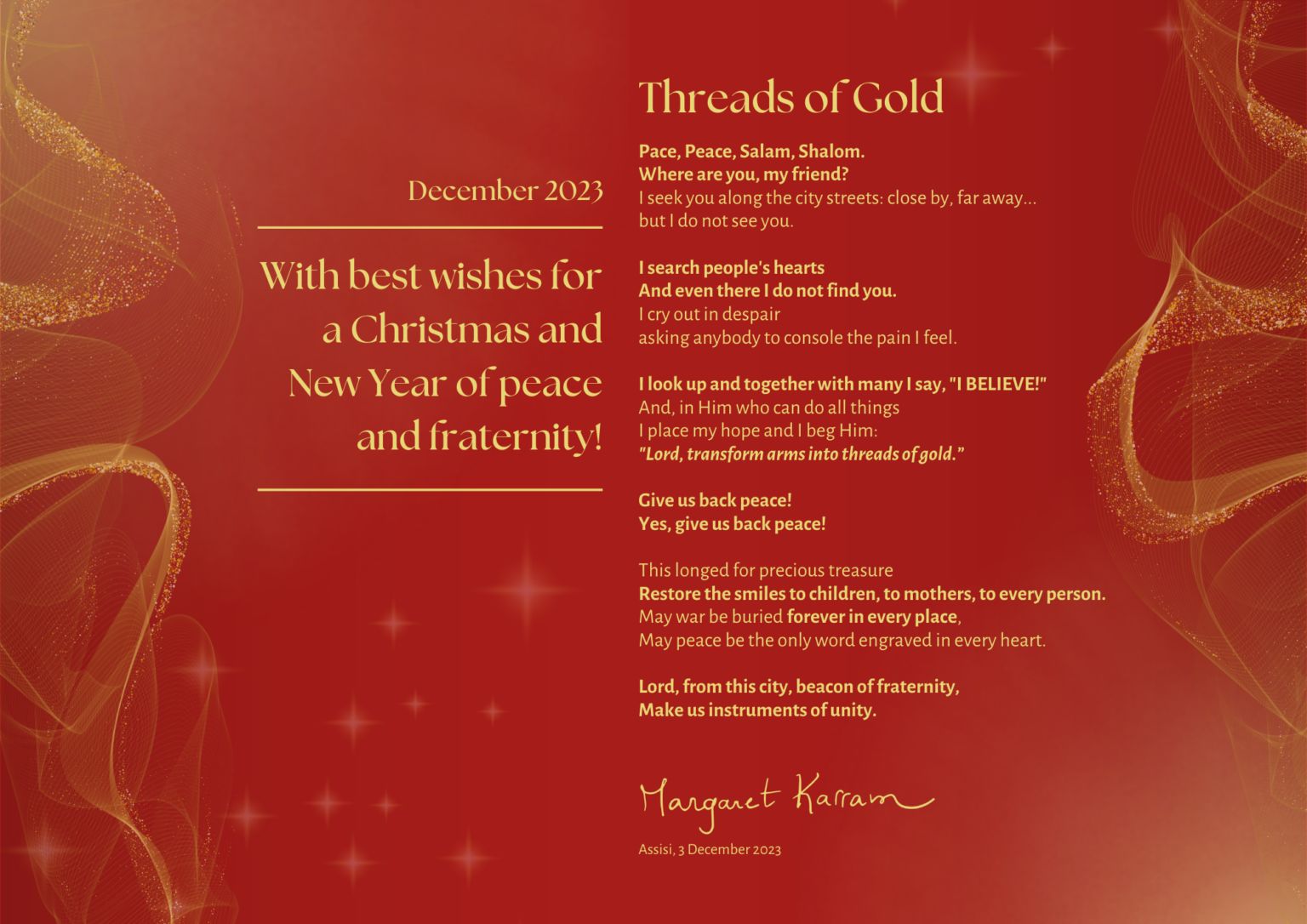
Asking for the gift of Peace: the Focolare President’s wishes

Margaret Karram, President of the Focolare Movement, expresses her wish for peace and hope this Christmas and in the New Year.


Pope Francis to the Focolare: “The world needs artisans of peace”

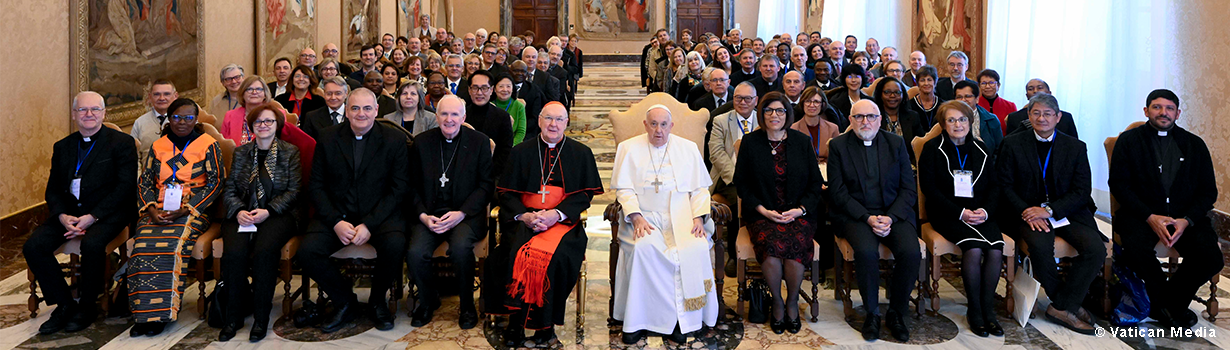
On the morning of 7 December 2023, Pope Francis received in audience Margaret Karram and Jesús Morán, President and Co-President of the Focolare Movement, together with Focolare General Council members and regional delegates, on the occasion of the 80th anniversary of its foundation. Here is the speech that the Pope addressed to them during the audience.

Dear brothers and sisters, welcome!

I greet Cardinal Farrell, your president Dr Margaret Karram, the co-president Jesús Morán, the members of the General Council, the delegates of the geographical areas, and all of you. I am grateful that you came while celebrating the eightieth anniversary of the founding of the Focolare Movement, also known as the Opera di Maria. Thank you!

It coincides with the day on which the Servant of God Chiara Lubich decided to consecrate herself fully to the Lord. From an inspiration she received in an entirely ordinary context of life – while she was going shopping for her family – a radical act of self-giving to God arose, as a response to her call that she had felt, sweet and strong, in her heart. It was 7 December 1943, in Trent, at the height of the war; on the very eve of the Solemnity of the Immaculate Conception, Mary’s “yes” became Chiara’s “yes”, generating a wave of spirituality that spread throughout the world, to tell everyone that it is beautiful to live the Gospel with one simple word: unity. But unity also means harmony: harmonic unity.
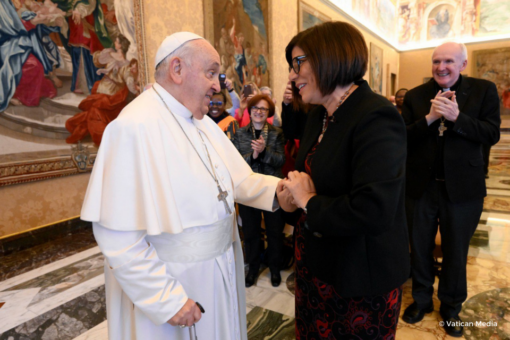
In these eighty years, you have made this message resound amid the young, communities, families, persons of consecrated life, priests and bishops; and also in various social environments: from the world of school to that of the economy, from the world of art and culture to that of information and the media; and in particular, in the spheres of ecumenism and interreligious dialogue. You have thus been an active instrument of a great flowering of works, of initiatives, of projects and above all of “rebirths”, of conversions, of vocations, of lives given to Christ and to our brothers and sisters. For all this today we want to give thanks to God.

In February 2021, speaking at your General Assembly, I emphasized three important attitudes for your progress: living your charism with dynamic fidelity, welcoming moments of crisis as opportunities to mature, embodying spirituality with consistency and realism (Pope’s address, 6 February 2021). Living spirituality. I want to remember these today to encourage you to live them and promote them along three lines: ecclesial maturityfidelity to the charism, and commitment to peace.

Ecclesial maturity. I invite you to work so that the dream of a fully synodal and missionary Church may be increasingly realized. Start out from your communities, fostering in them a style of participation and co-responsibility, also at the level of governance. Let the “focolare centres”, the hearths, increase within them and spread around them a climate of mutual listening and family warmth, in which we respect and care for one another, with particular attention to those who are weaker and those most in need of support. To this end, it will be helpful for you to pursue avenues of mutual participation and consultation at all levels, paying special attention to communication and sincere dialogue.

With regard to the second line, fidelity to the charism, I remind you of some of your Founder’s words: “Leave to those who follow you only the Gospel. If you do this, the ideal of unity will remain […]. What remains and will always remain is the Gospel, which does not suffer the wear of time” (C. Lubich, in La Parola di Dio, Rome 2011, 112-113). Please, sow unity by bringing the Gospel, without ever losing sight of the work of incarnation that God continues to wish to accomplish in us and around us through his Spirit, so that Jesus may be good news for everyone, no one excluded, and “that all may be one” (Jn 17:21).

And so, we come to the third line, commitment to peace, so important today. Indeed, after two millennia of Christianity, the longing for unity continues to assume the form, in many parts of the world, of an agonizing cry that demands a response. Chiara heard this during the tragedy of the Second World War, and decided to give all her life so that the “legacy of Jesus” might be realized. Today, unfortunately, the world is still riven by many conflicts, and continues to need artisans of fraternity and peace between men and between nations. Chiara said, “To be love and to spread it is the general purpose of the Opera di Maria” (Eve of Pentecost, Saint Peter’s Square, 30 May 1998). Being love and spreading it: this is the main purpose. And we know that only from love is the fruit of peace born.

Therefore, I ask you to be witnesses and builders of the peace that Christ achieved with his cross, defeating enmity. Think that, from the end of the Second World War until now, the wars have not ended. And we are unaware of the tragedy of war. I will confide in you, when I went to Redipuglia in 2014 for the centenary of the First World War, and I saw that cemetery, I truly wept. So much destruction! And every 2nd November I usually go to celebrate in a cemetery, also last time, the Commonwealth Cemetery, and I see the age of the soldiers – 22, 24, 18, 30 – all shattered lives, because of war. And war does not end. And in war, everyone loses, everyone. Only the arms manufacturers gain. And if weapons were not made for a year, world hunger could be brought to an end. This is terrible. We must think about this tragedy.

Before concluding, I would like to make one final invitation, appropriate in this time of Advent: that of vigilance. The snare of spiritual worldliness is always lurking. Therefore, you too need to know how to react decisively, consistently and realistically. Let us remember that inconsistency between what we say we are and what we truly are is the worst anti-witness. Inconsistency. Please, take care. And the remedy is always to return to the Gospel, the root of our faith and our history: the Gospel of humility, of selfless service, of simplicity. And I always like to remember that you are very close to the secret of God, the four secrets of God. God does not understand four things: he does not know how many congregations of religious sisters there are; what the Jesuits think; how much money the Salesians have; and what the Focolarini are smiling about!

Dear brothers and sisters, as we have already recalled, you are the Opera di Maria; she has accompanied you throughout these eighty years and you know well that she will never stop doing so. May the Virgin of Nazareth therefore be the source of your consolation and your strength, so that you may be apostles of unity in the service of the Church and of humanity. Thank you for what you are and for what you do! Continue your journey confidently. I bless you from my heart. And please, do not forget to pray for me. Thank you.

Pope Francis

Source: www.vatican.va


See also:

An 80-year-long adventure

https://www.focolare.org/en/2023/12/06/italiano-unavventura-lunga-80-anni/


The 80th anniversary of the Focolare Movement


On 7th December, Pope Francis will receive in audience the President of the Focolare Movement, Margaret Karram, together with those who are responsible for the Movement in the world. At 6pm, there will be a Eucharistic celebration in the Basilica of St, Mary Major in Rome, presided over by H.E. Cardinal Kevin Joseph Farrell, Prefect of the Dicastery for the Laity, Family and Life.

7th December 1943 marks the official birth of the Focolare Movement, the day on which Chiara Lubich consecrated herself to God forever. 80 years ago, a small community was born, which amidst the destruction of the Second World War wanted to rebuild peace and unity among all, and which would soon spread throughout the world, becoming part of the reality of new charisms of the Church. At the heart of the Focolare’s spirituality and action is the Gospel and in particular Jesus’ prayer: “That all may be one” (Jn 17:21).

Today the Movement is present in 182 countries, a sign of the universality and urgency of unity and fraternity in these fragmented and tragic times. It also includes Christians of various Churches, believers of numerous Religions and people without a precise religious affiliation.

On 7th December next, Pope Francis will receive in audience Margaret Karram, President of the Focolare Movement, Jesús Morán, Co-President and the group of those who are responsible for the Movement. “To be received by the Holy Father on 7th December 2023, exactly eighty years after Chiara Lubich’s first ‘yes’ to God, is an extraordinary and surprising gift for us,” explains the President. “We want to bring to the Pope the love and affection of the thousands of people around the world who live the Charism of unity and renew our service to the Church in this synodal journey, in collaboration with so many others who want to contribute to peace and love to alleviate the wounds of humanity”.

At 6 p.m. on the same day, in the Basilica of St. Mary Major, there will be a Mass of thanksgiving for these 80 years of Focolare life presided over by Cardinal Kevin Joseph Farrell, Prefect of the Dicastery for the Laity, Family and Life, together with several other cardinals, bishops and priests.

Margaret Karram goes on to explain, ” This day will be the conclusion of a pilgrimage that we wanted to make to some sacred and significant places in Assisi, Loreto and Rome so as to give thanks, to ask for forgiveness and to start again with courage and hope.

Focolare communities around the world will also live this anniversary with the same spirit and aims, so as to be “witnesses of proximity with fraternal love that overcomes every barrier and reaches every human situation”¹.

Stefania Tanesini

[1] Talk of Pope Francis to the General Assembly of the Focolare Movement – 6 February 2021

Source: Focolare Movement’s international website


See also:
An 80-year-long adventure:
https://www.focolare.org/en/2023/12/06/italiano-unavventura-lunga-80-anni/


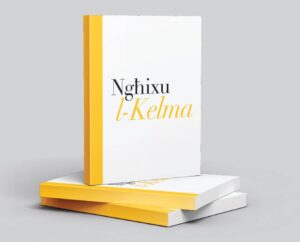
New publication in Maltese: “Ngħixu l-Kelma” (Living the Word)

The publication collects 100 Word of Life commentaries written by Chiara Lubich during the period 1943-2008.


The Word of Life is part of the great literary heritage left to the Focolare Movement by Chiara Lubich. She herself gave birth to the idea of ​​this leaflet, which is more than a commentary on Gospel passages; it is a charismatic writing, an intuition, a light, which motivates the reader to live the Word of God and translate it into life.

From the beginning, the Word of Life was written with the intention of reaching everyone, and therefore it was always presented as a modest leaflet, and it was written in a language that everyone can understand, with an incisive and direct style.

Over the years, this simple initiative has offered a valuable contribution for the Christian world to discover or re-discover the Word of God, while offering a “method” of living the Word and sharing with others the fruits of living it out.

In this book, one will find a selection of 100 Words of Life, taken from a collection of around 350 that Lubich wrote during 60 years of life, and in which one will find some of the spiritual legacy she left behind.

Introduction by: Msgr Charles Jude Scicluna, Archbishop of Malta


© Moviment tal-Fokolari, Malta
© Fondazzjoni Dinja Magħquda – Moviment tal-Fokolari (Malta)
ISBN: 978-9918-0-0656-4
Price: €10

The book is available from:

Emmaus Bookshop, Birkirkara
(tel: +356 2149 8343)


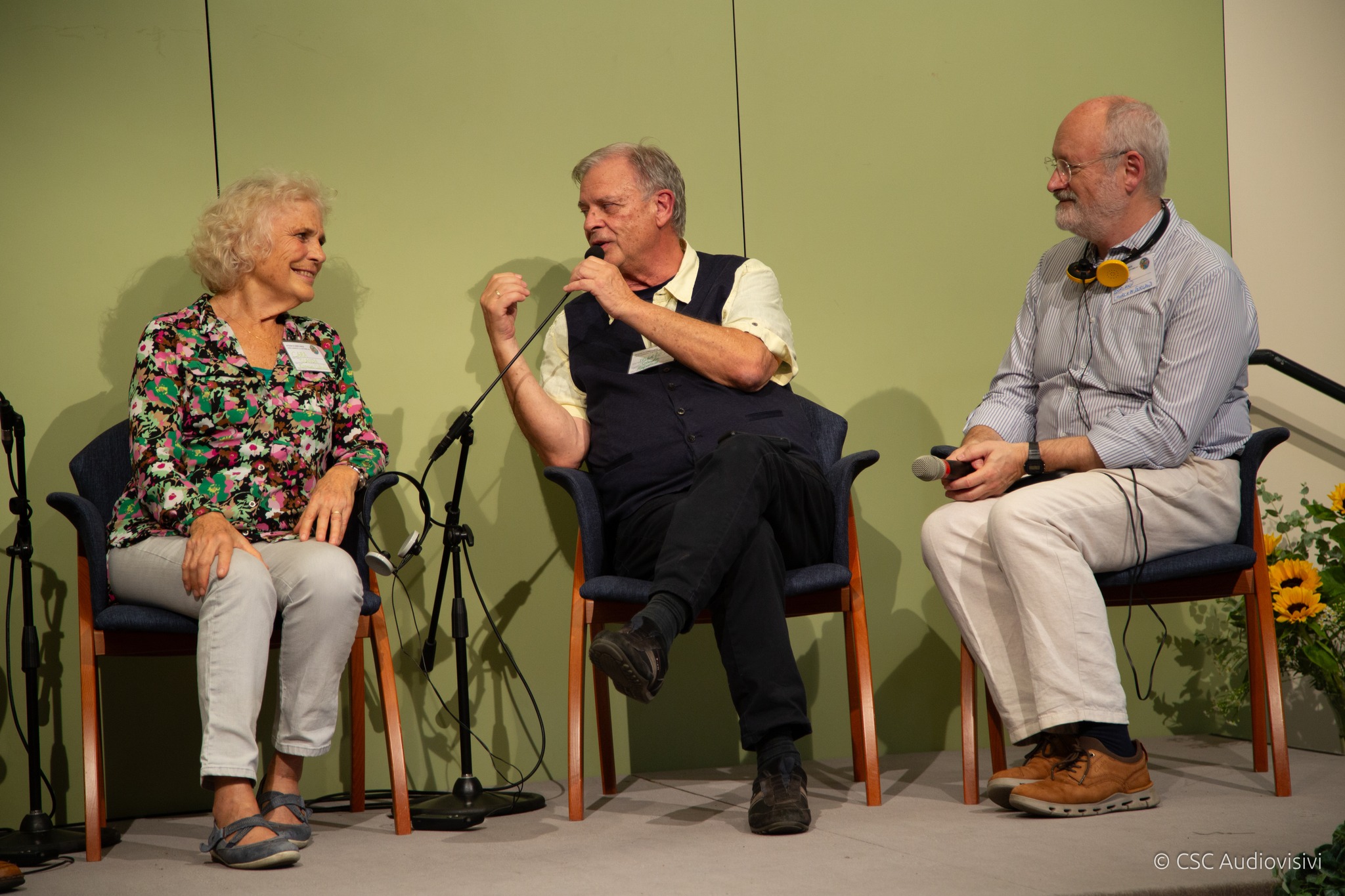
Ecumenical meeting in Rome: an opportunity to get to know one another

130 people from more than 15 Christian Churches and 26 countries, of various ages and vocations, who are part of the Focolare Movement, gathered in these days at the Conference Centre in Castel Gandolfo, Rome, in order to live an experience of profound fraternity.

The participants were representatives of Christian churches who embrace the ideal of unity promoted by the Focolare Movement. They came together to discover the challenges and the riches of their different traditions. It was an opportunity to get to know one another in order to be better able to welcome each other’s Church and to love it as one’s own.

Present at the event were Focolare President Margaret Karram and Co-President Jesús Morán. At the conclusion of the discussions, Karram quoted Chiara Lubich who, speaking of the path of unity among the Churches, said, “Each is a gift for the other, so that we may foresee in the Church of the future that one and only one will be the truth. But this truth will be expressed in various ways, seen from different viewpoints, enriched by many expressions. (…) This Church will be something marvellous, almost like a miracle, and it will engage the attention and interest of the whole world. Yes, this is necessary for the credibility and effectiveness of Christian witness.” (1)

In a fragmented world in which more and more divisive conflicts are breaking out, Christians of various Churches can offer a witness of unity in diversity, of dialogue that is possible beyond all differences. But what is the path so as to journey together and what is the contribution that people from various Churches who live the charism of unity can make to this process?

Moran commented, “Each Church can offer hospitality to the other.” He was not speaking of hospitality in the Eucharistic sense but in the spiritual sense. “In this way we will become a single Church that offers hospitality to all people as they are, with all their challenges. This is the mission of the Church: to allow all people be welcomed into Christ’s humanity; the humanity of Christ that is already in the Father, yet is still present in history. Only an eschatological vision like this can offer an appropriate response to the world of today.”

Source: www.focolare.org

1. C. Lubich, Una Spiritualità per l’unità dei Cristiani. Pensieri Scelti, Città Nuova, Rome 2020, p. 86

Photographic service: J. Garcia and C. Mendes ©CSC Audiovisivi


 in


Margaret Karram: Respect for human rights through dialogue and reconciliation

Statement issued by the President of the Focolare Movement following the outbreak of violence in the Holy Land on 7 October 2023: “Justice, dialogue and reconciliation, indispensable tools for building peace”.

8 October 2023

There are no words that can express the infinite suffering that I have in my heart for the peoples of Israel and Palestine, a suffering, brought about by this recent outburst of violence in my country. I am thinking of those who have died, the people who have been wounded, of those who are being held hostage, of those who are missing and their families.

In deep faith and together with all the Focolare Movement, I am united with the appeal of Pope Francis and that of the Latin Patriarchate of Jerusalem, and with the words of peace spoken both by those who are responsible for various Christian Churches and by the leaders of World Religions – especially those from the Israeli-Palestinian region – in asking for there to be an end to violence. And as Pope Francis said at the Angelus today, that people can understand that “terrorism and war don’t solve anything, but that every war is a defeat.”

In praying to the God of Peace and of Justice, I am also united to all the people throughout the world who are offering prayers, sufferings and actions, so that peace can be victorious over hatred and terror. I want to express a special thanks to those who have written to me from places that are in conflict, like Ukraine, expressing their offerings and closeness, in spite of the tragic situation in which they themselves have been living for over a year.

Let us commit ourselves to building a world of fraternity and to do all that is possible so that these peoples and all the others who are in the same conditions of instability and violence, can rediscover the pathway of respect for human rights, where justice, dialogue and reconciliation are the indispensable instruments for building peace.

Margaret Karran
President of the Focolare Movement


Source: www.focolare.org