Taking the initiative to love

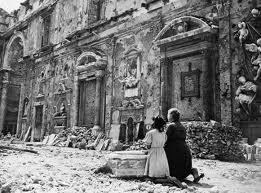
“(…) At one time society at its basis was fundamentally Christian, and a clear distinction could be made between good and evil. It is not so today. In the name of a freedom which is not true freedom, good and evil, observance and non-observance of the Commandments are all put on the same plane. We are living in a new kind of desert, where what has suffered
bombardment are not homes, churches, and other buildings, but instead, moral law, and consequently, individual consciences.

What can be done about this? Are we without arms in our battle to bring the forgiveness and love of Christ to a world which takes so little account of the reality of sin? No, we are not without weapons. This desecrated world has a countenance for us: Jesus Forsaken, in whom the sacred and the divine is completely hidden. In every negative situation, we see a reflection of Him; God who is abandoned by God. It is in His name and in our love for Him that we will find the strength to love what today appears so despicable. With the fire of love aflame in our hearts, and like our God who always takes the initiative, we will reach out to those we meet along our way. God, in us, will reawaken and enlighten consciences, instill contrition, bring back hope, inflame with enthusiasm, giving a desire to many, dead as they are, to be brought to life in Christ.

Therefore, the Word of Life in the month of January places before us three objectives: to keep the fire burning in our hearts; to be the first to love; to not measure our love but to love without limits. In this way we bring many to live our ideal, which is to live Christ.

Only if we live on this level can we be in line with what the Scriptures ask of us this month. I’ll conclude with the most ardent wish that you all have a most holy new year, rich in graces. It is the fourth year of our Holy Journey.”

Chiara Lubich

(from a Conference Call, 3 January 1985)


“Light and giving oneself to God”

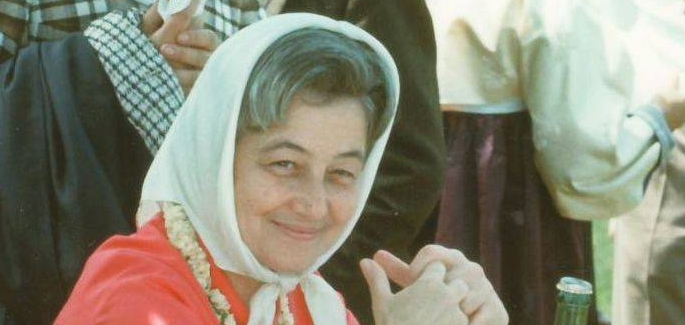
Chiara Lubich speaks about her experience of 7 December 1943

Looking back today, we can understand what that 7th of December 1943, the year of the Movement’s birth decades ago, can tell us. It tells us that a charism of the Holy Spirit, a new light came down on earth during those days, a light which, in the mind of God, was destined to quench the burning thirst of this world with the water of Wisdom, to warm it with divine love and thus give life to a new people nourished by the Gospel. This first and foremost.

And because God acts concretely, he immediately provided the first brick for the building, for this Movement, which would serve his purpose. He decided to call me, a girl like many others, and so my consecration to him, my “yes” to God, soon followed by the “yes” of many other young women and men.

That day speaks of light, then, and of our donation to God as instruments in his hands for the achievement of his goals.

Light and giving oneself to God, two realities which were extremely useful at that time when there was general confusion, reciprocal hatred, war. It was a time of darkness, when God seemed to be absent from the world with his love, his peace, his joy, his guidance, and it seemed that no one was interested in him.

Light and giving oneself to God, two words which heaven wants to repeat to us today too when many wars continue to rage on our planet and, even more frightening, terrorism has appeared. Light means the Word, the Gospel, still too little known and, above all, too little lived.

People who give themselves to God are more than ever necessary and opportune today considering that men and women who join the causes which trigger terrorism are ready to give their lives. What about us Christians, followers of a God who was crucified and forsaken in order to bring about a new world, for our salvation and for that Life which will never end?”

Chiara Lubich

(Castel Gandolfo, December 11, 2003, published in: Chiara Lubich, In unità verso il Padre, Rome 2004, p. 130-132).


Living the Gospel: Being instruments of consolation

Jesus is not indifferent to our tribulations and sufferings: he wants our hearts to be healed from the bitterness of selfishness.  He wants to fill our loneliness and give us strength in all we do.

A marriage saved

One of our daughters was going through an extremely difficult moment in her marriage. When I spoke to her on the phone she was in tears and confided in me that she had lost all hope of saving her marriage and that the only solution was to divorce. My husband and I have always been struck by the promise Jesus made to the disciples: “If two of you agree on earth about anything that they may ask, it shall be done for them by My Father who is in heaven.”  With this faith, I promised our daughter that we and her five other siblings would pray for reconciliation.

Not long afterwards, she called me up. She sounded elated and almost incredulous. After much reflection, her husband agreed to talk to people who could help them solve their problems, and they did manage to save their marriage. A few years later, our son-in-law shared with her his desire to become a Catholic and asked her to come with him to see a priest so that they could start the process. (G. B. – USA)


A new beginning

I was really looking forward to teaching at a Church of England secondary school in West London but my enthusiasm soon began to wane. Not being welcomed by the students as I would have wished and in being constant conflict with them, I started to assert my authority. However, when I shared the situation with friends, I realised I had to try a different tactic. Even though I felt I was in the right, it wasn’t what Jesus would have done. The following day I apologized to the class saying that I had probably made a lot of mistakes that a more experienced teacher would not have made.

As the pupils listened in total silence, I said I would try to see them all with new eyes and I hoped they would do the same with me. One of the main troublemakers publicly accepted my apology, and apologised in turn for his own behaviour and that of the rest of the class. Several students nodded at these words. I saw some of them smiling. Something almost unheard of had just happened: a teacher had apologised in front of the whole class. It was a new beginning for everyone. (G.P. – England)


The boy at the crossroads

Every morning, before I start work as a traffic policeman, I go to Mass and ask Jesus to help me to love everyone I meet during the day. One day, at a busy crossroads, I saw a young lad speeding by on his motorbike. After a while he came back again at very high speed, and this carried on several times. I told him to stop, hoping in my heart that he won’t cause trouble, but to no avail. Finally he did stop, just to say to me: “I have so many problems and I just want them to end with my life”. I listened to him for a long time whilst carrying on with my work. I offered him my willingness to help and decided not to give him a ticket. He left much more at peace.

One day, a few years later, while I was on duty in another place, a young man came up to me with a big smile on his face and hugged me warmly. I said to him: “Look, you must have got the wrong person” to which he replied, “No, I’m the guy at the crossroads; now I’m happily married and happy with life. I came all the way back here from the town where I now live because I wanted to thank you”. In my heart all I could do was thank God. (S.A. – Italy)


Every idea is a responsibility

The Coronavirus pandemic has disrupted programs, systems and procedures in all areas of human life. In every place there is a great need for creativity to find new answers to the challenges posed by this situation. Something that Chiara Lubich suggested back in 1983 is very up-to-date.

God speaks in us in various ways and among these are the inspirations of the Holy Spirit. We must, therefore, serve God by following the guidance of the gentle voice of the Spirit that speaks in us.
The Holy Spirit! The Third Divine Person who is God just as the Father is God and the Word of God is too! The Holy Spirit is in the heart of all Christians, and therefore in my heart too. He is in the heart of my brothers and sisters. (…)

Let’s become attentive and assiduous pupils of this great Teacher. Let’s pay great attention to his mysterious and delicate promptings. Let’s not put aside anything that might be one of his inspirations.

In the early days of our Movement we made great progress by putting into practice the motto “Every idea is a responsibility”. Therefore, let’s remember that the ideas that come to mind in someone who has chosen to love are often inspirations of the Holy Spirit.

Why does he give them to us? For our own good and for the good of the world through us, so that we can take forward our revolution of love.

So let’s be attentive and consider every idea, especially if we think it might be an inspiration, as our responsibility, to be grasped and put into practice.

In this way, we will have found a really good way of loving, honouring and thanking the Holy Spirit.

Chiara Lubich

(From a conference call, Mollens, Switzerland, 1st September 1983)


Claire of Assisi and Chiara Lubich: One Choice, that of God

It was a time of war. Everything crumbled before us, young as we were, attached to our dreams for the future: a home, our studies, people dear to us, our career.

The Lord was teaching us, through events, one of his eternal truths: “All is vanity, nothing but vanity…”.

It was that total and multifold devastation of everything that formed the objective of our small hearts, that brought forth our Ideal. We saw other young women launch themselves with sincere enthusiasm into working for the salvation and better future of our nation.

It was easy to talk about the Ideal in that life dead to all that could humanly attract one. We felt that only one idea was real and immortal: God. In the face of that destruction provoked by hatred, the One who does not die appeared more alive than ever to our young minds. And we saw Him and loved Him wherever He was absent: “Deus caritas est”.

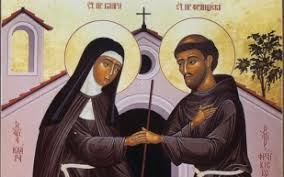
Our thoughts and aspirations were sealed by another young girl who in other times, not so different than ours, was able to illuminate with her divine light the darkness of sin and to melt the frozen hearts of egoism, hatred and grudges: Clare of Assisi. She too, like us, saw the vanity of the world, because the Poor one of Assisi, a living example of poverty, had educated her to «lose everything so as to gain Jesus Christ.»

She too, having run away from the castle of the Scifi family, at midnight at the Porziuncola, before taking off her rich garments, had responded to the saint when he asked her: “My daughter, what do you desire?” “God,” she answered.

We were struck by the fact that a young eighteen-year-old, beautiful, full of hope for the future, knew how to contain all the desires of her heart in the one Being worthy of our love.

And we too, just like her, felt that same desire. We said: “God is our ideal. How can we give our whole life to him?”

He had said: “Love me with all your heart…”. But how could we love Him?

“Whoever loves me observes my commandments. Love your neighbour as yourself.” We looked at one another and we decided to “love one another so as to love Him”. The more one “lives” the Gospel, the better one understands it.

Chiara Lubich

Extract from ‘Fides’ Journal, 48 (1948), n. 10, pp. 279-280.


Like Claire of Assisi

On the feast day of St Claire of Assisi, we publish a spiritual thought by Chiara Lubich which encourages every Christian to put God in the first place of the their life.

When we were young, we were always greatly struck by a phrase that Saint Claire told St Francis when the latter inspired her to follow his way. He asked her: “My child, what do you want?” One could expect all kinds of answers, like: “I want to follow you in the way of poverty, I want to choose religious life, I want to enter a convent,” and so on. Instead, in response to the question, “My child, what do you want?”, she answered unhesitatingly: “God”.

It’s the same choice that we made at the beginning of the Movement, we made only one choice: God! Beyond the bombings and the destruction of war surrounding us, God emerged. We believed in God and we chose Him as the ideal of our life. This choice of God is constantly renewed because it makes us put aside all those riches that we can accumulate in our life without even realizing it. Perhaps we are rich of our spirituality, rich with material things, rich in intelligence and the pursuit of our studies; we could be rich of our family bonds, our priesthood, our aims in life.

Our ideal, who is Jesus Forsaken, who made Himself nothing, makes us put all of these things aside so as to have God first (…). This is what Saint Claire reminds us of today. She did it by choosing the way of poverty; we can do it by choosing the way of unity, by trying to keep the presence of Jesus in our midst, the Risen One, and by embracing suffering through our love for Jesus Forsaken.

Chiara Lubich
Mollens (Switzerland), 11 August 1987


Help save the world with love

What have we learned from the pandemic? Which tools can we use to build a new world? What specific contribution can each of us make? From Maria Voce’s spontaneous words to a Focolare community in Italy on 16th July.

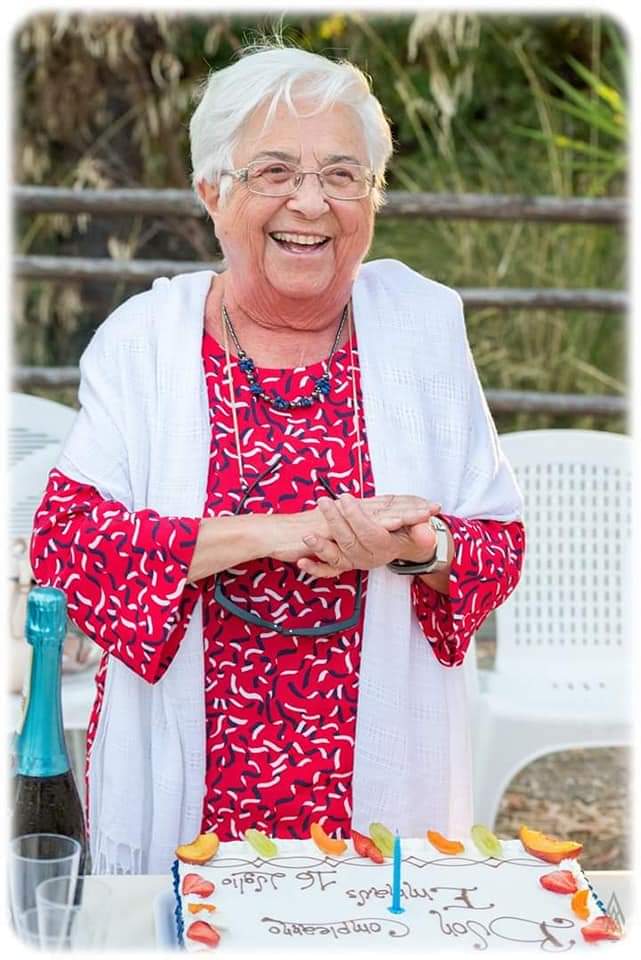
For a number of years, July 16th has been a double celebration for the Focolare communities around the world. It’s the anniversary of the special pact of unity between Chiara Lubich and Igino Giordani in 1949 and also the birthday of Focolare President, Maria Voce. Once again this year the celebration became an opportunity for spontaneous and informal dialogue – in which Maria Voce spoke from her heart about the meaning of that special day, about the life of the Focolare in recent months and the contribution the charism of unity can make at this crucial time for humanity. She had received many greetings, good wishes and much affection from all over the world and for this reason she wanted, and wants, to thank each person in a special way. We publish below part of what she said, with extracts from amateur video footage of that occasion.

“… The pandemic has taught us a great lesson, hasn’t it? We must recognise this. It has made us suffer and is still making us suffer. We don’t know how many painful consequences will still come from this pandemic, do we? But it has also been a great lesson. The main lesson was telling us ‘you are all equal’. You are all equal: whether rich or poor, powerful or wretched, children, adults, immigrants … you are all equal. That’s the first thing.

Second: even though you are all equal, some people are suffering more than others despite this equality. So what makes you all equal? You are all equal because God made you all equal. You are very different from each other but you are all his children. You have all been created by him with the same love, a great love. Then human beings came and began to differentiate between people, and we keep on doing this. So, yes to one person, no to another; one person is worth more, another less. This person can give me something, but that one can’t; this person is exploiting me, that one isn’t … and we start differentiating between people.

What happens when we do that? The result is that there are some countries where hospitals are well-equipped and countries where they are not. There are countries where there are enough masks for everyone and others where there are not.

There are places, even here in Italy, with very good internet connection and where distance schooling is possible, and other places that don’t have it. So we are all equal before God but not all equal in the eyes of other people, where real care for all is not there.  Does this hold true for us too? Perhaps I too am more willing to spend time with one person than with another and I differentiate between one person and another. I’ve seen this too and so am I really living the pact if I am like that, the pact that tells us to be ready to die for one another, not only for people I like, but any person at all?

Today people are saying we must create a new world, a new humanity. Everyone says that a new world must be created. However, in a small way, Chiara made a new world. Chiara’s family scattered across the globe is already a new world, at least in a small way. Of course it’s just a start, a model, a small sign, but it shows that it is possible. So, if it has been possible for this little group (which is only relatively little because it numbers hundreds of thousands around the world) to do this in a small way, I ask, is this little people, Chiara’s people, ready to tell everyone that a new world is possible?
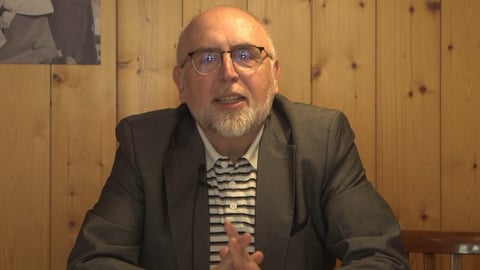
It is possible: we must be convinced that it is possible and remember the thought for today, “Believe in the power of love.” So, first of all, let’s believe that love is a powerful force. Have we experienced it? Yes, we have experienced it very often. But now, it has diminished a little; the thermometer of love has gone down. Let’s put some more mercury in the thermometer and make it rise. Let’s increase the amount of love in the world and you’ll see that everything else will rise up. We will be a reality that goes through the world doing good to all. And we’ll do this without having to say, “You know, we do things in this way; come with us because we are like this.” No, we are who we are; we are just like the others; we are poor wretches like everyone else, but we live in paradise and we don’t want to leave this paradise. But we want to be with others. We don’t want stay among ourselves in paradise. We want to bring this paradise to others and not keep it for ourselves, because it’s comfortable … and let the world get lost. No! The world must be saved; we must help save the world with our love.”


Jesús Moràn: the relevance of “Paradise ’49”

Seventy years ago it was Chiara Lubich herself who defined as “Paradise ‘49” the mystical experience through which God conveyed to her and, through her, to the Movement during its early times, the full understanding of the charism of unity and of the Work that would be born of it. This experience has been studied for years by the “Abba School”, the cultural centre of the Focolare which is currently engaged in a study seminar on “Paradise ’49” together with other scholars. Jesús Moràn, co-President of the Focolare Movement, is also taking part and we asked him to explain its relevance and vision.

“What we in the Focolare Movement, and I think others too, know as ‘Paradise ’49’ is a mystical experience that was in some way unprecedented and unique, because God never repeats himself. It was new and unique in both form and content.

It all started with a pact of unity between Chiara Lubich and Igino Giordani: a woman and a man; a girl to whom a charism had been given by God and a politician actively engaged in society; a virgin and a married man. That already says much. Furthermore, the context preceding the event must be kept in mind and is very important. The background to this experience was a very deep life of the Word – the human logos united to the divine logos; Jesus crucified and forsaken who unites heaven and earth and therefore fills every void; Eucharistic communion as a symbol of universal fraternity, of universal communion and fellowship.

Those who study this experience tell us that everything started there; everything arose out of that context. It is understandable that, if that is how things were, what came of it was a wide-ranging ecclesial and social movement, with a methodology based on a 360° dialogue: dialogue within the Catholic Church, ecumenical dialogue, interreligious dialogue and dialogue with culture. It is a movement that, in turn, was able to initiate important social movements such as the Economy of Communion and the Movement for Politics and Policies for Unity and also important cultural realities such as the Città Nuova publishing house or the Sophia University Institute.

What we are celebrating today is this particular event that occurred in a marvellous context where nature blends with culture, where the divine shines out in what is human and the human shines out in the divine and in social relationships. Certainly, in a world like this, which is so fragmented and marked by extreme polarization, I believe this experience is extremely relevant and can make a significant contribution to humanity’s journey today.” 

Source: www.focolare.org


Covid-19: Overcome fear and increase solidarity

Maria Voce, President of the Focolare Movement, at the “Elijah Interfaith Institute” in Jerusalem

“Everything that happens in life is directed  by an Author of history who is God, and God wants the good of people […] So even if  sometimes  it seems the freedom of human beings  leads to negative consequences, God is capable […] of bringing  good  even out of these negative situations”. According to Maria Voce, President of the Focolare Movement, this is the greatest lesson  that the Covid-19 crisis can offer.

In an interview with Rabbi Alon Goshen-Gottstein, director of the “Elijah Interfaith Institute” in Jerusalem, the President of the Focolare Movement also speaks of the possible benefits that the pandemic can bring to the world.

The interview is part of the Coronaspection project, a series of video interviews with religious leaders worldwide, sharing wisdom and spiritual advice as we jointly face a global crisis (here you can see the project’s trailer, which summarizes the spirit of the project).

“There are values that are more evident than others at the moment – says Maria Voce -, such as solidarity, equality among all, concern for the environment. The world will come out better from this crisis if we know how to overcome the divisions linked to prejudice, to culture, to see everyone as brothers and sisters  belonging  to the one family of God’s children.

This certainty is based on a profound  trust in the human person: ” there is always a spark of good in every person  and you can count on  it”; a person  responds “because ( good) is  inherent in him/her”. It is an inner conviction that stirs hope: “God is Love and loves all creatures”.

She continues ” In fact, it is enough to look around to see examples of solidarity. The efforts of doctors and nurses who try to awaken  trust, a smile, and their pain for the people they failed to save, have had the effect of “edifying” the patients who recovered.  In our Movement many people were able to make themselves available for  their neighbors,  to bring them what they needed; many children offered toys to  others that were a comfort to them”.

At the level of international relations – observes Maria Voce – “we see examples of solidarity in those  doctors and nurses who have come to Italy from other countries to help. […] Even at the level of economic thinking, we are trying to do everything so that countries do not think only of defending their own goods but of integrating their own vision with that of other countries”.

Nevertheless all this does not hide the challenges that the crisis brings. Alongside the personal ones she says there are those that come from leading an international movement: “making decisions that involve difficulties both on a personal and economic level.  I felt I had to call my direct collaborators, so that decisions could be shared, so that people’s interest would prevail over all other interests”.

She observed “Even fear should not be ignored, but accepted in order to overcome it: I would say that we should learn to live with fear and at the same time not to let it stop us – following Chiara Lubich’s example – “to  remain anchored in the present. She concluded, quoting the founder of the Focolare Movement, ” Only lovedrives away fear, and there is no fear where there is perfect love. So increasing love diminishes fear because love helps you to carry out actions that fear, instead,  would try to condition “.

To watch the full interview click here


Pasquale Foresi: “Prayer”

Praying does not consist specifically in dedicating time to meditation during the day, or in reading some passages of the Holy Scriptures or the writings of saints, nor in trying to think of God or of ourselves for our own inner renewal. This is not the essence of prayer. Neither is it only the recitation of the rosary nor of morning and evening prayers. These are certainly practices that help us to come in contact with God and express this intimate reality, which, however, never coincides completely with it.

Sometimes a person can do all this during the day and may not have even prayed for an instant. In fact, there’s a substantial difference between prayer and prayers, a difference which I shall try to explain, starting from that prayer that is mostly unconscious, but not less essential because of this.

When, we look up at night to watch the starry sky, we see a universe of unending beauty which enchants and amazes us in its silent obedience to a law: the law of life and harmony which from the beginning created it and sustains it every moment: This law alone bears witness to the Creator.

The same goes for the stars in the sky, and the plants and flowers that “know” when it is the time to blossom, and when to bear fruit and die. A profound rapport thus binds all living creatures to God, a relationship that – I dare say – is also a profound prayer because, with their being and their sole existence, they unconsciously recognize and follow that law, “narrating the glory.” (Psalm 18.2).

But this hidden prayer finds its highest expression – because it is free and conscious – also in the human person. It is that prayer which arises when, even before entering into a dialogue with God, we acknowledge him as the Father who created and sustains our being, on par with the entire universe. The relationship with God therefore emerges  in its reality as a vital and healing element together all in one. And so, it’s a relationship in which the human person is called to establish daily with him, or to make requests of him, as some masters of the spirit do, in an original interpretation of the Our Father: “Give us today our daily bread.”

Prayer, in order to be such, firstly demands a relationship with Jesus: to go with him in spirit beyond our human condition, our worries, and our prayers, though they’re also beautiful and necessary, and to establish this intimate relationship with him.

Let us now look at some other ways through which this relationship can develop. I shall start from a type of prayer which apparently may not seem to be such, and this is the prayer of offering. This comes from those who, prostrated by physical or spiritual sufferings, are unable to do anything, even to speak, and who offer to God, even if for the span of just an instant, all their existence. This type of prayer may thus be considered the deepest one, since it embeds the soul in that point where our contact with God is immediate and direct.

But our daily work too can assume the characteristics of a prayer of offering. I refer particularly to those who, during the day, are overcome by physical fatigue, almost unable to gather the necessary energy to dedicate themselves to prayer. Well, if in the morning, they too make an intention to offer their day to God, they can feel that they are living in a continual dialogue with him, and in the evening, during the silence of even a brief moment of reflection, they will find union with him. In the end, this is what humanity today is particularly sensitive to, the fact that the entire universe and all that it does, can be transformed into an immense, unceasing prayer that is being lifted up to God.

Pasquale Foresi, from “Luce che si incarna” (“Incarnated Light”) – Ed.Città Nuova, Rome 2014, p. 31-33.