“I sensed that Mary’s presence made everything else around me disappear”

Extract from a talk given by Chiara Lubich at the International Congress for Artists entitled “God is Beauty and not only Truth and Goodness”, held in Rome on 23 April 1999

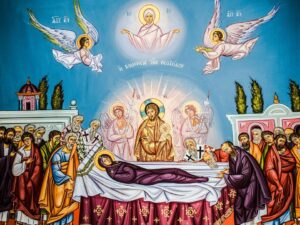
Traveling by car one day, I was listening to Gounod’s Ave Maria. Masterly performed, it called to mind a very fine veil, interlaced here and there with delicately embroidered designs. Listening to that piece of music uplifted my spirit and opened me up to union with God and in him to Mary, sublimely exalted by Gounod.

It was the feast day of her divine maternity and I admired her as being “beautiful beyond words”. I thought to myself: if God planned that She be his mother in Jesus, the Incarnate Word, the splendour of the Father, what degree of beauty must Mary have attained? It’s beyond all imagining!

I confided in her my desire to be with her in heaven, perhaps in the not too distant future. And I sensed that her presence made everything else in me and around me, everything on earth that still had a hold on me, all that is beautiful and good, decisively disappear.

In fact, the thought of her and of her beauty was enough to imprint on my heart, like a seal: ‘You, Lord, are my only good.’

I realized that She was teaching me her virtues day by day, the virtues needed to make the words – ‘You, Lord, are my only good’ – become a reality. But She gave them not by listing them, neither by explaining them, nor by giving me an ardent desire to live them, but by revealing herself to me. Yes, that beauty, of which Mary is a divine model, will save the world.

And I understood all this because a piece of music I listened to was a work of art.

Chiara Lubich


“I want to see her again in you”

The following passage, written by Chiara Lubich, refers to an episode that occurred in a private chapel in Rome, during which she understood in a new way the call to be a presence of Mary on earth.

“I went into church one day,
and with my heart full of trust, I asked:
‘Why did you wish to remain on earth,
on every point of the earth,
in the most blessed Eucharist,
and you, you who are God,
have not found
also a way to to leave here
Mary, the Mother of all of us who are on our journey?’
In the silence He seemed to reply:
‘I have not left her because I want to see her again in you.
Even if you are not immaculate, my love will virginise you,
and you, all of you,
will open your arms and hearts as mothers of humanity,
which, as in times past, thirsts for God
and for his Mother.
It is you who now must ease pains, soothe wounds, dry tears,
Sing her litanies
and strive to mirror yourself them.'”

December 18, 1957


16 July 2022 – Remembering the Pact of Unity

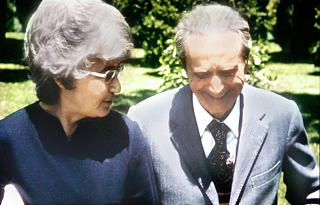
Seventy-three years after that historic day of the “Pact of Unity” between Chiara Lubich and Igino Giordani (Foco), Margaret Karram sends her best wishes and planetary greetings to all the communities of the Movement.

“My wish for all of you on this 16th of July is that that we promise one another to live the Word with greater ardour, to recollect ourselves and hear the words that Jesus said to Martha addressed to us: “You are worried and distracted by many things; but only one thing is needed.” (Lk 10:42).

In this way we can listen attentively to what Jesus wants to say to us and renew our unconditional love for Jesus Forsaken.”

Download full message


Happy Easter 2022


Holy Week: Reliving the Paschal mysteries

In the following text that Chiara Lubich wrote during Holy Week in the year 2000, she suggested how to live these “holy days”.

Today is Holy Thursday! We feel that today is truly special because of the spirituality that flowed from the charism given to us by the Holy Spirit. So we want to pause for a moment to meditate, contemplate and try to relive the mysteries it reveals, together with those of Good Friday, Holy Saturday and Easter Sunday.

To begin with, each of these days could be given a title that expresses or, I would say, has proclaimed within the Movement for over 50 years what we should be: Love on Holy Thursday; Jesus forsaken on Good Friday; Mary on Holy Saturday; the Risen Lord on Easter Sunday.

Today, then, it is Love. Holy Thursday, this day on which, over the years, we have often experienced the sweetness of a special intimacy with God. It reminds us of the abundance of love that heaven has poured out over the earth.

Love, first of all, is the Eucharist, given to us on this day.

Love is the priesthood, which is a service of love and which among other things, makes it possible for us to have the Eucharist.

Love is unity, the effect of love, which Jesus, then as today, implored from the Father: “That they may all be one, as you, Father, are in me and I in you” (cf. Jn. 17:21).

Love is the new commandment that he revealed on this day before dying. “Just as I have loved you, you also should love one another. By this everyone will know that you are my disciples, if you have love for one another.” (Jn. 13:34-35). It is a commandment which enables us to live here on earth a life modelled on that of the Holy Trinity.

Tomorrow: Good Friday. Just one name: Jesus forsaken.

I’ve just written a book on him entitled The Cry. I dedicated it to him with the intention of writing it also on your behalf, on behalf of the entire Work of Mary “as – and this is the dedication – a love letter to Jesus forsaken”.

In it I speak of him who, in the one life God has given us, and on a day, a particular day that was different for each of us, called us to follow him, to give ourselves to him.

You can understand then – and I say so in the book – that what I want to say in those pages cannot be like a talk, however informal, warm, and deeply felt; but is, rather, a song, a hymn of joy and above all of gratitude toward him.

He had given everything: the life he lived beside Mary, in hardship and obedience. Three years of mission, three hours on the cross, from which he forgave his executioners, opened Paradise to the good thief, and gave his Mother to us. Only his divinity remained.

His union with the Father, that sweet and ineffable union with the One who had made him so powerful on earth, as Son of God, and so regal on the cross; that feeling of God’s presence had to descend into the depths of his soul and no longer make itself felt, separating him somehow from the One with whom he had said he was one. And he cried out: “My God, my God, why have you forsaken me?” (Mt. 27:46).

The day after tomorrow: Holy Saturday. Mary is alone. She is alone with her dead son-God. Is this a depth of anguish that cannot be filled, an infinite agony? Yes, but she remains standing, thus becoming a sublime example, a masterpiece of virtue. She hopes and believes. During his lifetime Jesus had foretold his death, but also his resurrection. Others may have forgotten his words, but she never forgot them. She kept those and other words in her heart, and meditated on them (cf. Lk. 2:51).

Therefore, she doesn’t give in to suffering: she waits.

And finally: Easter Sunday.

It’s the triumph of the Risen Jesus whom we know and relive in our own small way after having embraced him forsaken; or when we are truly united in his name and experience the effects of his life, the fruits of his Spirit.

The Risen Lord must always be present and living in us during this year 2,000. The world is waiting for people who not only believe in and love him in some way, but people who are authentic witnesses and who can truly say, as Mary Magdalene said to the apostles after having seen Jesus near the tomb, those words we know so well but which are always new: “We have seen him!” Yes, we’ve discovered him in the light with which he enlightened us; we’ve touched him in the peace with which he filled us; we’ve heard his voice in the depths of our heart; we’ve savoured his incomparable joy.”

Let us keep these four words in mind during these days: love, Jesus forsaken, Mary, the Risen Lord.

Chiara Lubich

(Taken from a telephone conference call, 20th April 2000)
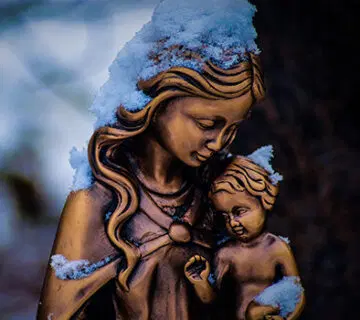


Pope Francis: “Thanks to the Maltese people for such a Christian welcome.”

Paul VI Hall, Vatican City – 6 April 2022
The Holy Father’s General Audience of Wednesday, 6 April 2022, following his Apostolic trip to Malta.

“Dear brothers and sisters, good morning!

Last Saturday and Sunday I traveled to Malta: an Apostolic Journey that had been planned for quite some time. It was postponed two years ago due to Covid and these things. Not many people know about Malta, even though it is an island in the middle of the Mediterranean. It received the Gospel very early. Why? Because the Apostle Paul was shipwrecked near its coasts and miraculously saved himself along with all those on the ship with him – more than two hundred seventy people. The book of the Acts of the Apostles recounts that the Maltese welcomed all of them, and uses this word: “with unusual kindness” (28:2). I chose these very words – with unusual kindness – as the motto of my Journey because they indicate the path to follow, not only to face the phenomenon of migrants, but more generally, so that the world might become more fraternal, more livable, and might be saved from a “shipwreck” that menaces all of us. For we are all – as we have learned – in the same boat, all of us. Viewed from that horizon, Malta is a key-place.

Above all, it is so geographically, due to its position in the centre of the Sea between Europe and Africa, that also bathes Asia. Malta is a sort of “wind rose”, where peoples and cultures meet. It is a perfect place to observe the Mediterranean area from a 360º degree perspective. Today we often hear about “geopolitics”. But unfortunately, the dominant logic are the strategies of the most powerful countries to affirm their own interests, extending their area of economic influence, or ideological influence, and/or military influence. We are seeing this with the war. In this scheme, Malta represents the rights and power of the “small” nations, small but rich in history and civilization that should lead toward another logic – that of respect and freedom – the logic of respect and also the logic of freedom, of the coexistence of differences, opposed to the colonization of the most powerful. We are seeing this now. And not only from one side: even from others… After World War II, the attempt was made to lay the foundations of a new era of peace. But, unfortunately – we never learn, right? – the old story of competition between the greater powers went on. And, in the current war in Ukraine, we are witnessing the impotence of the Organizations of the United Nations.

Second aspect: Malta is a key-place regarding the phenomenon of migration. In the John XXIII welcome centre, I met numerous migrants who landed on the island after terrible journeys. We must never tire of listening to their testimonies because only this way can we emerge from a distorted vision that is often circulated in the mass media, and the faces, the stories, the wounds, the dreams and the hopes of these migrants can emerge. Every migrant is unique. He or she is not a number but a person. Each is unique just like each one of us. Every migrant is a person with dignity, with roots, with a culture. Each of them is the bearer of a wealth infinitely greater than the problems they bring. And let us not forget that Europe was made of migrations.

Certainly, welcoming them must be organized – this is true – and supervised; and first, long before, it must be planned together, at an international level. The phenomenon of migration cannot be reduced to a crisis; it is a sign of our times. It should be read and interpreted as such. It can become a sign of conflict, or rather a sign of peace. It depends on how we take it; it depends on us. Those who gave life to the John XXIII Centre on Malta made the Christian choice. This is why it is called “Peace Lab”: laboratory of peace. But I would like to say that Malta in its entirety is a laboratory for peace! The entire nation through is attitudes, its own attitudes, is a laboratory for peace. And it can realize this, its mission, if it draws the sap of fraternity, compassion and solidarity from its roots. The Maltese people have received these values, together with the Gospel. And, thanks to the Gospel, they will be able to keep them alive.

For this reason, as Bishop of Rome, I went to confirm that people in the faith and in communion. In fact – the third aspect – Malta is the key-place from the perspective of evangelization as well. From Malta and from Gozo, the country’s two dioceses, many priests and religious, but even lay faithful, left to bring their Christian witness all over the world. It is as if Paul’s passing through there left his mission in the DNA of the Maltese! For this reason, my visit was above all an act of gratitude – gratitude to God and to the holy, faithful people from Malta and Gozo.

Nevertheless, the wind of secularism, of a globalized pseudo culture based on consumerism, neocapitalism and relativism, blows there as well. Therefore, it is time for the new evangelization there too. Like my predecessors, the visit that I made to the Grotto of Saint Paul was like drawing from the spring so that the Gospel might flow through Malta with the freshness of its origins and revive its great heritage of popular religiosity. This is symbolized in the National Marian Shrine of Ta’ Pinu on the island of Gozo where we celebrated an intense moment of prayer. There I heard the heart of the Maltese people beat. They have an immense trust in their Holy Mother. Mary always brings us back to the essentials, to Christ crucified and risen. And this for us, to his merciful love. Mary helps us to revive the flame of faith by drawing from the Holy Spirit’s flame that attracts generation after generation to the joyful proclamation of the Gospel, for the joy of the Church is to evangelize! Let us not forget this, this phrase from Saint Paul VI: the vocation of the Church is to evangelize. The joy of the Church is to evangelize. Let us not forget this any longer: it is the most beautiful definition of the Church.

I take this opportunity to renew my gratitude to the President of the Republic of Malta, so courteous and brotherly: thanks to him and to his family; to the Prime Minister and the other Civil Authorities who welcomed me with such kindness; as well as the Bishops and all the members of the ecclesial community, to the volunteers and to all who accompanied me in prayer.

I would not want to neglect to mention the welcome Centre for migrants, John XXIII: and the Franciscan Friar there (Father Dionysius Mintoff) who keeps it going at the age of 91, and continues to work thus with collaborators from the diocese. It is an example of apostolic zeal and love for migrants which is very much needed today. Through this visit, we sow, but it is the Lord who gives the growth. May His infinite goodness grant abundant fruit of peace and every good to the dear Maltese people!

Thanks to the Maltese people for such a human, such a Christian welcome. Thank you very much.”


Source: Archdiocese of Malta Newsletter, 7 April 2022


“Love your enemies”

Taken from a meditation by Chiara Lubich which was broadcast on the RAI GR2 radio program “Today is Sunday”, May 1978.

“Love your enemies”. This is a strong statement. Indeed, it turns our way of thinking and acting upside down and makes us change the direction our life is going in. Let’s not hide the fact that we all have enemies of one kind or another, even small ones. …
It might be our next-door neighbour, or the meddlesome, unpleasant lady I try to avoid whenever I meet her on the stairs. My enemy could be a relative who wronged my father thirty years ago, and so I never spoke to him again … It could be the boy sitting at the desk behind you at school and you never looked him in the eye again after he reported you to the teacher.

Perhaps it is the girl you were dating who suddenly dropped you to go out with another guy … The enemy could be the salesperson who tricked you … And then there are the politicians who don’t share our views and so we consider them enemies. Today some people even consider the government itself as their enemy and willingly resort to violence towards those who represent it.

In addition, there are, and have always been, people who see priests as their enemies and hate the Church. However, all these people, and many others whom we might call our enemies, should be loved. Loved!? Yes, loved! And don’t think you can manage that just by changing a hateful feeling for a kindlier one.

But there’s more to it than that! Listen to what Jesus says: “Love your enemies, do good to those who hate you; bless those who curse you; pray for those who mistreat you.” (Lk 6:27-28).

Do you see? Jesus wants us to overcome evil with good. He wants love to be expressed in concrete gestures. We might wonder why Jesus gave us such a command. The fact is that he wants to shape our conduct according to that of God, his Father, who “makes his sun rise on the evil and on the good and sends rain on the righteous and on the unrighteous.” Mt 5:45.

This is how things stand. We are not alone in this world. We have a Father and we need to be like him. What is more, God has a right to expect this kind of behaviour from us because he loved us first, while we were his “enemies”. While we were still immersed in wrongdoing, He sent us his Son, who died in that terrible way for each one of us.

Perhaps we too need to sort out some difficult situation, especially since we will be judged according to how we judge others. In fact, we are the ones who will give God the measure with which he will have to measure us.

Don’t we ask God to, “Forgive us our trespasses as we forgive those who trespass against us”?(1) So, let’s love our enemies! Only by acting in this way can unity be recomposed, barriers removed, and a community built up. Do you think this is too hard and burdensome? Does the mere thought of it keep us awake at night? Take courage! It’s not the end of the world. All that’s needed is a little effort on our part, then God does the other ninety-nine percent and… our hearts will be flooded with joy.

Chiara Lubich

(1) Mt 6:12.


Worldwide Linkup 26 March 2022

Focolare news from around the world

Opening – Time-out for peace – Greetings (from Russia, Ukraine, Poland, Central African Republic, Myanmar)
In dialogue with Prof. Vincenzo Buonomo
Chiara Lubich: Love your enemies
Argentina: an acrobat in the hands of God
Burundi: “It can be done!”
Guatemala: technology at the service of indigenous culture
Together for a new Africa: the courage to be leaders
In dialogue with Margaret Karram
Appointment for United World Week 2022 – Conclusion

Copyright 2022 © CSC Audiovisivi – All rights reserved. (2629M)


We found ourselves considering humanity as one family

Follow the Star that leads to the Child Jesus and become pilgrims.  The example of the Wise Men helps us understand that this time gives us a precious opportunity to set out again together and witness to our neighbours every day the wonder that dwells in that grotto and comes to make all things new.

A positive change

As I look back over all we lived in the last year during this time of unexpected pandemic, I have the impression that I am watching an action film that has shaken us all up a bit, parents and children alike.  It has often been tiring and hard to be forced to change plans and pace of life but it is also true that this situation has brought a breath of fresh air into our family. We have become aware of new ways of relating to one another and of needs that we had not previously considered. If faith had been a taboo with our children, here we are now faced with our own frailties, with fears of global dimensions and with questions that had previously gone unanswered.

The real change, however, began when we asked ourselves the meaning of what was happening. Accustomed to having answers to every question, this time we were puzzled by the unknown. In short, we found ourselves more supportive not only of each other in the family but also of others. We found ourselves considering humanity as one family.
(R.F. – France)

Love circulates among the inmates
I do voluntary work at the prison in my city. Together with a small group of other people, I take care of the “Città Nuova Reading Project”, in which many prisoners take part every week. One of them seemed sad that he could not receive the Eucharist because he had no catechetical preparation, so I suggested that I could help him. He was happy and thanked me and, together with the chaplain, we draw up a lesson schedule. Spontaneously, a few other inmates joined in during our preparation sessions.

Within a few months we were ready and so we arranged a date when the prisoner was to receive the sacrament for the first time.  To my surprise, on that day, the church was full: the inmates from that sector who rarely attend religious services, all came to Mass dressed in their best clothes. And not only that: drawing on long forgotten childhood memories, they took care of the songs, the readings and the prayers of the faithful. Like the rest of us, they were excited and enjoyed the family atmosphere that had been created, where no one felt alone.
(Antonietta – Italy)

Kneeling down
He lives alone in a dirty hovel, half-paralysed and reduced to skin and bones. He must be just over 60 years of age but he looks a lot older. The first time I went to bring him some food and clothing, I suggested that we pray together. He could no longer remember the Our Father, he only knew the Hail Mary. When I left, I asked him for a blessing, even though I was younger than him, a foreigner and, in his eyes, a rich foreigner. He raised his paralysed hand and marked the cross on my head. He, that poor man, looked at me with eyes full of joy, surprise and tears.

Ours has now become a weekly appointment. Each time we say together whatever prayers  come to his mind. He recites them out loud. The only way I can get close to him is to kneel down next to his bed: when I do that  I think: “Here I am, Lord, kneeling before you.”
(L.B. – Thailand)

Compiled by Maria Grazia Berretta

(taken from  “Il Vangelo del Giorno”, Città Nuova, year VIII, no.1, Jan-Feb 2022)


Chiara Lubich: Where there is love and charity, there is God

The Week of Prayer for Christian Unity is celebrated from 18-21 January in the northern hemisphere. The Christians of the Middle East who prepared the resources for 2022 affirm: “The new path for the Churches is the path of visible unity which we pursue with sacrifice, courage and boldness, day after day, ‘So that God may be all in all. (1 Cor 15:28)’.” In an interview with Bavarian TV in 1988 in Montet (Switzerland), Chiara Lubich spoke specifically about how to make progress on the path to Christian unity.

When speaking of Christian unity, we must bear in mind that this work was not begun by Christians from one Church or another. Here too, we know that it is the Holy Spirit who is urging Christians to progress towards unity. It is God’s plan before being ours. Therefore, we are truly prudent and wise if we follow him by listening to his voice which speaks within us and tells us: take this step, take this other step.

Now the Churches are travelling on two tracks: that of building unity in charity, the dialogue of charity, typical of Patriarch Athenagoras and Pope Paul VI, for example, and then dialogue in truth between Churches or groups of Churches. It is good to keep the idea of charity as the foundation because through charity we establish the presence of Christ in our midst. We know that where there is charity and love, there is God. Now if he is in our midst, he can prompt and enlighten theologians so that they can find ways in which we can united and find just one truth, one truth seen perhaps from different viewpoints.

So, what is needed? We should continue with the approach the Churches have begun, to dialogue in charity and on this basis, to dialogue also in truth, about the truth.

Regarding the unity of all humanity, I see that there are all these efforts being made towards unity and a small example is what we are doing. What I feel is that many barriers must fall, because if the barriers fall, many things will be resolved

If we spread Christianity and renew our Churches, and if we bear better witness to Christ and spread Christian principles through dialogue with other religions and with people of good will, we will certainly become one more and more. Jesus came on earth to bring universal fraternity. But only God knows how things will be in the end.

Chiara Lubich

(Chiara Lubich, Una spiritualità per la unità dei cristiani, [A spirituality for Christian unity] Città Nuova, 2020, p. 122-123)