Kelma tal-Ħajja

[:mt]Kelma tal-Ħajja ta’ Jannar[:en]January Word of Life[:]

[:mt]Download pdf

In-nies tagħha ġiebu ruħhom magħna bi ħlewwa liema bħalha” (Atti 28, 2)

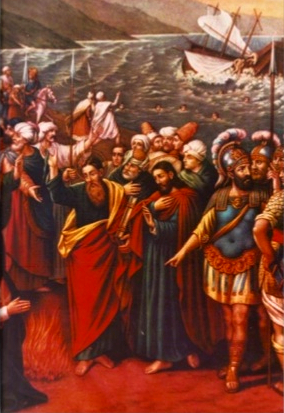
Mitejn u sitta u sebgħin ruħ kienu qed jivvjaġġaw fuq ġifen u, wara ġimgħatejn li kienu ilhom jinġarru mal-mewġ, waslu qrib gżira fil-Mediterran. Kienu mxarrbin għasra, għajjenin u mbeżża’. Ħassew li ma setgħu jagħmlu xejn mal-qawwa tan-natura u ġew wiċċ imb’wiċċ mal-mewt. Wieħed minnhom kien priġunier fi triqtu lejn Ruma biex jidher quddiem l-imperatur.

“In-nawfraġju ta’ San Pawl”

Din il-ġrajja ma ħarġitx mill-aħbarijiet ta’ żmienna, imma hi r-rakkont ta’ esperjenza tal-appostlu San Pawl, li ttieħed Ruma fejn  xandar il-Vanġelu billi xehed għalih bil-martirju.

Pawlu kien priġunier, iżda hu kellu fidi kbira fil-providenza t’Alla, u b’hekk  irnexxielu jqawwi l-qalb ta’ dawk li kienu miegħu f’din l-iżventura, sa ma waslu lkoll fuq xatt hawn Malta.

Kif waslu, in-nies tal-post laqgħuhom, qabbdulhom ħuġġieġa kbira biex jisħnu u wara ħadu ħsiebhom sew. Wara tliet xhur fuq din il-gżira, meta ġew biex iħallu xtutna, tawhom dak kollu li kellhom bżonn.

In-nies tagħha ġiebu ruħhom magħna bi ħlewwa liema bħalha”.

Pawlu, u dawk kollha li kienu fuq il-ġifen, ħassewhom milqugħin minn nies li ma kinux għadhom jafu bil-Vanġelu. Dawn laqgħuhom u qdewhom mill-aħjar li setgħu, mingħajr ma qagħdu jħabblu moħħhom biex jaraw ta’ liema kultura jew reliġjon kienu. Il-ħila li nilqgħu lill-oħrajn tinsab minquxa fina lkoll, għax kull bniedem huwa xbieha tal-Missier kollu ħniena, anki meta l-fidi nisranija tkun għadha ma nxtegħlitx fih jew inkella tkun iddgħajfet. Din hi liġi miktuba f’qalb il-bniedem, u l-Kelma t’Alla ddawwalha u turi l-valur tagħha, ibda minn Abraham 1, sar-rivelazzjoni ta’ Ġesù: “Kont barrani u lqajtuni” (2).

Il-Mulej innifsu jagħtina l-qawwa tal-grazzja tiegħu, biex ir-rieda dgħajfa tagħna tasal għall-milja tagħha fl-imħabba nisranija. B’din l-esperjenza, Pawlu jgħallimna wkoll li għandna nafdaw fil-providenza t’Alla, u nagħrfu u napprezzaw il-ġid li nirċievu permezz tal-imħabba konkreta ta’ ħafna nies li niltaqgħu magħhom fil-mixja ta’ ħajjitna.

In-nies tagħha ġiebu ruħhom magħna bi ħlewwa liema bħalha”.

Din is-silta meħuda mill-Atti tal-Appostli ġiet magħżula mill-Insara ta’ Knejjes differenti f’Malta biex tkun il-motto għall-Ġimgħa ta’ Talb għall-Għaqda tal-Insara tal-2020.

Dawn il-komunitajiet jgħinu b’ħafna inizjattivi li jsiru b’risq il-foqra u l-immigrati: jagħtuhom ikel, ilbies u ġugarelli għat-tfal u jgħallmuhom il-lingwa Ingliża biex ikunu jistgħu jitħalltu man-nies tal-lokal. Ix-xewqa hi li wieħed ikun dejjem aktar lest li jilqa’ lill-oħrajn  kif ukoll li jkun hemm aktar komunjoni bejn Insara ta’ Knejjes differenti, ħalli b’hekk dawn jagħtu xhieda ta’ fidi waħda.

U aħna, kif nistgħu nagħtu xhieda  tal-imħabba t’Alla ‘l ħutna? Kif nistgħu nagħtu sehemna fil-bini ta’ familja magħquda? Chiara Lubich tgħidilna hekk:

“Ġesù wriena li biex inħobbu rridu nilqgħu lill-ieħor kif inhu, bl-istess mod li bih Hu jilqa’ `l kull wieħed u waħda minna. Nilqgħuh kif inhu, bil-gosti, idejat, difetti u b’dak li jagħmlu differenti minna. […] Irridu nagħmlulu l-wisa’ ġewwa fina, u nwarrbu kull ġudizzju u kull ħsieb li ma jħalliniex naċċettawh. […] Lil Alla ma nistgħux nagħtuh glorja hekk kbira daqs meta nagħmlu sforz biex naċċettaw il-proxxmu tagħna, għax b’hekk inkunu qed nibnu l-pedament ta’ dik l-għaqda li tagħmilna aħwa ta’ xulxin. L-għaqda tattira l-preżenza ta’ Ġesù f’nofsna u l-preżenza tiegħu tibdel kollox. Mela, ejjew nersqu lejn kull proxxmu tagħna b’din ix-xewqa li nilqgħuh b’qalbna kollha u li nibnu miegħu l-imħabba ta’ aħwa lejn xulxin”.

Letizia Magri

1: Ara Ġen 18, 1-16.
2: Mt 25, 35.
[:en]

Word of Life

for ages 4-8 | for ages 9-17 | Print | Audio

They showed us unusual kindness. (Acts 28:2)

Two hundred and seventy-six shipwrecked people reached the shores of a Mediterranean island after two weeks adrift. They were soaking wet, exhausted and terrified. They had experienced their powerlessness before the forces of nature and had a near brush with death. Among them was a prisoner on his way to Rome where he would be subjected to the judgment of the emperor.

“The Shipwreck of St Paul”, Malta.

This isn’t one of today’s news stories.  It happened to St Paul the apostle, who was being taken to Rome to crown his mission as an evangelizer through the witness of martyrdom. He was sustained by his unshakable faith in Providence. Despite being a prisoner himself, he managed to support and encourage all his companions who were also involved in this misfortune until they ran aground on a beach in Malta. They were welcomed by the people of the island who lit a big fire so that they could gather round it and warm up. The islanders then looked after them during the winter for about three months, after which they gave them all they needed to continue their journey safely.

Paul and the others involved in the shipwreck experienced warm and practical kindness from people who had not yet received the light of the Gospel. The reception they received was not rushed and impersonal but was genuinely helpful to the visitors and showed no cultural, religious or social prejudice. This can only happen through the involvement of all members of a whole community.The capacity to accept others is part of every person’s DNA because we all bear within us the the image of the merciful Father. This is the case for Christians and those who do not follow the Christian faith. It is a law written in the human heart, which the Word of God has brought to light and developed, from the time of Abraham[1], right up to Jesus’ striking revelation, “I was a stranger and you welcomed me.”[2] The Lord himself gives us strength through his grace, so that our fragile will can reach the fullness of Christian love. Through this experience, Paul also teaches us to trust in God’s providential intervention and to recognize and appreciate all the good we receive through the concrete love of many people who cross our path.

“They showed us unusual kindness.”

This verse from the Acts of the Apostles was proposed by Christians from various Churches on the island of Malta as the motto for the Week of Prayer for Christian Unity 2020[3]. By working together, these communities support numerous initiatives helping migrants and people in need. They distribute food, clothing and toys for children. They give English language lessons to enable social inclusion. They want to strengthen this capacity for acceptance, but also to nurture fellowship among Christians belonging to different Churches, so as to bear witness to their shared faith. And how do we bear witness to God’s love to those around us? How do we contribute to build united families, supportive cities, and truly humane societies? This is what Chiara Lubich, founder of the Focolare Movement, suggested:

“Jesus showed us that loving means accepting others as they are, just as he welcomed each of us. We can welcome others with their likes and dislikes, their ideas, their faults and their diversity…We can “make space in ourselves” for others by overcoming prejudice, judgement or an attitude of rejection that may be in our hearts…We give no greater glory to God than when we strive to accept our neighbours because it’s then that we lay the foundations of fellowship and nothing gives as much joy to God as true unity among people. Unity attracts the presence of Jesus among us and his presence transforms everything. So let’s approach each neighbour wanting to welcome them with all our heart and lay the basis for a relationship of mutual love.[4]

 
Letizia Magri

[1] Cf. Gen 18:1-16.
[2] Mt 25:35.
[3] The Week of Prayer for Christian Unity is celebrated every year in the northern hemisphere from 18th to 25th January, in the southern hemisphere between the feasts of the Ascension and Pentecost.
[4] C. Lubich, Word of Life December 1986.[:]

Add Comment

Click here to post a comment

This site uses Akismet to reduce spam. Learn how your comment data is processed.