
 English
 Malti
Malti[:mt]Download pdf
“Agħmel il-qalb, binti; il-fidi tiegħek fejqitek” (Mt 9, 22).
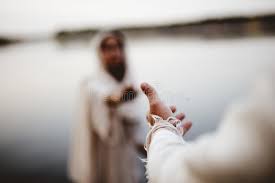 Ġesù kien miexi mdawwar bil-folla: missier iddisprat talbu jmur jgħin lil bintu li kienet waslet fl-aħħar. Huwa u sejjer, Ġesù kellu laqgħa oħra: minn qalb in-nies ħarġet mara li kienet ilha tbati bit-tnixxija tad-demm għal ħafna snin. Din il-kundizzjoni kienet serja ħafna, anki għaliex minħabba fiha kellha bilfors tnaqqas il-kuntatti mal-familja tagħha u ħbiebha. Hi ma sejħitlux lil Ġesù, ma kellmitux, imma resqet maġenbu minn warajh u messitlu t-tarf tal-libsa. Bejnha u bejn ruħha qalet hekk: “Imqar jekk immiss il-libsa tiegħu, infiq minn din il-marda kiefra”.
Ġesù dar, lemaħha u serħilha rasha billi qalilha: il-fidi tiegħek salvatek. Ma fiqitx biss imma bil-ħarsa li Ġesù ta, iltaqgħet mal-imħabba t’Alla.
“Agħmel il-qalb, binti; il-fidi tiegħek fejqitek”.
Din il-ġrajja meħuda mill-Vanġelu ta’ San Mattew, lilna wkoll tiftħilna orizzonti mhux mistennija: Alla jinsab dejjem riesaq lejna, imma Hu jistenna li aħna nieħdu l-inizjattiva biex ma nitilfux l-appuntament miegħU. Il-mixja tagħna ta’ fidi, li tgħaddi minn mogħdijiet iebsa li fihom niżbaljaw, inħossuna dgħajfa u nibqgħu b’xiber imnieħer, hi mixja prezzjuża. Hu l-Mulej tal-Ħajja vera u din il-Ħajja jrid ixerridha fuqna li aħna wliedu u l-ebda ċirkustanza ma tista’ tħassar din id-dinjità ta’ wlied Alla.
Għalhekk illum Ġesù qed jgħid lilna wkoll:
“Agħmel il-qalb, binti; il-fidi tiegħek fejqitek”.
Biex ngħixu din il-Kelma tal-ħajja, tista’ tgħinna meditazzjoni ta’ Chiara Lubich dwar din il-frażi: “Fil-fidi, il-bniedem juri b’mod ċar li ma jserraħx fuqu nnifsu imma jafda f’Min hu aqwa minnu. […] Lil dik il-mara mfejqa, Ġesù jsejħilha: ‘binti’, biex juriha dak li tassew jixtieq jagħtiha: mhux biss il-fejqan fil-ġisem, imma l-ħajja divina li tista’ ġġedidha kollha kemm hi. Infatti Ġesù jagħmel il-mirakli biex in-nies tilqa’ s-salvazzjoni li qed iġibilna, il-maħfra, dak id-don tal-Missier li hu Huwa nnifsu u li meta jasal fuq il-bniedem jibdlu mill-qiegħ. […]
Mela kif se ngħixuha din il-Kelma? Ngħixuha billi fil-bżonnijiet serji tagħna nuru ʼl Alla li aħna nafdaw fiH. Din l-imġiba żgur ma terfagħniex mir-responsabiltajiet tagħna, ma teħlisniex milli nagħmlu l-almu kollu tagħna. […] Imma jista’ jkun li l-fidi tagħna tkun qed tgħaddi minn prova. Naraw dan propju f’din il-mara li qed tbati, li għarfet tirbaħ l-ostaklu tal-folla li kien hemm bejnha u bejn l-Imgħallem. […] Għalhekk irridu nemmnu, b’dik il-fidi li ma tiddubitax quddiem il-provi. U rridu wkoll nuru ʼl Ġesù li fhimna d-don immens li Hu ġabilna, id-don tal-ħajja divina. U filwaqt li nirringrazzjawH, nikkorrispondu magħha”[1].
“Agħmel il-qalb, binti; il-fidi tiegħek fejqitek”.
Din iċ-ċertezza tagħtina l-ħila nwasslu l-fejqan billi b’għożża “mmissu” ʼl min għaddej mit-tbatija, lil min jinsab fil-bżonn, fid-dlam u mifxul. Hekk ġralha omm mill-Venezwela, li kellha l-ħila taħfer: “Kelli bżonn iddisprat ta’ għajnuna, u ħadt sehem f’laqgħa fuq il-Vanġelu, li fiha smajt kliem Ġesù: ‘Henjin dawk li jġibu l-paċi, għax huma jissejħu wlied Alla’[2], ‘Ħobbu l-għedewwa tagħkom’[3]. Jien kif stajt naħfer lil min qatel lil ibni? Imma issa fija daħlet żerriegħa u fl-aħħar mill-aħħar rebħet id-deċiżjoni tiegħi li naħfer. Issa tassew nista’ nissejjaħ “bint Alla”. Dan l-aħħar sejħuli biex niġi wiċċ imb’wiċċ mal-qattiel ta’ ibni, għax kien inqabad. Kienet esperjenza iebsa, imma l-grazzja għenitni. F’qalbi ma kienx hemm mibegħda u lanqas sens ta’ tpattija, imma biss ġietni ħniena minnu u f’qalbi fdajtu fil-ħniena t’Alla”.
Letizia Magri
[1] C. Lubich, Parola di Vita luglio 1997, in eadem, Parole di Vita, a cura di Fabio Ciardi (Opere di Chiara Lubich 5; Città Nuova, Roma, 2017) pp. 583-585.
[2] Cf. Mt 5, 9.
[3] Cf. Lc 6, 35.
https://soundcloud.com/user-63571203/juy-2021[:en]
“Take heart, daughter; your faith has made you well” (Mt. 9:22).
Jesus is walking onwards and is surrounded by the crowds: a desperate father has begged him to come to the aid of his daughter who is dying. While he is on his way, another encounter takes place: a woman who has been suffering from an issue of blood for many years makes her way through the people; her physical condition is serious and, in addition, it forces her to limit her family and social interaction. The woman does not call out to Jesus, she does not speak, but she comes up behind him and dares to touch the fringe of his garment. She has a very clear idea, ‘If all I do is touch his cloak, I will be healed of this suffering that torments me.’And behold, Jesus turns, looks at her and reassures her: her faith has obtained salvation. Not only physical health: Jesus’ gaze brings about an encounter with God’s love.
“Take heart, daughter; your faith has made you well.”
This episode from Matthew’s Gospel opens up an unexpected perspective for us too: God is always on his way towards us, but he also awaits our initiative so that we do not miss our appointment with him. Our journey of faith, although bumpy and marked by mistakes, fragility and disappointments is of great value. He is the Lord of true Life and wants to share this life with all of us, his sons and daughters, who, in his eyes, are rich with a dignity that no circumstances can suppress. For this reason, today Jesus says to us too:
“Take heart, daughter; your faith has made you well.”
We can be helped to live this Word by what Focolare founder, Chiara Lubich, wrote when meditating on this very Gospel passage: ‘Through their faith, men and women clearly demonstrate that they do not rely on themselves but trust in the One who is stronger than them. Jesus calls the woman he has healed ‘daughter’ to show that he really wants to give her not only the gift of physical healing but also the gift of divine life that can renew her entirely. Jesus, in fact, works miracles so that we can accept the salvation that he brings. He embodies the Father’s gift of forgiveness and when this is communicated to men and women, it transforms them.
How can we live this Word? By showing God our trust in him when we face serious challenges.. Such an attitude certainly does not relieve us of our responsibilities, nor does it dispense us from doing all we can. .. But our faith can be put to the test. We see it clearly in this suffering woman who is able to overcome the obstacle of the crowd that stands between her and the Master (…). We must have faith, then, but faith that does not doubt in the face of difficulties. And, again, we must show Jesus that we have understood the immense gift that he has brought us, the gift of divine life and be grateful to him and correspond to it.’ [i]
“Take heart, daughter; your faith has made you well.”
This certainty also allows us to bring salvation by tenderly ‘touching’ those who are suffering, in need, darkness or feeling lost. This is what happened to a mother from Venezuela who found the courage to forgive: ‘I was feeling desperate for help when I attended a meeting on the Gospel where I heard Jesus’ words: “Blessed are the peacemakers, for they shall be called children of God” [ii], and “Love your enemies.” [iii] Love your enemies. How could I forgive those who had killed my son? But in the meantime a seed had entered into me and the decision to forgive finally prevailed. Now I can truly call myself a “child of God”. Recently I was called to a meeting with my son’s killer who had been caught. It was hard but grace intervened. There was no hatred or rancour in my heart, only great pity and the intention to entrust him to God’s mercy.’
Letizia Magri
[i] Chiara Lubich Word of Life Jul 1997
[ii] Cf. Mt. 5:9
[iii] Cf. Lk. 6:35
https://soundcloud.com/user-63571203/juy-2021[:]

Add Comment