
[:mt]Il-Moviment tal-Fokolari f’Malta huwa reġistrat bħala organizzazzjoni volontarja: Fondazzjoni Dinja Magħquda – Moviment tal-Fokolari (Malta) VO/1624
Il-Moviment tal-Fokolari, magħruf ukoll bl-isem “Opra ta’ Maria” beda fi Trento, fl-Italja fl-1943 meta t-tieni gwerra dinjija kienet fl-aqwa tagħha. Illum jinsab f’182 nazzjon u jilħaq mal-ħames miljun ruħ.
Il-bidu
Chiara Lubich (1920-2008) irrealizzat li l-uniku ideal li tassew ta’ min jgħix għalih huwa Alla u flimkien ma’ grupp ta’ tfajliet oħra bdiet tiċċentra ħajjitha fuq l-Evanġelju. Ħafna oħrajn bdew jagħmlu bħalhom. L-għan waħdieni tagħhom sar li jagħmlu dak kollu li jistgħu biex isseħħ it-talba ta’ Ġesu’ lill-Missier: “Ħa jkunu lkoll ħaġa waħda”(Ġw 17,21)
Twieldet spiritwalita’ ta’ l-unita’ li tat bidu għal moviment ta’ tiġdid spiritwali u soċjali. Permezz tat-18-il fergħa u tal-5 movimenti tal-massa li jħaddan fih, l-ispiritwalita’ tal-Moviment tal-Fokolari qed tolqot il-ħajja tal-familja, id-dinja taż-żgħażagħ u l-oqsma l-oħra kollha tal-ħajja ekkleżjali u sekulari. Matul is-snin żviluppaw djalogi, li qed iħallu ħafna frott, mad-dinja kattolika, ma’ nsara ta’ Knejjes differenti, ma’ nies ta’ reliġjonijiet oħra u saħansitra ma’ nies ta’ rieda tajba, iżda li ma għandhom l-ebda rabta ma’ xi reliġjon.
Il Moviment tal-Fokolari f’Malta
L-ewwel żerriegħa tal-ispiritwalità tal-unità f’Malta nżergħet fil-bidu tas-snin sittin minn lajċi, saċerdoti u reliġjużi li wrew interess fir-rivista tal-Moviment tal-Fokolari Città Nuova kif ukoll kotba tal-ispirtwalità tal-Moviment ippublikati minn Città Nuova Editrice. Rappreżentanti ta’ Città Nuova minn Sqallija bdew jiġu Malta biex jippromwovu dawn il-pubblikazzjonijiet u hekk saru l-ewwel kuntatti mal-Moviment tal-Fokolari.
Imsaħħra minn din l-ispiritwalità u x-xhieda tal-ħajja tal-Vanġelu, kienu bosta Maltin li rħewla lejn Sqallija u postijiet oħra fl-Italja biex jipparteċipaw f’laqgħat, kungressi, Mariapoli u skejjel ta’ formazzjoni. Saħansitra fl-1973 grupp ta’ żgħażagħ għexu għal ftit ġranet fiċ-ċittadella permanenti tal-Fokolari f’Loppiano, qrib Firenze. Kienu esperjenzi li bidlulhom ħajjithom u lura Malta ma setgħux ma jwasslux dan il-messaġġ ġdid ta’ ħajja evanġelika fl-ambjenti tagħhom.
Sa nofs is-snin sebgħin kien hemm diġà madwar 70 ruħ li kienu jgħixu din l-ispiritwalità. Fl-1975 żaru Malta rappreżentati mid-diversi realtajiet fiċ-Ċentru tal-Moviment tal-Fokolari f’Ruma, in-nar kompla jitħeġġeġ u bdiet tikber l-ewwel komunità madwar il-Kelma tal-Ħajja li ġiet ippublikata bil-Malti għall-ewwel darba fl-1977. Kien ukoll żmien meta nibtu l-ewwel vokazzjonijiet għall-fokolare. Il-Moviment u l-messaġġ ta’ Dinja Magħquda xterdu aktar bil-miġja tal-Gen Verde fl-1978 u aktar tard fl-1980 dik tal-Gen Rosso. Kibret ix-xewqa u l-ħtieġa li jinfetaħ Fokolare fil-gżira tagħna kif ukoll li ssir Mariapoli f’Malta. Fl-1979 saret l-ewwel Mariapoli f’Malta li fiha ħadu sehem madwar 1000 ruħ u fil-bidu tas-snin 80 twaqqfu ż-żewġ ċentri tal-Fokolare.
Il-ħajja kompliet tikber u trabbi l-għeruq: fl-1999 seħħet ġrajja importanti ħafna ta’ din il-mixja.
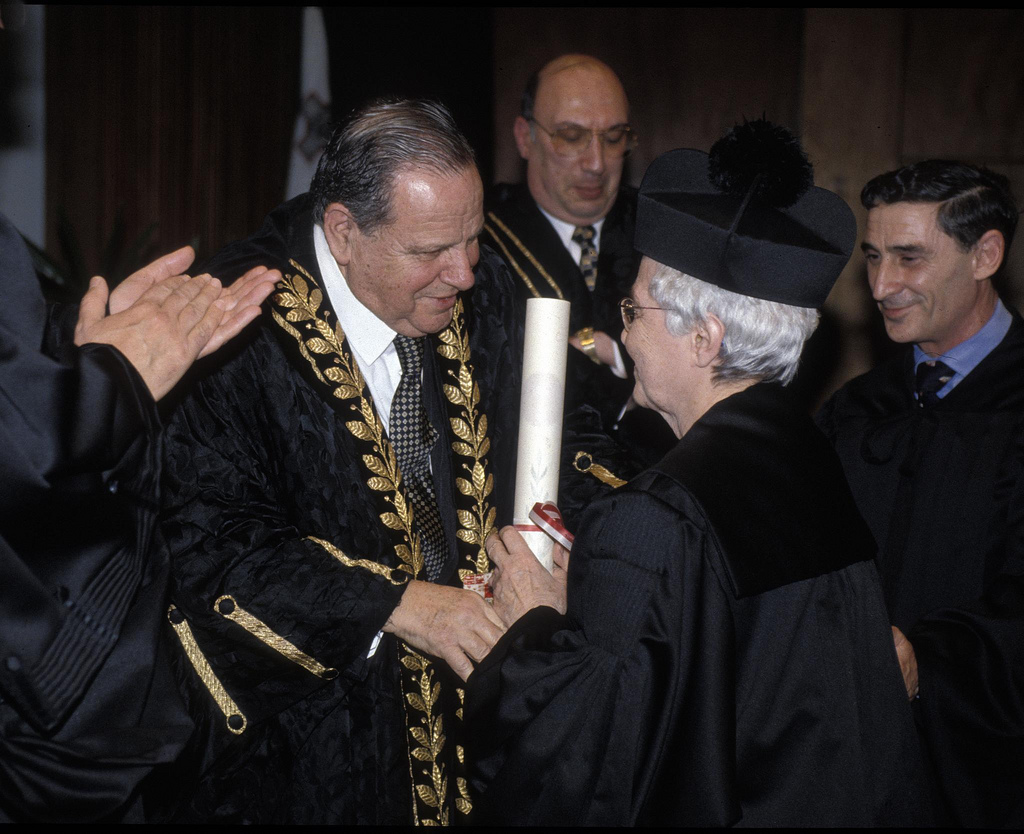 Chiara Lubich ġiet f’din il-gżira biex tirċievi l-lawrea Honoris Causa fil-“Letteratura (Psikoloġija)”, mill-Università ta’ Malta. Din ingħatatilha b’ħajr għall-kariżma tagħha li “tħaddan dehra sħiħa tal-persuna umana fil-qasam tal-psikoloġija”. Imbagħad fuq sfond internazzjonali twieldet bħala prospettiva ta’ riflessjoni “Psikoloġija u komunjoni”, li hi xibka ta’ professjonisti li fiha huma jinżlu aktar fil-fond ta’ dan it-tip ta’ approach psikoloġiku.
Wara għaxar snin mill-għotja ta’ din il-lawrea lil Chiara, f’Malta nżamm seminar speċjalistiku fuq it-tifsira psikoloġika tal-mudell relazzjonali li joħroġ mill-ispiritwalità tal-unità. U llum ukoll il-komunità fokolarina Maltija tinsab miexja ’l quddiem, u n-nies li b’xi mod jew ieħor iħaddnu din l-ispiritwalità jlaħħqu l-eluf. Insibu rabtiet mill-aktar ħajja li nbnew fi ħdan il-Knisja lokali u ma’ Movimenti u komunitajiet ekkleżjali oħra.
Frott konkret ta’ dan hu x-xogħol li jinsab għaddej bħalissa fil-mixja lejn ‘Flimkien għall-Ewropa’. Fi ħdan il-Kunsill Ekumeniku Malti u il-Kummissjoni Ekumenika Djoċesana ssir ħidma mill-qrib ma’ nies ta’ denominazzjonijiet insara oħra. Isiru wkoll kuntatti spissi ta’ ħbiberija mal-komunità Musulmana partikolarment fi ġrajjiet li fihom saret ħidma flimkien maż-żgħażagħ.
Anki San Pawl ħassu milqugħ ħafna, meta wasal hawnhekk ħtija tan-nawfraġju (Atti 27, 26). Hu dam fil-gżira għal tliet xhur u, kif fakkar Benedittu XVI fil-vjaġġ tas-sena 2010, warajh ħalla “sinjal li ma jitħassarx fl-istorja ta’ Pajjiżkom”. F’dik l-okkażjoni kien fakkar għal darb’oħra li grazzi għall-miġja ta’ Pawlu fost il-Maltin, il-Vanġelu ta’ Ġesù rabba l-għeruq tiegħu bi sħiħ u wassal għal “ħafna frott mhux biss fil-ħajja tal-individwi, tal-familji u tal-komunitajiet, imma wkoll fil-formazzjoni tal-identità nazzjonali ta’ Malta, kif ukoll fil-kultura mimlija ħajja tagħha”.
Official website Focolare Movement International Website
[:en]The Focolare Movement in Malta is registered as a non-profit voluntary organisation: Fondazzjoni Dinja Magħquda – Moviment tal-Fokolari (Malta) VO/1624
The Focolare Movement (officially entitled “The Work of Mary”) is an ecclesial movement that began in the Roman Catholic Church in 1943. Its goal is to fulfil Jesus’ prayer, “That they may all be one” (Jn 17:21), and thus to work towards the unity of all people. Indeed, the goal is to make humankind one family.
The Movement was founded by Chiara Lubich (1920—2008). When she was in her early 20s, during World War II, she dedicated her whole life to God. It wasn’t long before other young people followed her example and together they formed the first community that was called a “focolare” (the Italian word for “hearth”). It was made up of both celibate and married people, who spiritually shared in the community while living fully their commitment to marriage.
Ever since the Movement’s beginnings, people of many cultures, vocations and roles in society, coming from a variety of religious and ethnic backgrounds, have actively participated in it. Most are lay people (adults, families, youth, children), but there are also consecrated men and women, priests and even bishops.
To bring more unity to the human family, the Focolare has opened up dialogues with as many people and organizations as possible, including:
• Building unity within the Catholic Church
• Seeking communion and visible gestures of unity among Christians of different Churches
• Working to accomplish unity among the world’s religions, through a common commitment to live the Golden Rule found in many sacred texts: “Do to others as you would have them do to you.”
• Collaborating with people who do not have any specific religious affiliation, but who want to promote basic human values that aim at the common good
• Supporting and providing space for meetings and dialogue among persons of various professions.
Spirituality: The first fundamental principle of the “spirituality of unity” – also called “spirituality of communion” – is rediscovering God as love and putting him at the centre of one’s life. This choice calls for the practice of “mutual and constant love, which makes unity possible and brings the presence of Jesus among all (…).” (Premise to the Statutes of the Work of Mary). By applying the words of the Gospel in one’s daily activities, a lifestyle is created that contributes to building unity and peace, both locally and on a worldwide level.
The Focolare is present in 182 countries, with permanent centres in 87 nations. Christians from 350 different Churches and ecclesial communities are part of the Movement. Members of other religions share the Movement’s spirituality and objectives in a variety of ways. People who do not have any religious affiliation are also part of the Focolare.
Centres of formation and shared experience
• The Focolare has 25 established communities, which are actually “small towns”, located in as many countries. Those who live in these towns share the commitment to create a society based on a fraternal lifestyle. The small towns include homes, businesses and workshops and provide courses in the spirituality of unity, which form people of various ages and vocations in how to live the Gospel and share their experiences with others.
• There are Mariapolis Centres in 35 countries in which members of the Movement meet for retreats or ongoing formation. These centres also offer courses of formation in the culture of unity, which are open to both members of the Movement and all those who would like to learn more about its spirituality and activities.
Engagement on cultural and institutional levels
The Abba School is an interdisciplinary study centre composed of professors and scholars, whose objective is to clarify and develop the doctrine drawn from the charism of unity.
– Sophia University Institute is a training and academic research centre located in the Focolare’s international town of Loppiano near Florence, Italy.
International study groups bring together scholars, experts, students and professionals from a number of fields, including philosophy, economics, politics, communication, law, art, medicine, education, psychology, architecture and sports. These groups promote conferences, courses of formation and publications related to these fields, which are studied in the light of the Focolare charism of unity.
The Economy of Communion (EOC) is an initiative in the field of economics that inspires people who own or are employed in approximately 900 businesses worldwide, promoting best practice shaped by a spirit of communion, reciprocity and generosity. Sixteen business centers have grown up in 13 countries with the purpose of giving mutual support and being incubators for new startup EOC businesses.
The Movement for Politics and Policy for Unity (MppU) provides an opportunity for political reflection and action among people from different parties, including diplomats, elected officials, scholars and citizens. They want to propose fraternity as a political category on which to base institutions as well as legislative and administrative initiatives. Among their projects are courses to form young people in the skills of political participation and good citizenship.
New Humanity is a nongovernmental organization (NGO) that since 1987 has enjoyed special consultative status on the UN’s Economic and Social Council, and general consultative status since 2005. It has been recognized as an UNESCO NGO partner since 2008.
International solidarity efforts
– More than 1,000 social projects are ongoing in various countries
– More or less 35 projects and “micro-activities” are promoted by Azioni per un Mondo Unito (Projects for a United World), an NGO which operates in 30 countries
93 projects provide financial support to children in 48 countries. Almost 11,000 children have been helped, primarily through local support services, such as schools, meals, medical clinics, etc. In addition, the Associazione Azione per Famigie Nuove Onlus (“Association for Projects of the New Families”) promotes training courses and supports initiatives to benefit families and disadvantaged children.
- Publishing Houses
Città Nuova (“New City”) is the Italian publishing house and others operate in 16 countries. In Great Britain, it is known as “New City” and in North America, “New City Press.” - Città Nuova is the name of the Focolare magazine published in Italy. The Movement in 23 countries produces other magazines in 17 languages. The English editions are entitled New City in Great Britain (also online free of charge at newcity.co.uk), the Philippines and Kenya and Living City in North America (available online at livingcity.com).
– Nuovo Umanita’ (“New Humanity”) is a quarterly cultural journal in Italian that offers research and studies on a variety of topics.
– Ekklesia (“Church”) is a quarterly magazine on ecclesial and religious life. - The Word of Life is a monthly commentary on a phrase of Scripture, translated in approximately 90 languages and local dialects, reaching millions through printed copies, radio, television and online.
- The international website, focolare.org, is translated into five languages.
- An international online conference call (Collegamento) periodically brings together and shares news with the wider Focolare family throughout the world.
- CSC Media is the Focolare’s audiovisual production centre.
The President of the Focolare Movement:
Directing the Movement is a female president, assisted by a co-President and a General Council made up of 55 counsellors, each with a five-year term. The current Focolare president is Margaret Karram, Israeli, of Palestinian origin, and the co-president is Jesús Morán from Spain.
Pontifical approvals:
The Focolare Movement (“Work of Mary”) received its first approval from the Holy See in 1962. In its General Statues, which were approved by the Pontifical Council for the Laity on June 29, 1990, it was approved as “a private, universal association of the faithful, a juridical entity in the canonical order by decree of the Holy See”. On March 15, 2007, approval was given for further modifications to the Statues.
Official website Focolare Movement International Website
[:gb]The Focolare Movement in Malta
The first seeds of the spirituality of unity were sown in the sixties. In 1975 there were around 70 persons who adhered to it, the first community was formed, the first vocations to the focolare came about, and there was the desire was to have a Focolare on the island and to hold the Mariapolis in Malta. Then finally, in 1979, the first Mariapolis was held, with 1000 participants. And at the beginning of the 80’s two Focolare centres were established.
 This life continued to grow and put down roots: the year 1999 was a fundamental stage of this journey. Chiara Lubich came to Malta to receive from the University of Malta the degree Honoris Causa in “Literature (Psychology)”, motivated by the contribution given by her charism in “the cultivation of an integral vision of the human person in the field of psychology.” Within this perspective, “Psychology and Communion” was born on international plane. It is a network of operators with the task of delving into this original psychological approach. Ten years after the conferment of the degree on Chiara, a specialist seminar was held in Malta on the psychological significance of the relational paradigm that emerges from the spirituality of unity.
The Focolare community continues to flourish unto today, and several thousand people have been touched by the spirituality: lively relationships have been built with the local Church, and with other Movements and ecclesial communities. The real effects can be seen in the work that is presently being carried out in the journey towards “Together for Europe 2012”. Work is carried out in close contact with people of other Christian denominations through the Malta Ecumenical Council, and with the local church in the diocesan ecumenical commission. Frequent and very friendly are the contacts with the Moslem community, particularly in events in which we have collaborated, working together with the children. One of the most recent developments is in the cultural sphere, particularly in the fields of medicine, pedagogy, sports, and also in the political-juridical field: members of the Focolari, who belong to the two main political parties, seek to give their witness to fraternity.
Amongst the various Maltese initiatives in adherence to the Economy of Communion, the school of English “the Voice” was born in 1992. It is much appreciated by the Ministry of Education for its cordial and welcoming climate and the professional level of instruction. This welcome was experienced also by Saint Paul, who was shipwrecked on the island (Acts 27, 26) and who remained there for three months. He left –as recorded by Benedict XVI on his travel there in 2010-“an indelible mark on the history of your country”. On that occasion he recorded how, thanks to the presence of Paul amongst the Maltese, the Gospel of Jesus was rooted firmly and has borne “much fruit not only in the life of individuals, the families and the communities, but also in the formation of the national identity of Malta, and also of its vibrant and particular culture.”The Focolare Movement in Malta
The first seeds of the spirituality of unity were sown in the sixties. In 1975 there were around 70 persons who adhered to it, the first community was formed, the first vocations to the focolare came about, and there was the desire was to have a Focolare on the island and to hold the Mariapolis in Malta. Then finally, in 1979, the first Mariapolis was held, with 1000 participants. And at the beginning of the 80’s two Focolare centres were established.
This life continued to grow and put down roots: the year 1999 was a fundamental stage of this journey. Chiara Lubich came to Malta to receive from the University of Malta the degree Honoris Causa in “Literature (Psychology)”, motivated by the contribution given by her charism in “the cultivation of an integral vision of the human person in the field of psychology.” Within this perspective, “Psychology and Communion” was born on international plane. It is a network of operators with the task of delving into this original psychological approach. Ten years after the conferment of the degree on Chiara, a specialist seminar was held in Malta on the psychological significance of the relational paradigm that emerges from the spirituality of unity.
The Focolare community continues to flourish unto today, and several thousand people have been touched by the spirituality: lively relationships have been built with the local Church, and with other Movements and ecclesial communities. The real effects can be seen in the work that is presently being carried out in the journey towards “Together for Europe 2012”. Work is carried out in close contact with people of other Christian denominations through the Malta Ecumenical Council, and with the local church in the diocesan ecumenical commission. Frequent and very friendly are the contacts with the Moslem community, particularly in events in which we have collaborated, working together with the children. One of the most recent developments is in the cultural sphere, particularly in the fields of medicine, pedagogy, sports, and also in the political-juridical field: members of the Focolari, who belong to the two main political parties, seek to give their witness to fraternity.
Amongst the various Maltese initiatives in adherence to the Economy of Communion, the school of English “the Voice” was born in 1992. It is much appreciated by the Ministry of Education for its cordial and welcoming climate and the professional level of instruction. This welcome was experienced also by Saint Paul, who was shipwrecked on the island (Acts 27, 26) and who remained there for three months. He left –as recorded by Benedict XVI on his travel there in 2010-“an indelible mark on the history of your country”. On that occasion he recorded how, thanks to the presence of Paul amongst the Maltese, the Gospel of Jesus was rooted firmly and has borne “much fruit not only in the life of individuals, the families and the communities, but also in the formation of the national identity of Malta, and also of its vibrant and particular culture.”The Focolare Movement in Malta
The first seeds of the spirituality of unity were sown in the sixties. In 1975 there were around 70 persons who adhered to it, the first community was formed, the first vocations to the focolare came about, and there was the desire was to have a Focolare on the island and to hold the Mariapolis in Malta. Then finally, in 1979, the first Mariapolis was held, with 1000 participants. And at the beginning of the 80’s two Focolare centres were established.
This life continued to grow and put down roots: the year 1999 was a fundamental stage of this journey. Chiara Lubich came to Malta to receive from the University of Malta the degree Honoris Causa in “Literature (Psychology)”, motivated by the contribution given by her charism in “the cultivation of an integral vision of the human person in the field of psychology.” Within this perspective, “Psychology and Communion” was born on international plane. It is a network of operators with the task of delving into this original psychological approach. Ten years after the conferment of the degree on Chiara, a specialist seminar was held in Malta on the psychological significance of the relational paradigm that emerges from the spirituality of unity.
The Focolare community continues to flourish unto today, and several thousand people have been touched by the spirituality: lively relationships have been built with the local Church, and with other Movements and ecclesial communities. The real effects can be seen in the work that is presently being carried out in the journey towards “Together for Europe 2012”. Work is carried out in close contact with people of other Christian denominations through the Malta Ecumenical Council, and with the local church in the diocesan ecumenical commission. Frequent and very friendly are the contacts with the Moslem community, particularly in events in which we have collaborated, working together with the children. One of the most recent developments is in the cultural sphere, particularly in the fields of medicine, pedagogy, sports, and also in the political-juridical field: members of the Focolari, who belong to the two main political parties, seek to give their witness to fraternity.
Amongst the various Maltese initiatives in adherence to the Economy of Communion, the school of English “the Voice” was born in 1992. It is much appreciated by the Ministry of Education for its cordial and welcoming climate and the professional level of instruction. This welcome was experienced also by Saint Paul, who was shipwrecked on the island (Acts 27, 26) and who remained there for three months. He left –as recorded by Benedict XVI on his travel there in 2010-“an indelible mark on the history of your country”. On that occasion he recorded how, thanks to the presence of Paul amongst the Maltese, the Gospel of Jesus was rooted firmly and has borne “much fruit not only in the life of individuals, the families and the communities, but also in the formation of the national identity of Malta, and also of its vibrant and particular culture.”The Focolare Movement in Malta
The first seeds of the spirituality of unity were sown in the sixties. In 1975 there were around 70 persons who adhered to it, the first community was formed, the first vocations to the focolare came about, and there was the desire was to have a Focolare on the island and to hold the Mariapolis in Malta. Then finally, in 1979, the first Mariapolis was held, with 1000 participants. And at the beginning of the 80’s two Focolare centres were established.
This life continued to grow and put down roots: the year 1999 was a fundamental stage of this journey. Chiara Lubich came to Malta to receive from the University of Malta the degree Honoris Causa in “Literature (Psychology)”, motivated by the contribution given by her charism in “the cultivation of an integral vision of the human person in the field of psychology.” Within this perspective, “Psychology and Communion” was born on international plane. It is a network of operators with the task of delving into this original psychological approach. Ten years after the conferment of the degree on Chiara, a specialist seminar was held in Malta on the psychological significance of the relational paradigm that emerges from the spirituality of unity.
The Focolare community continues to flourish unto today, and several thousand people have been touched by the spirituality: lively relationships have been built with the local Church, and with other Movements and ecclesial communities. The real effects can be seen in the work that is presently being carried out in the journey towards “Together for Europe 2012”. Work is carried out in close contact with people of other Christian denominations through the Malta Ecumenical Council, and with the local church in the diocesan ecumenical commission. Frequent and very friendly are the contacts with the Moslem community, particularly in events in which we have collaborated, working together with the children. One of the most recent developments is in the cultural sphere, particularly in the fields of medicine, pedagogy, sports, and also in the political-juridical field: members of the Focolari, who belong to the two main political parties, seek to give their witness to fraternity.
Amongst the various Maltese initiatives in adherence to the Economy of Communion, the school of English “the Voice” was born in 1992. It is much appreciated by the Ministry of Education for its cordial and welcoming climate and the professional level of instruction. This welcome was experienced also by Saint Paul, who was shipwrecked on the island (Acts 27, 26) and who remained there for three months. He left –as recorded by Benedict XVI on his travel there in 2010-“an indelible mark on the history of your country”. On that occasion he recorded how, thanks to the presence of Paul amongst the Maltese, the Gospel of Jesus was rooted firmly and has borne “much fruit not only in the life of individuals, the families and the communities, but also in the formation of the national identity of Malta, and also of its vibrant and particular culture.”[:]